Estimated reading time: 7 min

Why facefat, belly fat or hove handle not going away?

While genetics dictate where you lose the fat first from, eventually if you get cut enough you will lose it from all unwanted places. So, it just means you've not progressed far enough in your cut to see the changes just yet

You can't target fat loss in 1 spot. This myth, known as spot reduction, has been consistently debunked by science. To lose fat from a specific area, you have to lower your overall body fat percentage. For example, a systematic review by Ramírez Campillo et al. (2020), titled "Regional fat loss from the affected body part by aerobic exercise only," found that "no significant effect was observed regarding body fat percentage or fat mass reduction by localized aerobic exercise."

Here are some rough benchmarks for when you can expect to see your abs

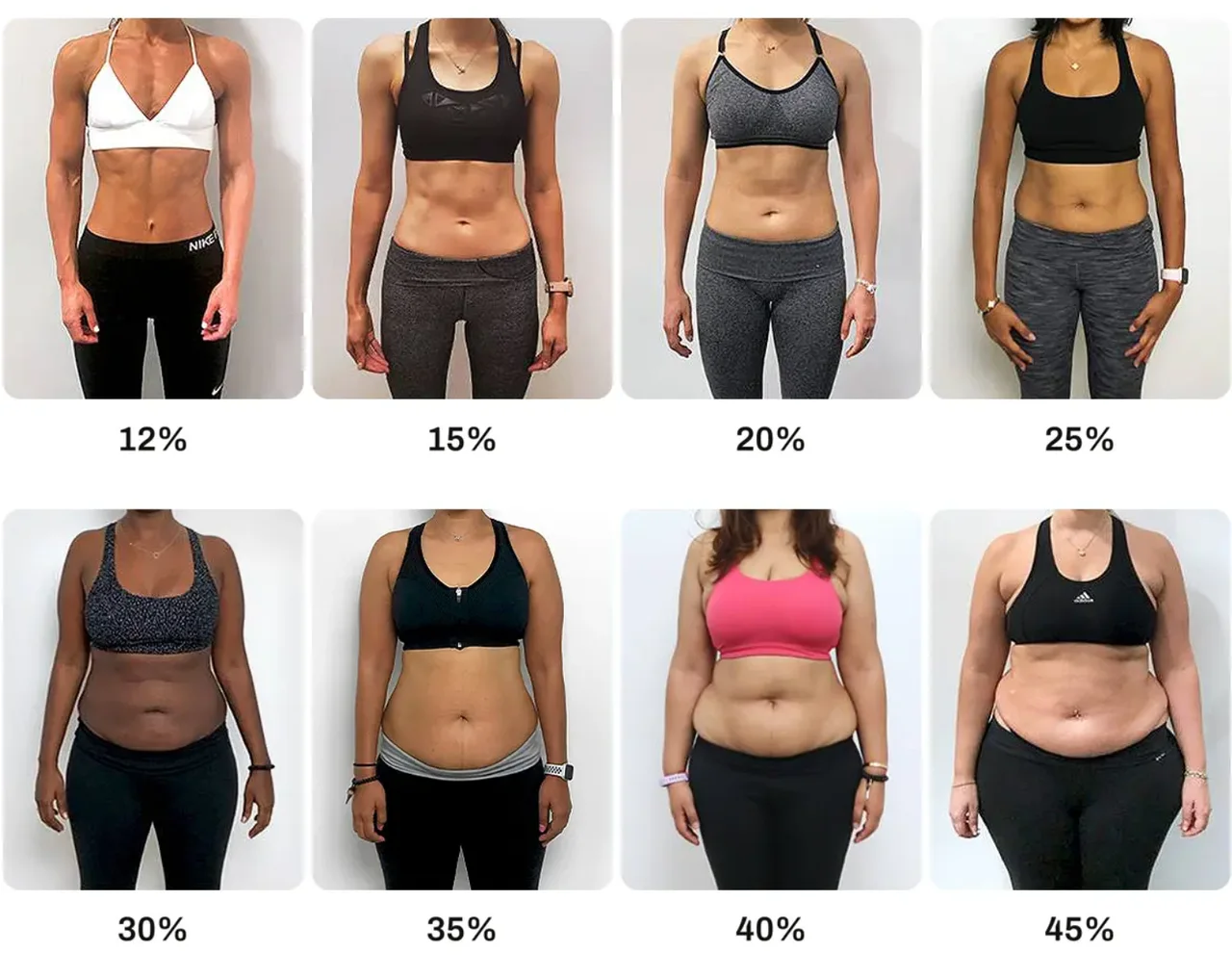
Men Abs typically appear around 10–15% body fat, with sharp definition below 9%. Your face will start to look leaner around 13–14%.

Women Abs become visible around 16–20%, and the face slims down between 18–22%.
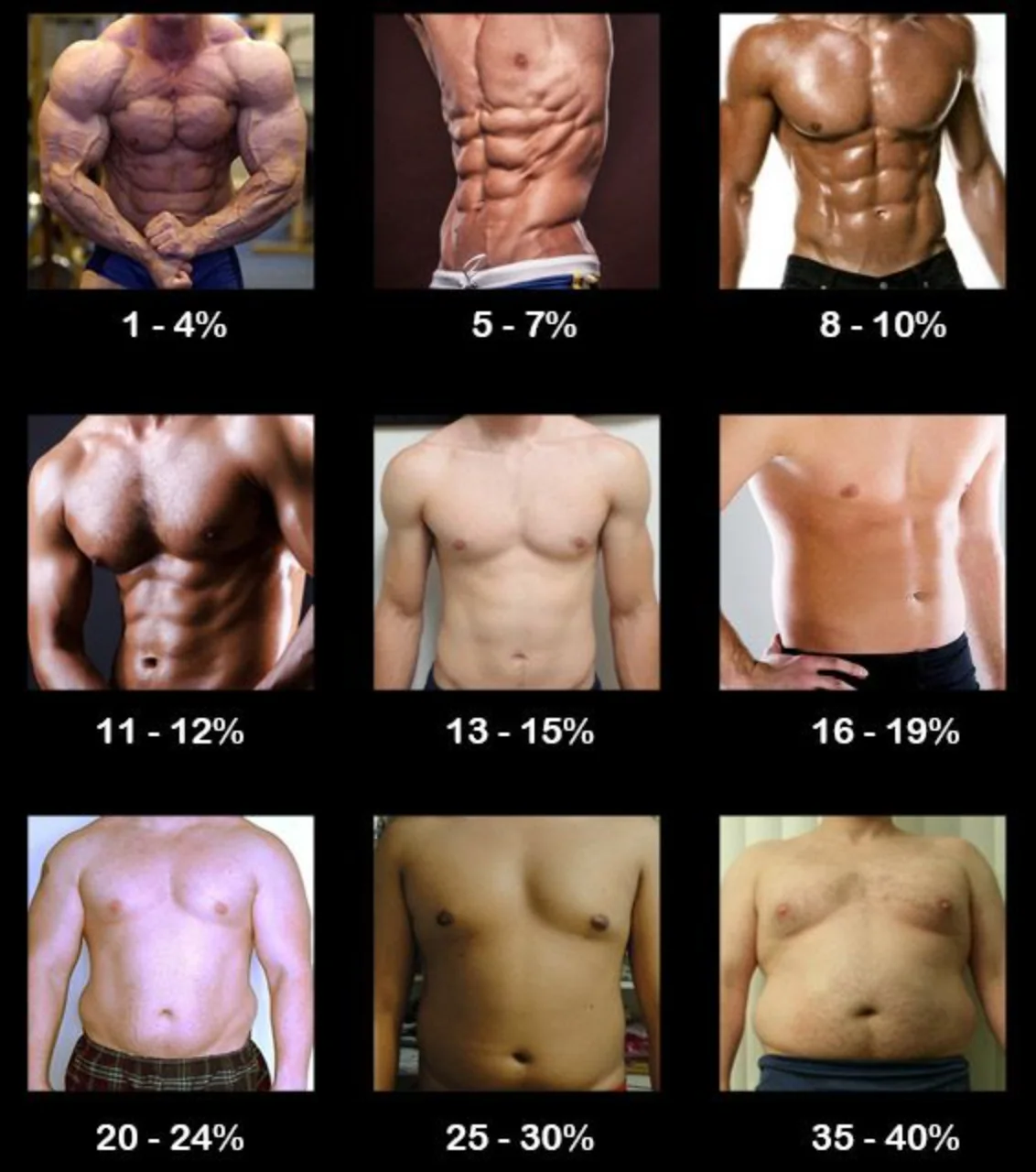
First, you need an accurate body fat measurement.

A word of warning: don't trust consumer grade smartwatches and scales. While they're convenient, their body fat estimations are often unreliable and can lead you to make the wrong decisions. The professional equipment costs thousands of dollars for a reason that's a level of technology you simply won't find in a sub $1000 gadget.

Finding a place for a proper scan is easier than you might think. A quick search for “DEXA scan near me” will usually point you to a local clinic or gym that offers DEXA scans for a small fee. It’s a good idea to call ahead and confirm the price, as costs can vary significantly between different facilities for the same service.

For body fat % measurement, in terms of accuracy:

TierCategoryMethodsNotes
Tier 1Criterion & Reference MethodsMRIDirect adipose tissue quantification, no assumptions
Tier 1Criterion & Reference Methods4-Compartment Models (4C)Criterion gold standard for living subjects
Tier 1Criterion & Reference MethodsDEXA3-compartment model, high precision, clinical reference
Tier 2High-Quality DensitometryHydrostatic Weighing (UWW)Classic 2-compartment density method
Tier 2High-Quality DensitometryBod PodAir displacement plethysmography, comparable to UWW
Tier 3Validated Field & Clinical MethodsUltrasound (B-mode / A-mode)Measures fat layer thickness; less operator-dependent than calipers
Tier 3Validated Field & Clinical MethodsExpert Skinfold CalipersHighly dependent on technician skill; uses validated equations
Tier 3Validated Field & Clinical MethodsHigh-End Multi-Frequency Segmental BIA (e.g., InBody 970/770)≥6 frequencies, up to 1 MHz, 8-point electrodes
Tier 4Good Multi-Frequency BIA (Research/Clinical Grade)Other MF-BIA devices (e.g., Seca mBCA, Tanita MC-780)Reasonable accuracy; typical error ~3.5–5% vs DEXA (varies by population)
Tier 5Estimation & Basic DevicesUS Navy FormulaCircumference-based; population averages; error typically >4–5%
Tier 5Estimation & Basic DevicesSingle-Frequency BIAConsumer devices; highly hydration-dependent; lowest electronic accuracy

Visual estimates, even by professionals, are significantly less accurate than DEXA scans, no matter what some forum discussions might claim. That said, for contest or photoshoot preparation, visual assessments for conditioning are a practical method. In such cases, it's beneficial to seek guidance from a coach's trained eye for a more reliable evaluation.

Coaches use Caliper and DEXA, onstage bodybuilders are evaulated based conditioning, accurate bodyfat% is not a judging criteria. So, while you'll see coaches telling people "eyes are final judges", nobodys eyes are more accurate than DEXA or MRI.

Back in time when these devices were not widely available, people used a much simpler rule. Lean bulk untill abs disappear, cut till abs become sharp. So, not having access to any of the bodyfat% measuring devices is not a roadblocker.

For more info on this, see this Here's how fat loss works, you need 3 things order

a) deficit, eat less than your TDEE (total daily energy expenditure)

b) activty level boost (an hour of swimming/bicycling in zone2 burns 400-500kcal)

c) lifting for muscle mass preservation (An average 30-minute lifting session only burns about 150-210 calories (Hunter GR et al., J Strength Cond Res, 2003)

Now, if you are 1 of those who thinks they can lose bodyfat just from lifting heavy weights alone, well it might not happen. I'll present some data below to get you into right mindset, you don't need remeber any of this but walk out with a conclusive fatloss strategy

The best way to lose fat involves a combination of strategies. It all starts with a moderate calorie deficit, which is the cornerstone of any sustainable plan. You should also boost your daily step count, ideally aiming for 8,000 to 20,000 steps, depending on what you can consistently manage. This significantly increases your energy expenditure through NEAT and can burn an extra 600-850 kcal per day for someone weighing 150-210 lbs (about 68-95 kg (149.6–209 lbs)) (BodySpec, 2025). Add in some low impact cardio like swimming or cycling at a Zone 2 heart rate. These are especially great for heavier individuals because they don't stress the joints like running does. Zone 2 sessions can burn around 400-500 kcal per hour at a moderate intensity (Mount Elizabeth Hospitals, 2025).

Strength training is just as crucial. Building muscle raises your resting metabolic rate, so you burn more calories even when you're not doing anything. Gaining 10 kg (22 lbs) of muscle can increase your BMR by an estimated 100-150 kcal per day (Pratley et al. 1994, Lemmer et al. 2001, Lopez et al. 2022, Aristizabal et al. 2014). Over a year, that added muscle could help you lose 5-7.5 kg (11-16.5 lbs) of fat just from the metabolic boost alone (calculated based on ~7,700 kcal/kg fat). This multifaceted approach is strongly supported by research. The Cochrane review by Shaw, et al. (2006) concluded that "a combination of energy and fat restriction, regular physical activity, and behavioural strategies is warranted" for significant, long term weight loss. Putting it all together, movement, cardio, and muscle building is the key to losing fat for good while protecting your joints (Westcott 2012) and keeping your metabolism efficient.

Now, you may have got some idea of how fat loss works and it fits together. A sample strategy may look like this

I’ll start by eating at a 400-500 kcal deficit. To retain muscle mass, or potentially even gain some (since I’m a beginner with a low training age/FFMI), I’ll strength train 3 times a week. I'll begin with 1 hour of Zone 2 cardio (where I can talk but not sing) on lifting days. On non lifting days, I’ll increase cardio to 1.5–2 hours. If the weight loss isn’t progressing at the desired rate, I’ll either increase the calorie deficit or add more Zone 2 cardio. I'll target weight loss of 1 to 2 pounds (about 0.5 to 1 kilogram) per week. Why? Losing weight at this gradual, steady pace makes it more likely that you will keep the weight off in the long term, compared to rapid weight loss.

Just like anything, target the evidence based number first, after that you can tweak it according to signals you receive from body.

For more step by step instruction

For straightforward fat loss, see this guide.

If you're already muscular and want to cut, this is the guide for you.

This guide will take you through the essentials of nutrition and fitness, all for free You'll learn how to calculate your TDEE (Total Daily Energy Expenditure), determine the right macro split for protein, fats, and carbs, and track your calories using tools like Cronometer and a food scale. Plus, it includes personalized progress tracking, tailored deficit/surplus recommendations based on your body stats and goals, along with a customized workout and cardio plan.