How Much Muscle Can You Build Naturally?

This is a guide to what men and women can realistically expect as natural bodybuilders using Fat-Free Mass Index (FFMI).
The goal here is not to give you a magic ceiling down to the decimal. It is to give you a realistic range so you can set better expectations and stop comparing yourself to enhanced physiques or internet outliers.
What is FFMI?
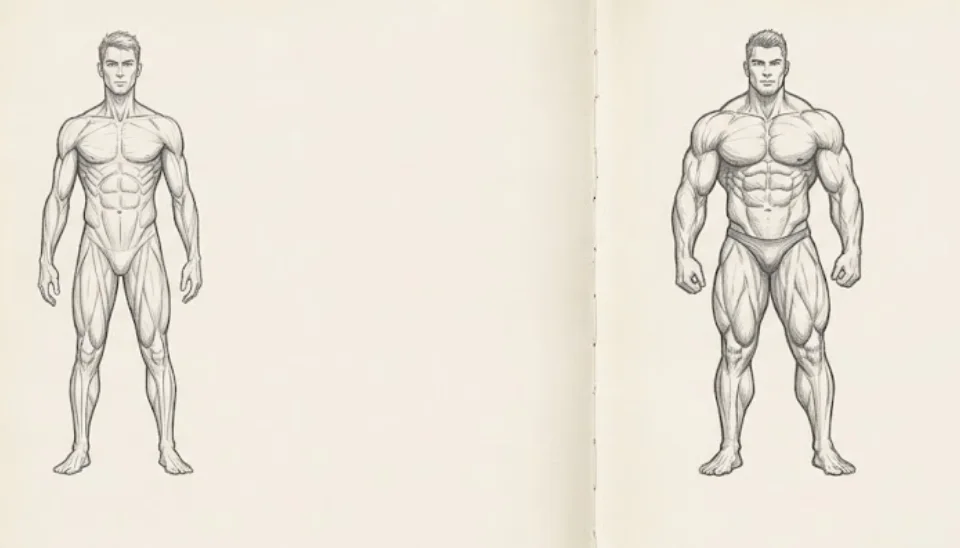
In the above image, the height and bodyfat% is same but the person on the right is much heavier and have higher lean mass, we can also say the guy on the right has higher FFMI than the guy on the left
FFMI stands for Fat-Free Mass Index.
It is similar to BMI, but instead of looking at total body weight relative to height, it looks at your fat-free mass relative to your height. The person on the right not only has a higher FFMI but also higher BMI
In practice, FFMI is a rough way to estimate how much lean mass you carry for your frame.
Important: FFMI is only a guide.
- It does not perfectly account for frame size, bone structure, or muscle insertions.
- It can shift based on hydration, glycogen, and how lean you are.
- Small errors in body-fat estimates can move your FFMI by around a point.
FFM vs Lean Mass
Fat-Free Mass (FFM) is your total body weight minus all stored fat. Lean Body Mass (LBM) is slightly different: it includes FFM plus a small percentage of "essential" fat required for normal physiological functions, such as the fat stored in bone marrow and organs
| Component | Fat-Free Mass (FFM) | Lean Body Mass (LBM) |
|---|---|---|
| Skeletal muscle | Yes | Yes |
| Organs (heart, liver, kidneys, etc.) | Yes | Yes |
| Bones | Yes | Yes |
| Blood | Yes | Yes |
| Connective tissue (tendons, ligaments, cartilage) | Yes | Yes |
| Skin | Yes | Yes |
| Water (intracellular & extracellular) | Yes | Yes |
| Essential fat (fat in bone marrow, nervous system, organs) | No | Yes |
| Storage fat (subcutaneous & visceral fat) | No | No |
FFM is not all skeletal muscle
On average, skeletal muscle makes up roughly 40–50% of fat-free mass (FFM) in healthy adults. Men are typically at the higher end of this range, while women tend to be slightly lower because a larger proportion of their lean body mass consists of organs and essential fat.
Even if we focus only on glycogen and the water stored alongside it, FFM/LBM measurements can be easily influenced by short-term changes in hydration and carbohydrate intake. For example, after just 2–3 days of very low carbohydrate intake, an average male can lose around 2–3 kg (4–6 lb) of water weight. A body composition scan will often register this as a loss of fat-free mass, temporarily lowering the person's FFMI, even though they haven't actually lost muscle tissue.
So when we talk about changes in FFM or FFMI, is this transient shift in water and glycogen really what we care about, or are we trying to measure actual skeletal muscle?
Carbohydrate intake, sodium intake, and creatine supplementation can all alter the amount of water your body retains, which can temporarily change your measured FFMI.
Raw FFMI vs Normalized FFMI
This guide uses both raw FFMI and normalized FFMI, and they are not interchangeable.
- Raw FFMI is the basic formula: fat-free mass divided by height squared.
- Normalized FFMI adds a height correction so people of different heights can be compared a bit more fairly.
Why this matters:
- most of the population and athlete reference values cited in this guide are reported as raw FFMI
- the famous Kouri upper-end male reference of 25.0 is specifically a normalized FFMI value
- you should not compare your normalized FFMI to a study's raw FFMI value as if they were the same metric
So throughout this guide:
- when we discuss ordinary baselines or common trained-natural ranges, we are usually relying more on raw FFMI study data
- when we discuss the famous Kouri-style male upper-end natural reference, we will say normalized FFMI explicitly
A Key Nuance About Body Fat
One important nuance got lost in a lot of internet FFMI discussions:
Higher FFMIs are often easier to carry at higher body-fat levels than at very lean or stage-lean levels.
Why?
- FFMI is based on fat-free mass, not just muscle tissue.
- Fat-free mass includes muscle, glycogen, water, organs, connective tissue, and other non-fat tissue.
- When you diet hard, especially into very lean bodybuilding condition, you usually lose some glycogen, water, and sometimes a bit of lean tissue.
- That means your FFMI can look lower when you are shredded than when you are heavier in the off-season.
So if someone has a very high FFMI at 15-18% body fat, they may not hold that exact same FFMI at 8-10% body fat after a full cut.
This matters because many "natural limit" conversations ignore the difference between:
- off-season muscularity
- general lean athletic condition
- contest-level leanness
For practical use, it is better to think of FFMI as a range that depends partly on how lean you are when you measure it.
There is also an extreme example from outside bodybuilding that shows why body-fat context matters so much.
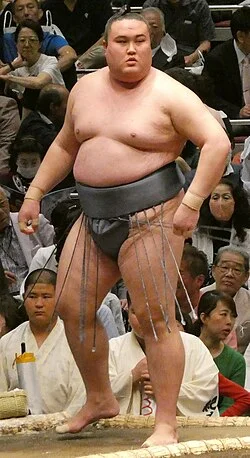
In a study on professional Japanese sumo wrestlers, one wrestler was reported at 186 cm, 181 kg, and 33.0% body fat, with 121.3 kg of fat-free mass. That implies an FFMI of about 35.1.
This does not mean a natural bodybuilder can expect a stage-lean FFMI anywhere near that number. It means very high body fat can coexist with a huge amount of fat-free mass, which is exactly why FFMI comparisons need body-fat context.
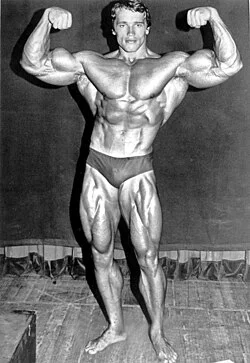
Arnold Schwarzenegger a bodybuilder who has admitted to steroid use. His competition height and weight are listed as 1.88m and 107kg. Assuming 6% bodyfat, that gives him an LBM of 100kg (220 lbs BTW) and a normalized FFMi of 27.9 (at 4% this goes to 28.5).
The Simple Takeaway
If you are a natural bodybuilder, the most useful expectation is this:
- Most natural men who train seriously for years will usually land somewhere around the low 20s in FFMI.
- Most natural women who train seriously for years will usually land somewhere around the high teens to about 20 FFMI.
- Truly elite natural outliers exist, but they are uncommon.
The rest of this post explains where those expectations come from.
Men
What Most Men Can Expect Naturally
Important note for the men's section:
- the common baseline and trained-natural numbers below are mainly interpreted from raw FFMI data
- the famous Kouri upper-end number of 25.0 is a normalized FFMI reference and should be treated separately
| Level | Rough FFMI Expectation | What it means |
|---|---|---|
| Healthy but untrained | ~18.9 | Normal young male baseline |
| Well-trained natural | ~21-23 | Where many serious natural lifters are likely to end up |
| Exceptional natural | ~24-25+ | Rare outlier territory |
This is the cleanest practical summary for most readers:
- If you are an average healthy guy who lifts seriously for years, ending up around
21-23 FFMIis already very solid. - Pushing toward
24-25is unusual and likely requires excellent genetics, excellent execution, and a long training history. - Treat
25+as rare territory, not as the standard for what a natural male "should" look like.
In general:
- around
21-23is a realistic natural target in normal lean-to-moderate condition - higher values are often easier to see in the off-season than in fully dieted condition
- a man measuring
22.5at moderate body fat may not still measure22.5after a deep contest-style cut
Evidence Behind Those Numbers
| Source | Metric | Key number | What it supports |
|---|---|---|---|
| Schutz, Kyle, and Pichard, 2002 | Raw FFMI | Median FFMI of 18.9 in young males | General healthy male baseline |
| Kouri et al., 1995 | Raw FFMI | Mean FFMI of 21.8 in male nonusers | Natural trained men cluster around the low 20s |
| Kouri et al., 1995 | Normalized FFMI | Nonusers extended up to normalized FFMI 25.0 | High-end natural territory exists, but it is rare |
| Kouri et al., 1995 | Normalized FFMI | Pre-steroid Mr. America winners had mean normalized FFMI 25.4 | Elite natural-looking physiques can exceed the average natural lifter by a lot |
What the Research Suggests
The strongest evidence in this post comes from the Kouri paper and from population reference data.
Kouri et al. compared steroid users and nonusers and found that the nonuser group had a mean raw FFMI of 21.8. In the same paper, after height normalization, nonusers extended up to normalized FFMI 25.0. They also reported that pre-steroid-era Mr. America winners had a mean normalized FFMI of 25.4.
That does not prove a perfect universal natural ceiling. But it does support a very practical conclusion:
21-23is a realistic destination for many well-trained natural men.24-25+is possible, but uncommon.- Physiques that clearly live far beyond that should not be your benchmark if you are staying natural.
Body-Fat Context for the Male Data
This part matters a lot.
The original Kouri paper is often quoted for the 21.8 mean raw FFMI in nonusers, but a later review discussing that dataset noted an average body fat of about 12.5% +/- 5.5% for the nonuser group.
That means the men in that sample were not all stage-lean. Broadly speaking, they were measured in a range that was lean to moderately lean, not all in peak contest condition.
So the practical takeaway is:
- the often-cited
21.8average for natural male nonusers was a raw FFMI value, not a normalized one, and it was not measured only in shredded bodybuilders - it reflects a group averaging around the low teens in body fat, with meaningful variation around that average
- if one of those same men dieted much harder, his FFMI might come down somewhat even if he kept most of his muscle
The pre-steroid Mr. America number is also useful, but it should be handled carefully.
Kouri reported a mean normalized FFMI of 25.4 for the pre-steroid Mr. America winners. That is a strong sign that elite natural-looking physiques can exist at very high FFMI levels. But we do not have a clean, directly reported body-fat value for each one in that paper, so it is better not to attach an exact body-fat range as if it were firmly measured there.
Women
What Most Women Can Expect Naturally
Important note for the women's section:
- the main female reference values below are reported as raw FFMI
- unlike the famous male Kouri
25.0figure, these female values are not mainly being presented as normalized FFMI benchmarks
| Level | Rough FFMI Expectation | What it means |
|---|---|---|
| Healthy but untrained | ~15.4-16 | Normal young female baseline |
| Well-trained natural | ~18-20 | Where many serious natural lifters are likely to end up |
| Exceptional natural | ~22-24+ | Rare outlier territory |
This is the simplest realistic takeaway:
- A natural woman who trains hard for years will often land around
18-20 FFMI. - Reaching
22+is impressive and uncommon. - Values around
24+appear in athlete datasets, but those are outlier cases and should not be treated as normal expectations.
In general:
- around
18-20is a realistic natural target in normal lean-to-moderate condition - the highest FFMI values are often easier to carry away from peak contest leanness
- a woman who measures very high in the off-season may not hold the exact same FFMI after dieting down hard
Evidence Behind Those Numbers
| Source | Metric | Key number | What it supports |
|---|---|---|---|
| Schutz, Kyle, and Pichard, 2002 | Raw FFMI | Median FFMI of 15.4 in young females | General healthy female baseline |
| Blue et al., 2019 | Raw FFMI | Mean FFMI of 16.9 in 266 collegiate female athletes | Many active female athletes are still well below the "elite natural" internet numbers |
| Harty et al., 2019 | Raw FFMI | Average FFMI of 18.82 in 372 collegiate female athletes | Trained female athletes commonly land in the high teens |
| Harty et al., 2019 | Raw FFMI | 97.5th percentile of 23.9 | High-end natural female outlier range |
| Blue et al., 2019 | Raw FFMI | Range up to 25.5 | Very rare upper-end cases do exist |
What the Research Suggests
The female data is actually one of the most useful parts of this topic because it gives us large athlete samples instead of just lore and message-board arguments.
In one study, Blue et al. reported a mean raw FFMI of 16.9 across 266 collegiate female athletes, with values ranging up to 25.5. In another, Harty et al. reported an average raw FFMI of 18.82 across 372 collegiate female athletes, with a 97.5th percentile of 23.9.
That points to a practical conclusion:
18-20is a strong, realistic natural outcome for many women who train seriously.22+is outlier territory.24+can happen, but it is rare enough that it should not be presented as an ordinary natural expectation.
Body-Fat Context for the Female Data
The female studies are also easier to interpret when you keep body fat in view.
Harty et al. reported 372 collegiate female athletes with:
- average body fat of
24.18% +/- 5.48% - average raw FFMI of
18.82 - 97.5th percentile raw FFMI of
23.9
That is helpful because it tells us those values were not taken only from women in contest shape. They came from a large athlete sample averaging around the mid-20s in body fat.
Blue et al. reported a mean raw FFMI of 16.9 and a range up to 25.5 in 266 collegiate female athletes, but the source we are using here does not give the same clean body-fat context alongside those FFMI values.
So the safest conclusion is:
- women can post very solid FFMI numbers without being stage-lean
- the highest observed values in athlete samples do not automatically mean those athletes were in contest condition
- if a woman dieted from normal athletic condition into very lean condition, her FFMI would not necessarily stay exactly the same
How to Use This as a Natural Bodybuilder
If you want a simple benchmark for goal-setting, use this:
| Group | Realistic long-term natural expectation | Rare elite natural range |
|---|---|---|
| Men | ~21-23 raw FFMI in normal lean-to-moderate condition | ~24-25+ FFMI, with the famous Kouri 25.0 figure specifically referring to normalized FFMI |
| Women | ~18-20 raw FFMI | ~22-24+ raw FFMI |
This is not a rule. It is a reality check.
- If you are below these ranges, it does not mean your genetics are bad. It may simply mean you have more years of progress ahead.
- If you are inside these ranges, you are probably doing very well.
- If you are comparing yourself to physiques far beyond these ranges, there is a good chance you are comparing yourself to enhanced athletes, cherry-picked outliers, or bad body-fat estimates.
Also keep this in mind:
- FFMI measured at higher body fat is not always directly comparable to FFMI measured in contest shape
- your "best off-season FFMI" and your "leanest stage-ready FFMI" may not be the same number
- when people ask about natural potential, they should first ask:
At what body-fat level?
How to Compare Yourself to the Studies More Fairly
If you want the best possible apples-to-apples comparison, do this:
- first ask:
What body-fat range were the people in the study measured at? - then try to compare yourself when you are in roughly that same body-fat range
- get your body fat measured with
DEXAif possible - measure when your body weight is stable, not in the middle of a hard bulk or aggressive cut
- note your exact body-fat level when you calculate FFMI
- compare yourself to studies that used better body-composition methods, especially athlete datasets that also used
DXA
Why DEXA?
- both the Blue and Harty female athlete studies used
DXA - DEXA is usually a much better reference point than guessing body fat from photos, calipers done casually, or online calculators
- it still is not perfect, but it gives you a much stronger comparison point than most gym estimates
For practical comparison:
- if you want to compare yourself to the male Kouri nonuser data, compare yourself in roughly the same kind of body-fat range discussed for that sample, around the low-teens on average rather than in a fully depleted contest state or at much higher body fat
- if you want to compare yourself to the Harty female athlete data, compare yourself in a range closer to that study population, which averaged about
24.18% +/- 5.48%body fat - if your body-fat level is far away from the study population, your FFMI comparison is weaker even if the number looks similar
Match the Body-Fat Range Before You Compare
This is the rule most people miss:
Do not compare your FFMI to a study unless your body-fat level is at least reasonably close to the body-fat level of the people in that study.
Why?
- FFMI can shift as glycogen, water, and lean tissue shift
- someone at
10%body fat and someone at18%body fat can have very different-looking FFMI values even if their long-term muscular potential is similar - someone at
24%body fat should not assume their FFMI means the same thing as someone measured in the low teens
Use these study contexts as rough anchors:
Kouri et al. nonusers: later discussion of the dataset puts the group around12.5% +/- 5.5%body fat on average, and the often-cited21.8value from that sample is raw FFMIHarty et al. female athletes: the sample averaged24.18% +/- 5.48%body fatBlue et al. female athletes: useful FFMI data, but not the same clean body-fat context in the source we are relying on here
And for clarity:
Kouri 25.0for male nonusers is a normalized FFMI referenceKouri 25.4for pre-steroid Mr. America winners is also presented here as a normalized FFMI reference- most of the other benchmark values in this guide are being used as raw FFMI references
So in practice:
- if you are a man at
20%+body fat, your FFMI is not a clean apples-to-apples comparison to the Kouri nonuser average - if you are a woman far leaner or far softer than the Harty sample, your FFMI should be interpreted more cautiously against that dataset
- the closer your measurement conditions are to the study conditions, the more meaningful the comparison becomes
References
- Kouri EM, Pope HG Jr, Katz DL, Oliva P. 1995. Fat-free mass index in users and nonusers of anabolic-androgenic steroids. Clinical Journal of Sport Medicine. PubMed
- Schutz Y, Kyle UUG, Pichard C. 2002. Fat-free mass index and fat mass index percentiles in Caucasians aged 18-98 y. International Journal of Obesity. Nature
- Blue MNM, Hirsch KR, Pihoker AA, Trexler ET, Smith-Ryan AE. 2019. Normative fat-free mass index values for a diverse sample of collegiate female athletes. Journal of Sports Sciences. Duke Scholars
- Harty PS, Zabriskie HA, Stecker RA, Currier BS, Moon JM, Jagim AR, Kerksick CM. 2019. Upper and lower thresholds of fat-free mass index in a large cohort of female collegiate athletes. Journal of Sports Sciences. PubMed
- Kondo M, Abe T, Midorikawa T, et al. 2017. Upper limit of fat-free mass in humans: A study on Japanese Sumo wrestlers. American Journal of Human Biology. PubMed
Bottom Line
If you are natural, the most useful expectation is not "What is the absolute biggest humanly possible FFMI?"
It is this:
- Men: most serious natural lifters should think in terms of roughly
21-23 raw FFMI, with24-25+reserved for rare outliers. If you invoke the famous Kouri25.0benchmark, remember that it is a normalized FFMI reference. - Women: most serious natural lifters should think in terms of roughly
18-20 raw FFMI, with22-24+reserved for rare outliers.
And just as important:
- those numbers are usually easier to hit and hold at higher body-fat levels than in fully shredded condition
- the leaner you get, the more likely your FFMI is to come down a bit from lost glycogen, water, and sometimes lean tissue
That is the simple view most people need.