Before you begin
A few quick notes will make these guides easier to use.
- Use a desktop or laptop when possible: These guides often link out to calculators and supporting references. A larger screen makes it much easier to move between tabs and compare information.
- Use the linked tools instead of doing manual math: Interactive calculators are linked wherever they can save time. The equations are sometimes shown for reference, but you usually do not need to calculate them yourself.
- Treat the guide as a framework, not a rulebook: Use the guidance as a strong starting point, then adjust based on your body, recovery, and training response instead of following it rigidly.
1. Introduction to Lean Bulking
AI Fitness Advice (ChatGPT, Gemini, Claude)
AI gets its training data by scraping vast corners of the internet, including forums like Reddit where bro-science, myths, and misinformation spread easily. Because of this, AI-generated workout routines and diet plans often sound incredibly convincing, even when they are deeply flawed or just generic templates. Interestingly, AI tends to perform best in fields where the work is highly verifiable. In software engineering or mathematics, you can test an output instantly and cheaply. Code either compiles and passes its tests, or it fails. A math proof is either right or wrong. The feedback loop is immediate. Fitness and nutrition do not work that way. There is no quick, objective validation system. If an AI gives you a subpar training program, you might not notice the issues for weeks or months. Even then, pinpointing the cause is incredibly difficult. Real-world progress depends on a complex web of individual variables, including your genetics, adherence, recovery, sleep, stress, exercise technique, and daily nutrition. Right now, AI is most effective in fitness when it is paired with an experienced human who can critically evaluate and tweak the output. Unlike writing code, fitness does not have an automated compiler to instantly flag a bad hypertrophy block or a useless dieting strategy.
Why trust these guides? Where is the proof that they work? Who can I contact?
To put things in perspective, the MacroCodex app has over 16,000 users. You can see what they think by reading the reviews on the Play Store. We do not have upsells, subscriptions, ads, or donation requirements. Everything here is completely free.
These guides are built on years of hands-on coaching and consistent, real-world results. By following this approach and using the free MacroCodex app, you will see weight loss or weight gain within 2 to 5 weeks. It is rare to find free resources that promise results this quickly without trying to upsell you, show ads, or force a subscription.
You do not have to trust these guides blindly. If you spot any mistakes or run into issues, email us at [email protected] and we will look into it.
Here is some feedback from the community:
- A thread on Reddit: https://www.reddit.com/r/tirzepatidecompound/comments/1omfgxd/everyone_should_read_this_guide_on_losing_fat/
- An independent user report: https://www.reddit.com/r/AskFitnessIndia/comments/1tgjvvo/how_to_backup_or_move_macrodex_data_locally_or_on/
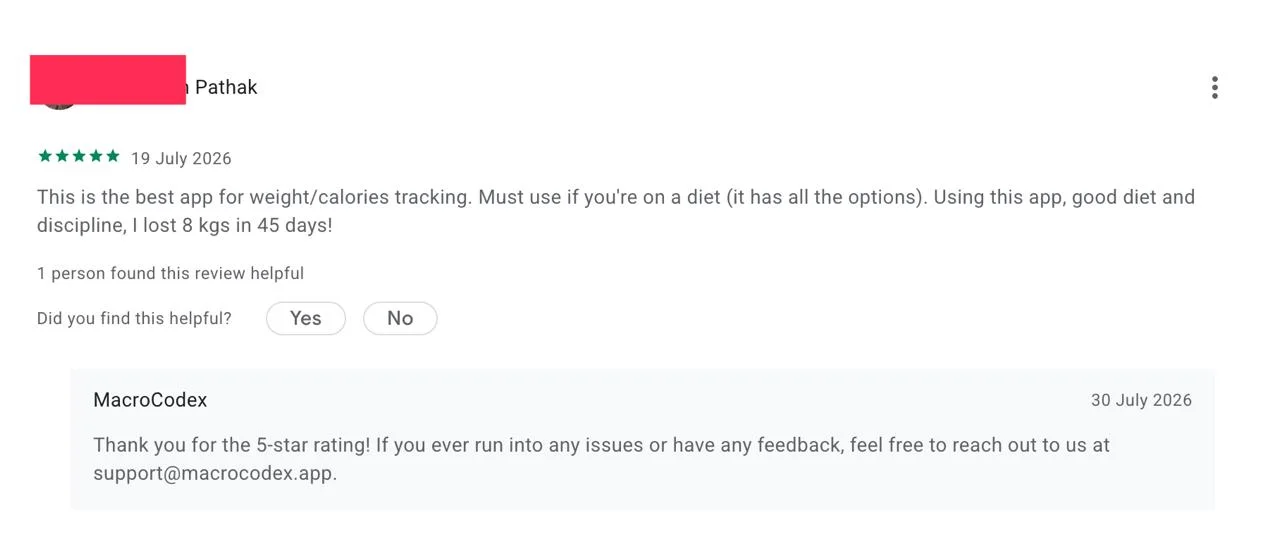
You can find several other Reddit posts and comments referencing these guides and sections. We also back up our claims with linked evidence whenever possible, and we encourage you to research these concepts independently.
Once you start seeing results, the best way to support us is by sharing your experience. Since the app and guides are completely free, we have zero advertising budget, which makes it hard to reach a larger audience. Mentioning MacroCodex on Reddit, in YouTube comment sections, or other relevant places goes a long way. We only want honest feedback, so please only share it if the app actually helped you reach your goals.
Leaving a quick review and rating on the Play Store also helps immensely. If you run into any issues, just send an email to [email protected].
Why read this Guide?
These guides might look intimidatingly long and detailed, but in our coaching practice, we get clients up and running with these exact fundamentals in their very first week. Usually, within 2-5 weeks, they are already seeing the scale move in the right direction. It really is as straightforward as downloading MacroCodex and taking action.
We have packed these pages with the kind of hands-on intuition, troubleshooting techniques, and myth-busting that normally takes a coach five to ten years of trial and error to figure out.
Most beginners spend their first year or two spinning their wheels because they have no idea how to eat. They obsess over perfecting their training routine, even though they could just grab a free, proven program from LiftVault, FitnessWiki, or Boostcamp and get great results. Training is actually the easy part. If you are doing about ten challenging sets per muscle group each week (around zero to three repetitions in reserve) and gradually adding weight or reps, you will grow.

We focus purely on the high-leverage basics. You can find endless "science-based" optimizations online, but almost all of them offer microscopic returns. This guide prioritizes the vital 20% of effort that yields 80% of your real-world results.
When you first start lifting, you can get away with a terrible diet because "newbie gains" carry you through. Eventually, though, you will hit a wall. Even if you manage to build some decent muscle by accidentally eating enough protein and calories, that new muscle often ends up buried under a layer of stubborn body fat. The result is a physique that looks disappointing in the mirror, despite all your hard work in the gym.
Reading this can save you years of frustration. By the end, you will understand nutrition the exact same way elite performers do, including IFBB pros, athletes, models, and Hollywood actors.
Let's establish a ground rule.
You are not allowed to say "my diet is fine" unless you can fill in these blanks on the spot:
"My maintenance is X calories. My goal is Y, so I am eating at a Z calorie deficit or surplus. This means my daily target is A calories, made up of B grams of protein, C grams of carbs, and D grams of fat."
Without these numbers, "eating clean" usually just means eating home-cooked, whole foods without any actual awareness of your energy intake. If you want predictable, repeatable progress, guessing is not enough. You need the actual data. This guide walks you through exactly how to find and track those targets.
If you ask any top-tier athlete, fitness model, or actor about their nutrition, they can instantly tell you their maintenance calories and daily targets.
Whether you want to build a lean, athletic frame or the mass of a competitive bodybuilder, your results depend entirely on these core principles. Knowing them is what separates people who feel lost from those who make steady, visible progress week after week. It ensures your hard work in the gym actually pays off. Ultimately, it comes down to managing three variables: the fuel you put in your body (calories and macros), your total mass (your scale weight), and your body composition (your body fat percentage).
What the Scale Doesn't Tell You
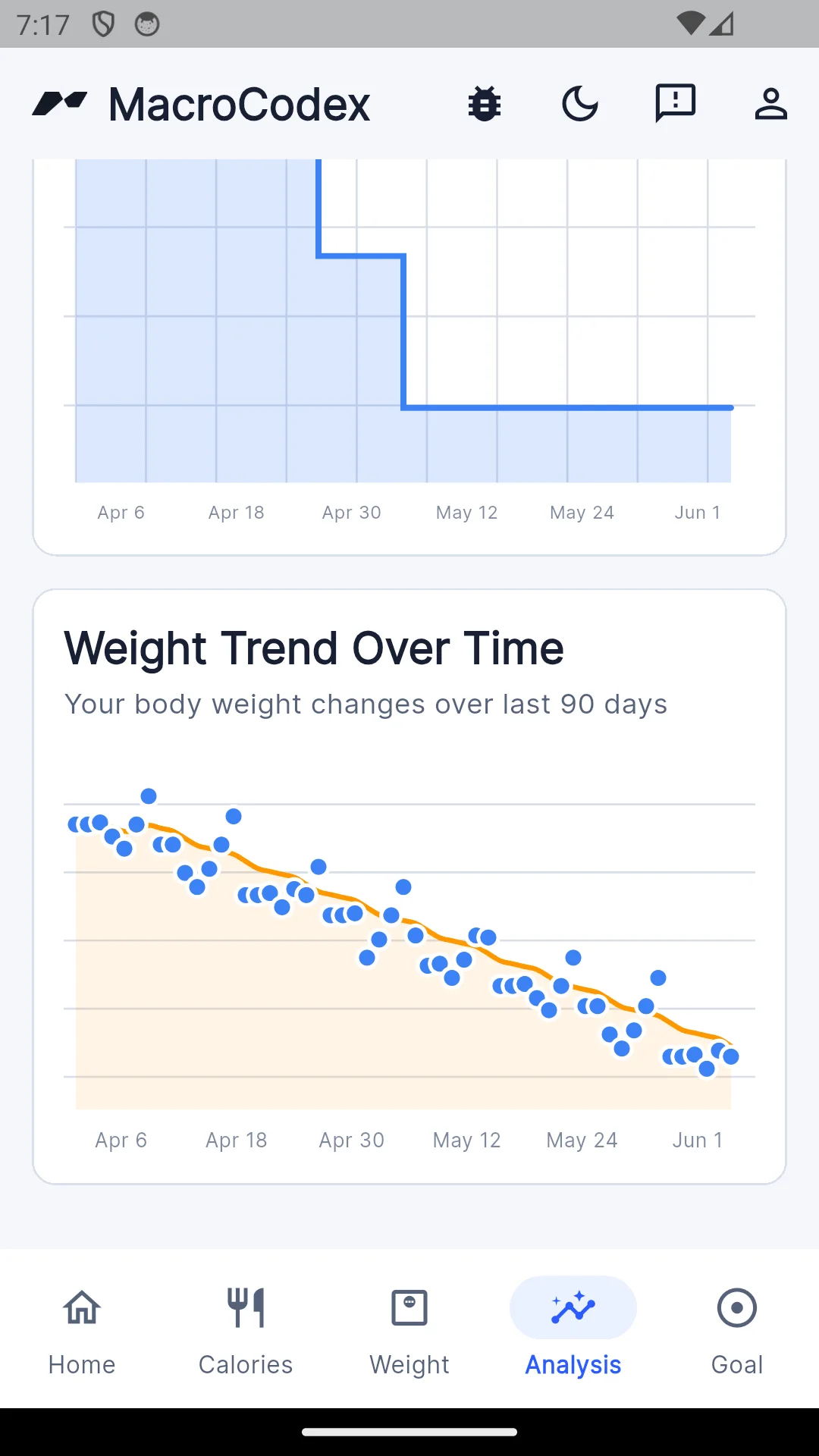
Track Your Weight Trend, Not Your Daily Weight
Stepping on the scale every morning can be incredibly frustrating, mostly because our weight naturally bounces around. It's completely normal for your weight to shift over the course of a single day or week simply because of water retention, recent meals, and glycogen levels. Instead of stressing over those daily ups and downs, it's much more helpful to look at the overall trend over several weeks.
Why bodyfat% matters?
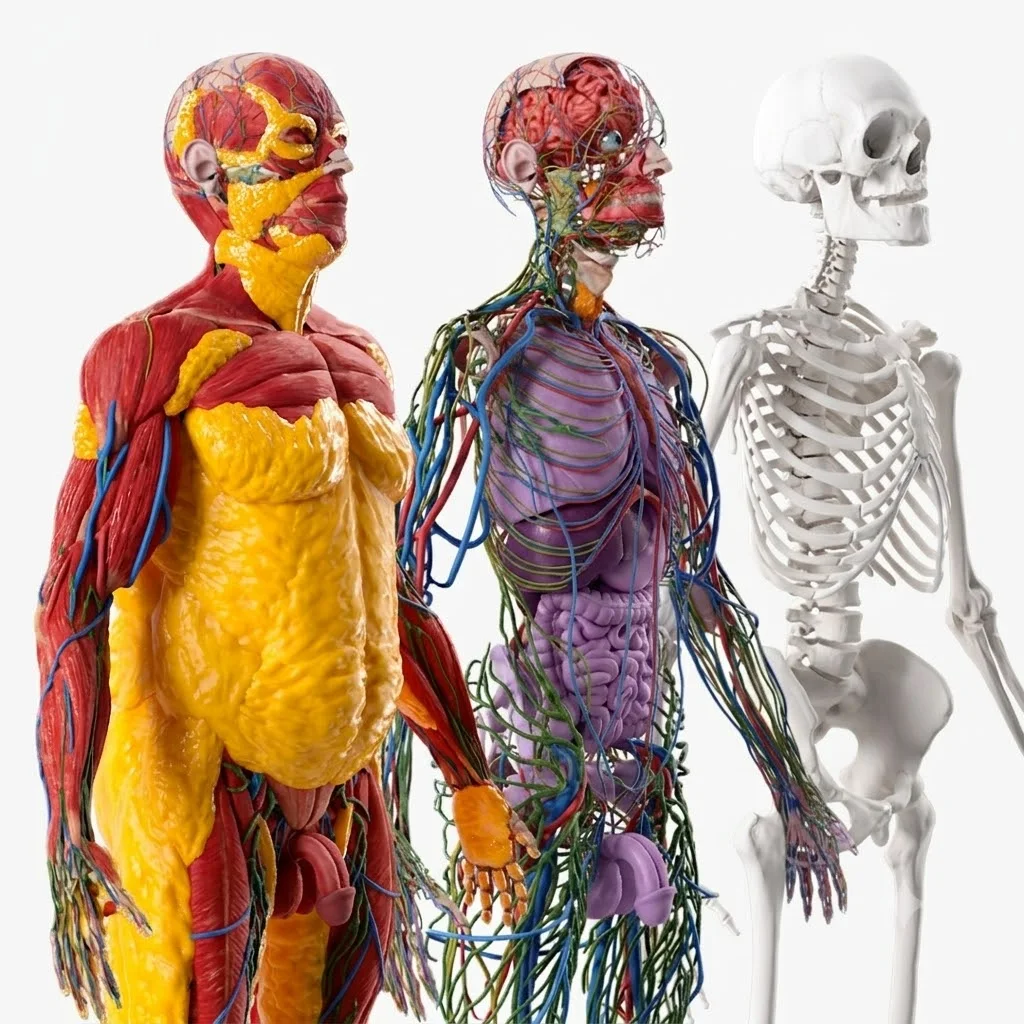
Staring at the scale and obsessing over a single number is an easy trap to fall into, but that weight doesn't tell the whole story. Your body is far more than just a single lump of mass. Instead, it is split into two main parts: fat mass and lean mass. Fat mass is pretty self-explanatory, while lean mass is everything else, including your muscles, bones, organs, and water weight.
Tracking both your total weight and your body fat percentage reveals the actual ratio between these two components. This gives you a much clearer understanding of your true baseline and lets you accurately measure the quality of your progress over time.
Take a look at the image below. Both men stand at 180 cm (5'11") and weigh 80 kg (176 lbs). Despite sharing identical stats, one looks soft and out of shape, while the other looks lean and athletic. The deciding factor here is their body fat percentage.
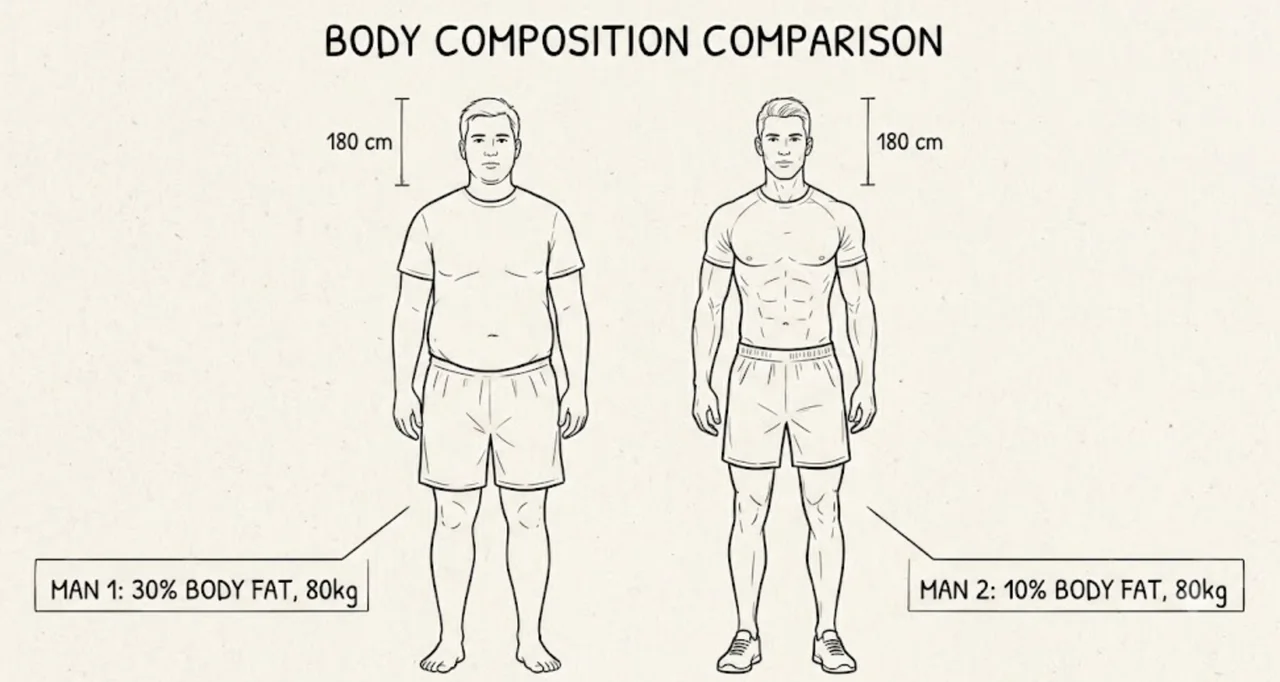
Man 1 carries a higher body fat percentage of 30%. This means 30% of his total weight comes from fat, leaving the remaining 70% as lean mass.
Man 2 sits at a much lower body fat percentage of 10%. Only 10% of his weight is fat, while a massive 90% is lean mass.
These numbers make their physical differences immediately obvious. For Man 1 to build a leaner, more athletic build, he needs to focus on dropping fat while packing on lean mass.
True body transformation isn't just about moving the scale up or down. It's about shifting your overall body composition to find the right balance between fat and lean tissue.
Look at it this way. If someone called you and only shared their height and weight, you would have almost no idea what they actually looked like in person. But if they added their body fat percentage to the mix, you'd immediately have a highly accurate mental picture of their build.
The Problem with Most Body Fat Measurements
Since your body fat percentage is such a critical metric, you need an accurate way to measure it. The truth is, most methods are wildly inconsistent.
Smart Scales and Smartwatches
Just a quick heads-up: don't rely too heavily on consumer-grade smartwatches and scales. They're incredibly convenient, sure, but their body fat estimates are notoriously off. Basing your fitness decisions on these numbers can easily steer you in the wrong direction. There's a reason clinical equipment costs thousands of dollars. You simply can't squeeze that level of technology into a gadget that costs less than a grand.
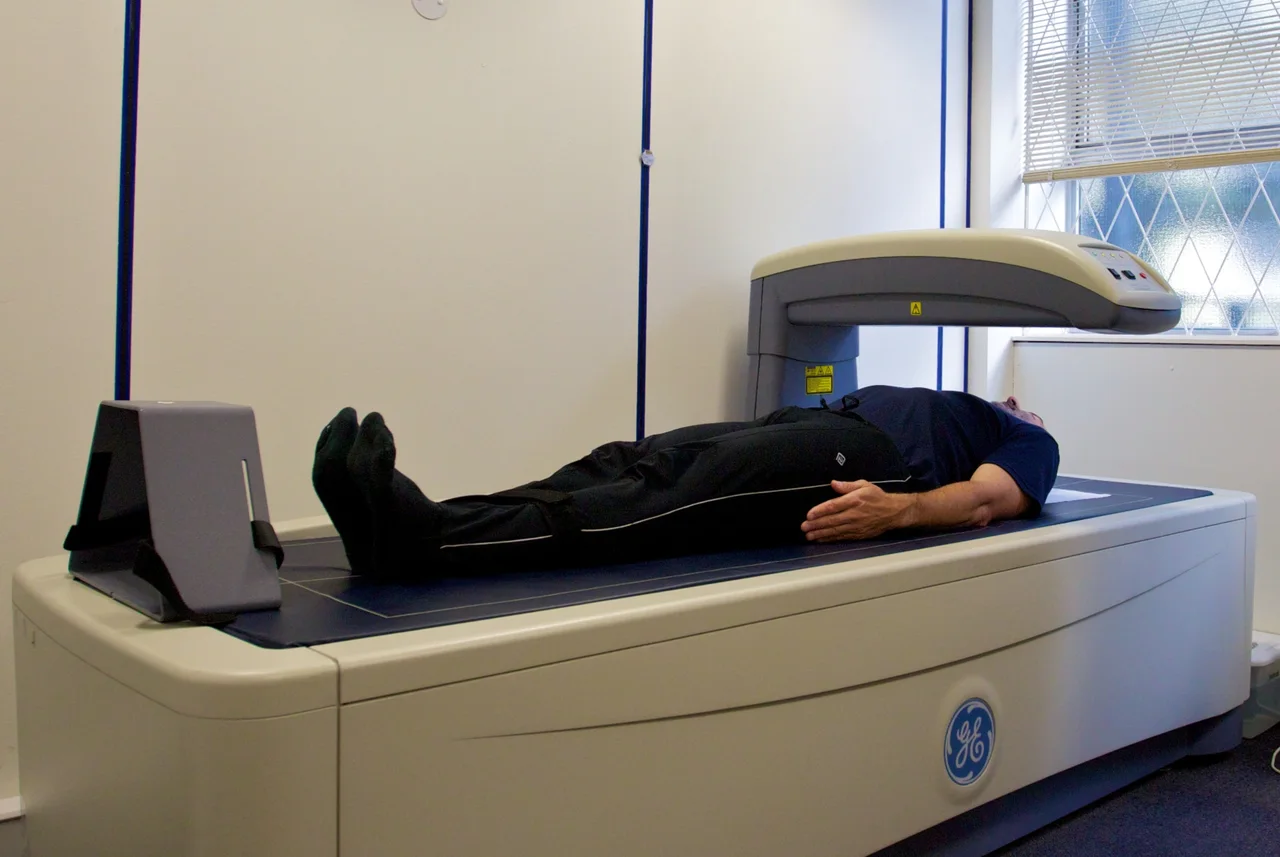
Finding a proper scan is actually pretty straightforward. If you search for "DEXA scan near me", you'll likely find a local clinic or gym offering them for a reasonable fee. I'd recommend calling ahead to confirm the pricing first, since different facilities can charge wildly different rates for the exact same scan. Make sure to specifically ask for a "Body Composition DEXA scan." If you plan on tracking your progress over time, try negotiating a package deal for a few scans throughout the year. Many providers are happy to offer a discount if you prepay or commit to a bundle.
InBody
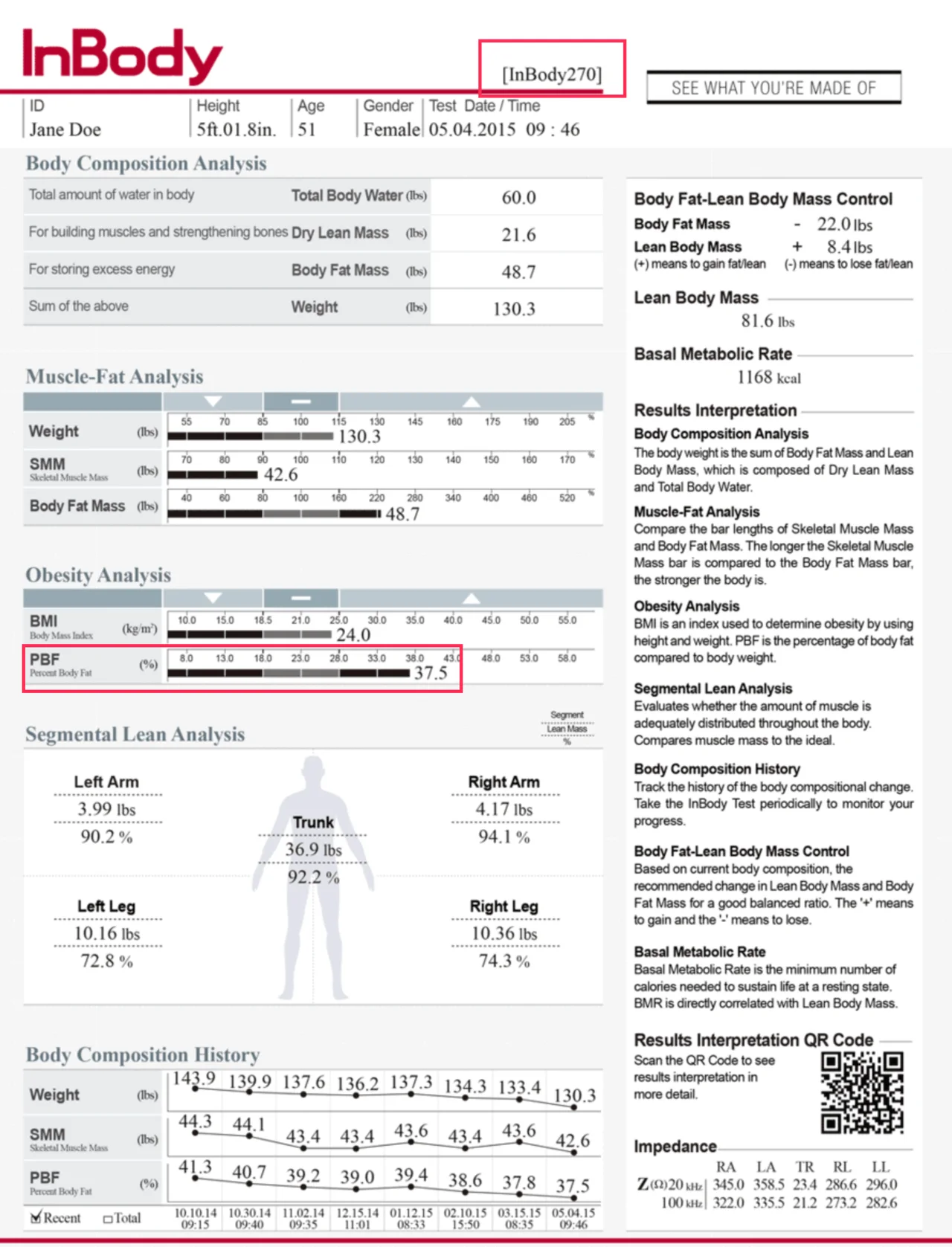
You've probably seen InBody machines at your local gym, as they've become incredibly common worldwide. The models you'll run into most often are the InBody 260 and 270. While these are perfectly fine for keeping an eye on overall trends (like whether your muscle or fat mass is generally going up or down), they aren't highly accurate. In fact, they aren't even close to the precision you get from a DEXA scan.
| Feature | InBody 260/270 | InBody 770 | InBody 970/970S |
|---|---|---|---|
| Frequencies | 2 (20, 100 kHz) | 6 (1, 5, 50, 250, 500, 1000 kHz) | 6 or 8 depending on model/region (up to 3 MHz) |
| Segmental analysis | ✓ | ✓ | ✓ |
| Intracellular vs extracellular water | Basic | Advanced | Most advanced |
| Phase angle | Limited | ✓ | Multi-frequency segmental phase angle |
| BIVA/Cole-Cole analysis | No | Limited | ✓ |
| Target users | Gyms | Sports medicine, clinics | Research, hospitals |
As you go up the product line, the accuracy gets better:
InBody 970/970S > InBody 770 > InBody 260/270
Yet, even the top-of-the-line InBody 970/970S falls short of a DEXA scan when it comes to pinpointing body composition. The high-end models do a much better job of minimizing errors and delivering deeper metrics, but as the table shows, they still can't match DEXA's gold standard accuracy. Since these professional machines cost thousands of dollars and still have limits, a cheap smart scale doesn't stand a chance. Save your money instead of wasting it on those home gadgets.
Accuracy of methods
For body fat % measurement, in terms of accuracy:
| Tier | Category | Methods | Notes |
|---|---|---|---|
| Tier 1 | Criterion & Reference Methods | MRI | Direct adipose tissue quantification, no assumptions |
| Tier 1 | Criterion & Reference Methods | 4-Compartment Models (4C) | Criterion gold standard for living subjects |
| Tier 1 | Criterion & Reference Methods | DEXA | 3-compartment model, high precision, clinical reference |
| Tier 2 | High-Quality Densitometry | Hydrostatic Weighing (UWW) | Classic 2-compartment density method |
| Tier 2 | High-Quality Densitometry | Bod Pod | Air displacement plethysmography, comparable to UWW |
| Tier 3 | Validated Field & Clinical Methods | Ultrasound (B-mode / A-mode) | Measures fat layer thickness; less operator-dependent than calipers |
| Tier 3 | Validated Field & Clinical Methods | Expert Skinfold Calipers | Highly dependent on technician skill; uses validated equations |
| Tier 3 | Validated Field & Clinical Methods | High-End Multi-Frequency Segmental BIA (e.g., InBody 970/770) | ≥6 frequencies, up to 1 MHz, 8-point electrodes |
| Tier 4 | Good Multi-Frequency BIA (Research/Clinical Grade) | Other MF-BIA devices (e.g., Seca mBCA, Tanita MC-780) | Reasonable accuracy; typical error ~3.5–5% vs DEXA (varies by population) |
| Tier 5 | Estimation & Basic Devices | US Navy Formula | Circumference-based; population averages; error typically >4–5% |
| Tier 5 | Estimation & Basic Devices | Single-Frequency BIA | Consumer devices; highly hydration-dependent; lowest electronic accuracy |
DEXA Limitations
A DEXA scan does not directly measure skeletal muscle tissue. Instead, it measures bone mineral content, fat mass, and lean soft tissue mass. Lean soft tissue is often used as a proxy for muscle because skeletal muscle is its largest component, but it also includes water, glycogen, organs, connective tissue, and other non-fat tissues.
Because of this, fat-free mass (FFM) and FFMI are sensitive to short-term changes in hydration and glycogen. If an individual drastically reduces carbohydrate intake for several days, glycogen depletion and associated water loss can reduce measured FFM by several kilograms without any meaningful loss of contractile muscle tissue. Changes in sodium intake, carbohydrate intake, and creatine supplementation can similarly alter fluid balance and influence measured FFMI.
DEXA also has limitations in separating specific tissue compartments. It cannot reliably distinguish small lipid deposits within muscle. Intramyocellular lipid (IMCL), which consists of fat droplets stored inside muscle cells, is generally not separately identified by DEXA and is included within the lean soft tissue compartment. Intermuscular adipose tissue (IMAT), located between muscle groups, may also be incompletely distinguished from surrounding lean tissue depending on its size and distribution. Therefore, changes in DEXA-derived lean mass do not always represent changes in actual skeletal muscle protein.
TL;DR: Do not interpret "loss of lean mass" from a DEXA scan as automatically equal to loss of muscle tissue. DEXA measures lean soft tissue, not skeletal muscle directly, and changes can reflect shifts in water, glycogen, and other non-muscle components.
Visual guide
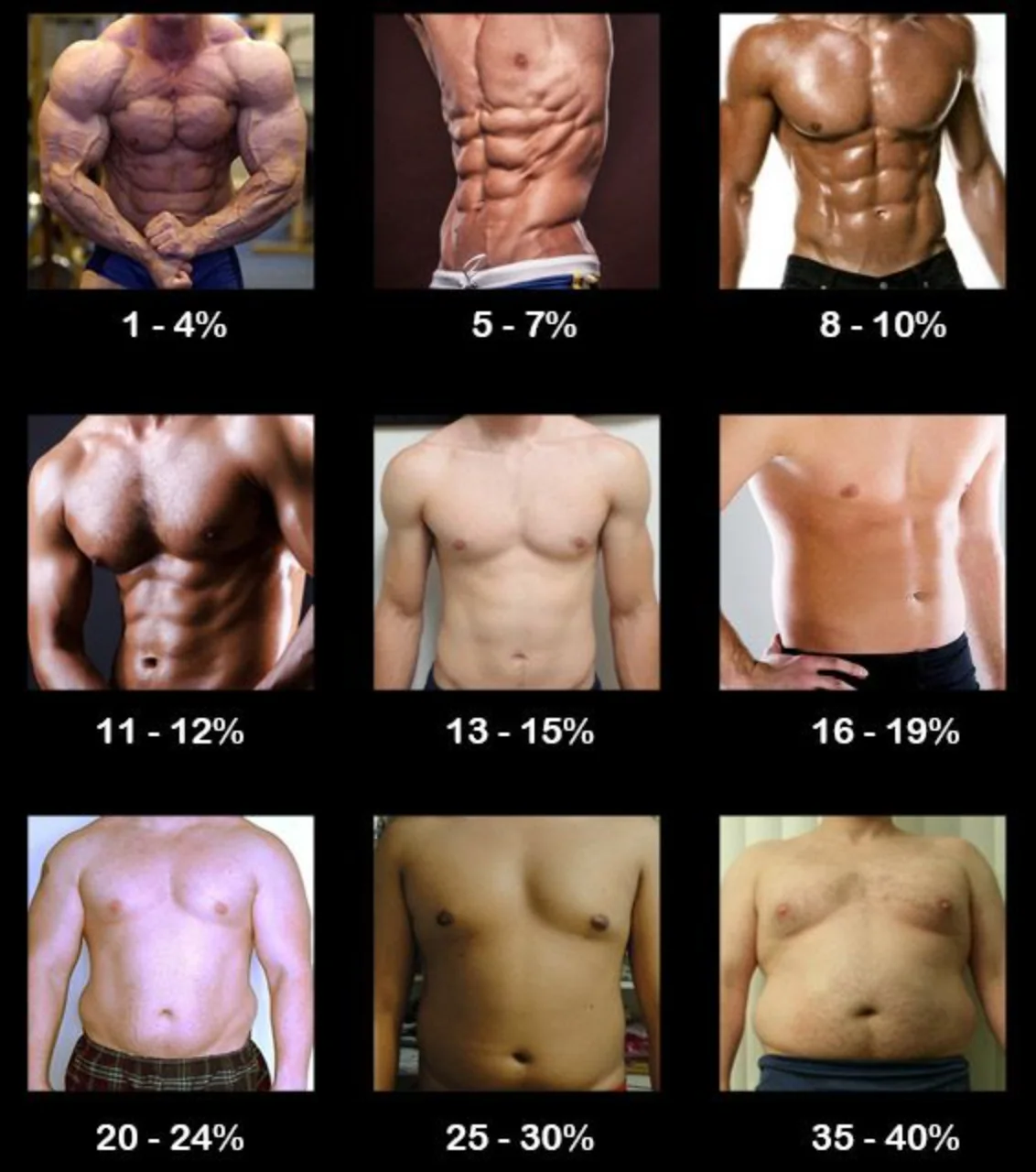
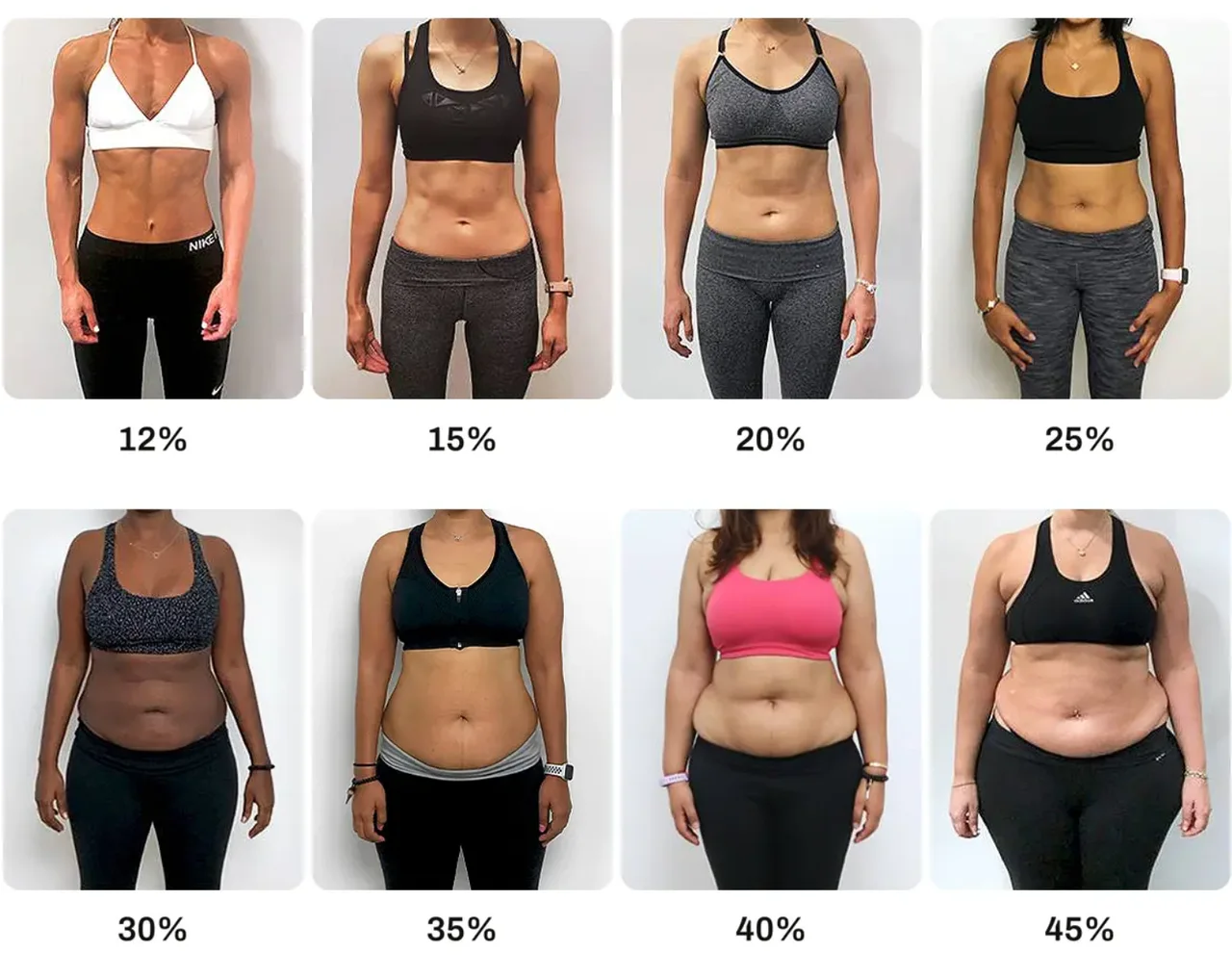
Visual estimates, even by professionals, are significantly less accurate than DEXA scans, no matter what some forum discussions might claim. That said, for contest or photoshoot preparation, visual assessments for conditioning are a practical method. In such cases, it's beneficial to seek guidance from a coach's trained eye for a more reliable evaluation.
Why are visual body fat comparisons so often misleading?
A few major factors explain why looking at photos rarely tells the whole story.
1. The same body fat percentage can look completely different, even at the exact same height
Body fat percentage only tells you the ratio of fat to your overall body weight. It does not reveal how much muscle you carry unless you factor in your scale weight to calculate your actual lean and fat mass.
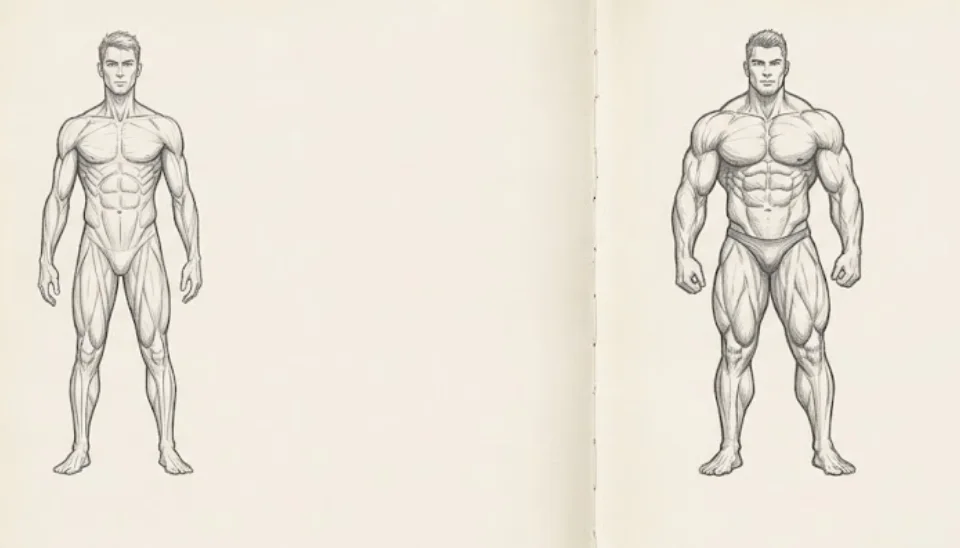
Take two men who are both 180 cm (5 ft 11 in) tall and sit at 10% body fat:
- One weighs 70 kg (154 lb)
- The other weighs 90 kg (198 lb)
Even with identical body fat percentages, their physiques will not look similar at all.
The 90 kg individual has significantly more lean mass, along with more absolute fat mass.
- The 90 kg person has 9 kg of fat and 81 kg of lean mass.
- The 70 kg person has 7 kg of fat and 63 kg of lean mass.
This means the heavier man has 2 kg more fat, but a massive 18 kg more lean mass. That extra muscle creates a larger, rounder, and much fuller shape. Because of this, the heavier man will usually look leaner and more defined, despite both individuals sitting at exactly 10% body fat.
With 18 kg of extra muscle, his biceps, quads, and lats have a much larger circumference. This gives him a naturally wider and more developed silhouette.
2. The "peaks and valleys" effect of body topography
Most people can guess body fat fairly well if the subject has decent muscle mass. However, those guesses get highly inaccurate when looking at someone with average or below-average muscle.
It sounds counterintuitive, but visual leanness depends heavily on your body's physical contours, not just how thick your fat layer is. The 90 kg lifter has prominent muscle peaks. When a bicep flexes and peaks, it stretches the skin and subcutaneous fat thin over the top. At the same time, the valleys between muscles (such as the gap separating the bicep and tricep) run deeper because the muscles on either side bulge outward. This casting of deep shadows and sharp transitions creates a highly defined look.
The 70 kg man has smaller muscle bellies. While he carries 2 kg less total fat, that fat is spread over a smaller frame. The skin does not stretch as tightly over his muscles, which leaves him with softer transitions and less defined separation.
This dynamic only holds true if both people are roughly the same height. It explains why a simple body fat percentage can never fully describe how someone actually looks.
Fitness influencers frequently exploit this topographic effect to look much larger on screen than they are in person.
You might wonder how someone of your exact height and weight looks so much bigger. The secret is usually a lower body fat percentage. A leaner build creates deeper shadows and sharper muscle separation, making muscles pop on camera.
If you saw that same influencer standing next to an average person, you would instantly see their true size. Often, they are not actually massive; they are just incredibly lean, and the lens exaggerates their shape.
This also explains why heavy strongmen or powerlifters can look surprisingly lean, sometimes even showing visible abs, at higher body fat percentages. Their massive amount of lean muscle mass carries the weight differently.
This does not mean tracking body fat is useless. If you know someone's height, weight, and body fat percentage, you can get a very solid mental picture of their build.
3. Fat distribution is highly individual
When we try to guess body fat, we usually focus on obvious areas like the shoulders, arms, chest, waist, and abs. We look at the core and the limbs because those are the areas on display.
But fat does not accumulate evenly. One person might store fat primarily in their thighs, hips, glutes, or lower back, while another stores it mostly around their stomach.
A DEXA scan measures fat distribution across your entire body to find your true overall percentage. Visual guesses, on the other hand, rely on just a few visible areas. Since everyone stores fat differently, two people with identical body fat levels can look entirely different.
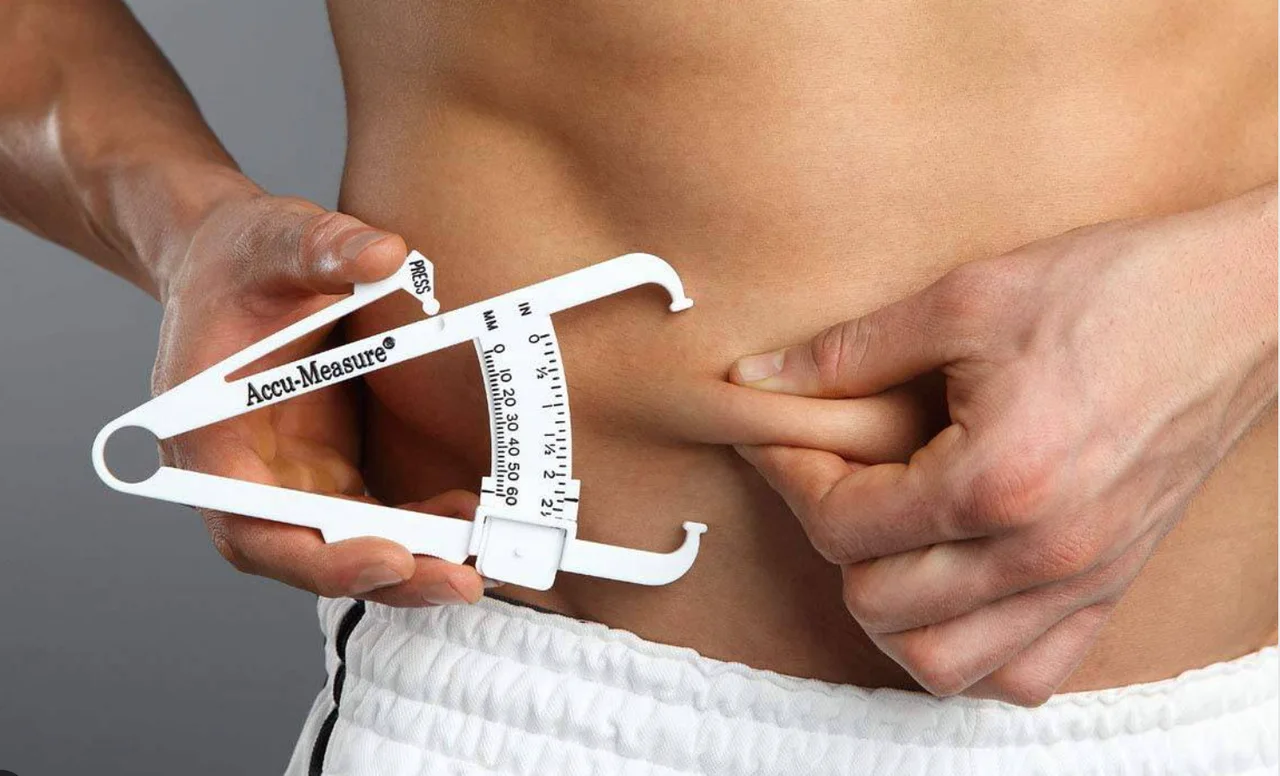
Coaches frequently rely on calipers or DEXA scans to track progress, but when bodybuilders step on stage, they are judged strictly on visual conditioning. Precise body fat percentages simply do not enter the equation. Many trainers love to say the eyes are the ultimate judge, but human vision still cannot match the precision of an MRI or a DEXA scan.
Long before these high-tech tools became common, lifters used a much simpler rule of thumb: bulk until your abs fade, then cut until they show up again. You do not need cutting-edge technology to get results.
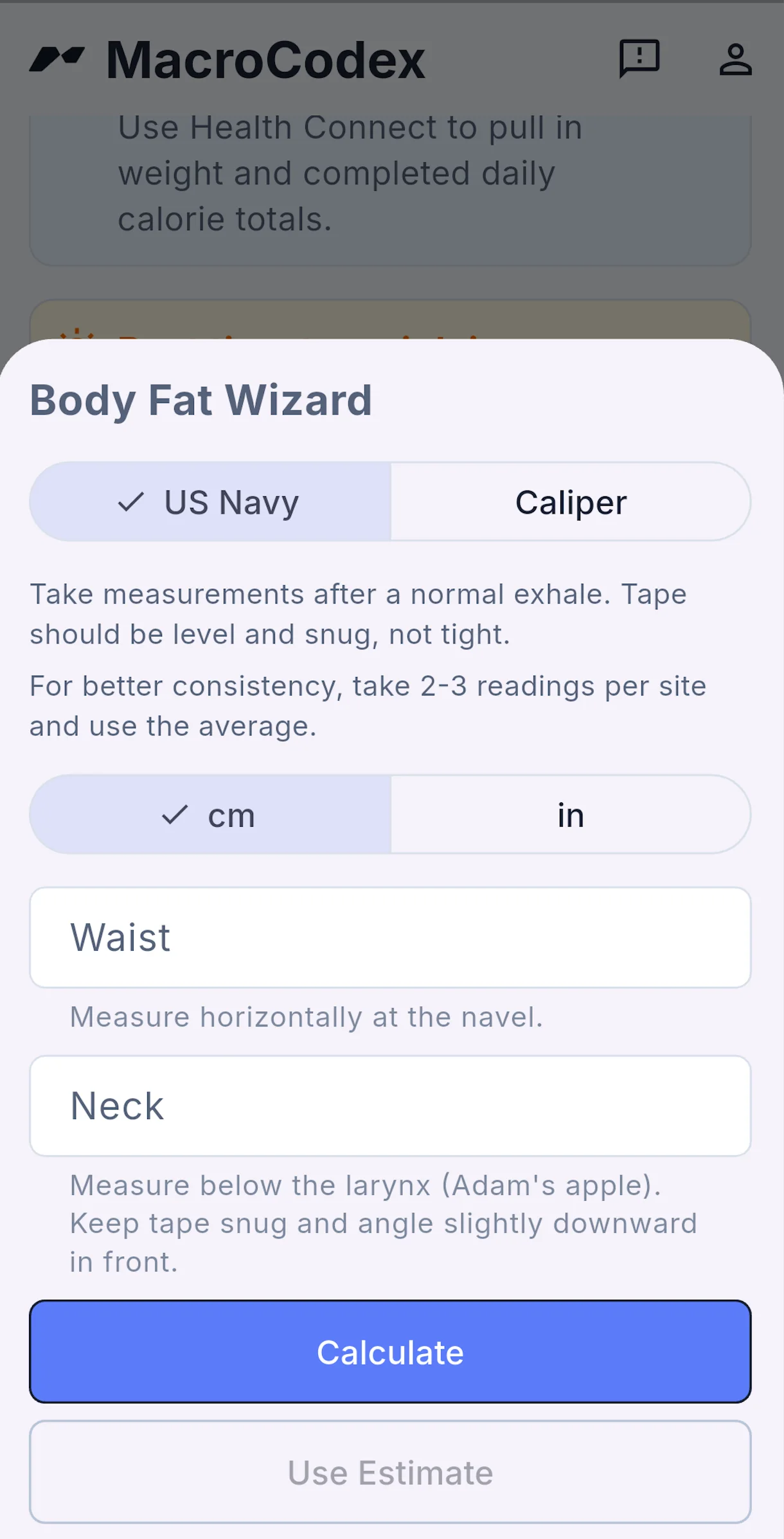
If you cannot get a DEXA scan, the free MacroCodex app has a built-in US Navy body fat calculator. The classic formula it uses is more than enough to establish a solid baseline.
| Category | Male Body Fat % | Female Body Fat % |
|---|---|---|
| Essential Fat | 2–5% | 10–13% |
| Athletic | 6–13% | 14–20% |
| Fitness | 14–17% | 21–24% |
| Average | 18–24% | 25–31% |
| Obese | 25%+ | 32%+ |
Table source: American Council on Exercise (ACE). ACE Personal Trainer Manual (multiple editions), based on body fat classification ranges derived from: Heyward, V. H. Advanced Fitness Assessment and Exercise Prescription. Human Kinetics.
To translate male body fat targets to female equivalents, you can generally just add 9 to 10 percentage points.
Here is how that looks in practice:
- If the recommendation for a man is to cut to 10-12%, the target for a woman is about 19-21%.
- If a man is advised to bulk up to 17%, the equivalent target for a woman is roughly 26-27%.
This quick adjustment makes it easy to convert standard fitness guidelines between genders.
What's the Goal?
Your objective will dictate your entire approach, so it’s crucial to know exactly what you’re aiming for.
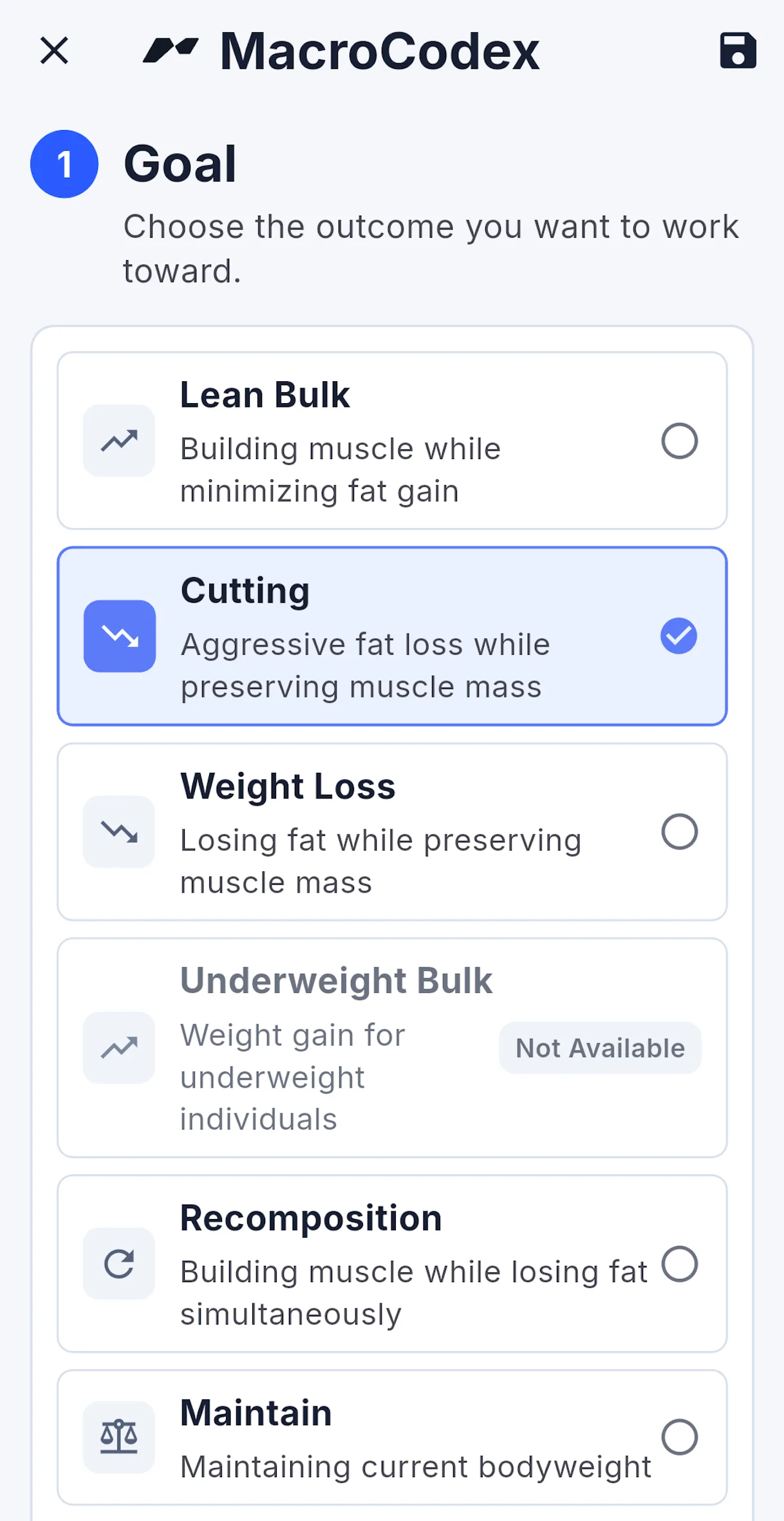
- Cutting is all about lowering your body fat while performing minimum required lifting to maintain existing muscle mass
- Body Recomposition is the process of building muscle and losing fat at the same time.
- A Lean Bulk focuses on maximizing muscle gain while accepting a minimal, controlled increase in body fat.
- An Underweight Bulk is a more aggressive approach for those who need to gain weight to reach a healthy range.
Manage expecations
A common trap for beginners is trying to chase multiple goals at the same time. Pros do not do this. They focus on one specific goal per phase.
When you are in a cutting phase to lose weight, building muscle shouldn't be your main expectation. While you can technically build muscle in a calorie deficit, the process is incredibly slow and tedious. It is like swimming against a strong current: you might make forward progress, but it takes an exhausting amount of effort.
In fact, once your daily calorie deficit goes past 400 calories, your rate of muscle growth drops off a cliff. Why waste energy stressing over muscle gains during a cut?
Real muscle growth is maximized when you are eating in a slight calorie surplus. If you want to dive deeper into the science behind this, check out this guide on why a surplus is prescribed when muscle can grow at maintenance.
A smarter strategy while cutting is to do an hour to an hour and a half of Zone 2 cardio every day. To keep your joints healthy and avoid overuse injuries, mix things up by rotating through brisk walking, incline treadmill walks, cycling, or swimming. To keep the muscle you already have, you only need to lift weights once or twice a week.
Once you successfully lean down, transition into a lean bulk. At this point, bump your lifting sessions up to three or four times a week and scale your cardio back to about 30 minutes. The calorie surplus from your lean bulk will act like fuel, allowing you to build muscle much faster.
Having those extra calories simply makes the entire muscle-building process much easier.
While burning fat is relatively straightforward when you put in the hours of low-intensity Zone 2 cardio, trying to pack on size while dieting is a tough battle.
Do not fight against basic calorie math or you will quickly burn yourself out. Use a surplus to build mass and a deficit to lose fat. It is that simple.
Why not just eat at maintenance and skip bulking or cutting altogether?
If you want a more detailed breakdown of this debate, take a look at this article explaining why a surplus is prescribed when muscle can grow at maintenance, and why we lean bulk or cut.
When you gain weight, it is always going to be a mix of muscle and fat. The goal of a lean bulk is to tilt those scales, maximizing muscle growth while keeping fat gain to an absolute minimum.
Eventually, you will need to run a cut to strip away whatever unwanted fat accumulated during your bulk. But do not worry, if you execute your lean bulk properly, the rate of fat gain is incredibly slow.
Fueling the Machine: Calories and Macros
Your body's transformation is fueled by what you eat. Calories are simply energy, eat more than you burn, and you’ll gain weight; eat less, and you’ll lose it. But the type of calories you eat determines the quality of that change. These are your macros:
- Protein is the brick and mortar for building muscle. Without enough of it, your body simply can't repair and grow, no matter how hard you train.
- Fats are non-negotiable. Healthy fats are essential for regulating the hormones that drive muscle growth and recovery, not to mention keeping your joints healthy. Skimping on them will sabotage your progress.
- Carbohydrates are your body's go-to energy source, especially for powering you through high-intensity workouts.
Workout does not build muscle.
Workout triggers a process which builds muscle using supplies from diet.
A person working out consistently triggers this BUILD process, but if the diet is not on point, this process halts prematurely and doesn't build anything.
The supplies are fats, carbs, and proteins, which all add up to total calories.
These are needed in the right proportion for growth; too low fat = hormones not working optimally, not enough joint lubrication, too low carbs = not enough performance, glycogen stores to fuel the workout, too low proteins = not enough building blocks for muscle, too low calories (coupled with low bodyfat% which is body's energy reserve) = not enough energy to sustain muscle protein synthesis.
The "Dieting Tips" Fallacy
"Just eat smaller portions" is advice we hear all the time. But without tracking your calories, you are basically guessing which parts of your meals actually need to shrink.
For instance, your diet might benefit most from cutting back on fats, but you decide to slash carbs or protein instead. You could end up hurting your gym performance, slowing down your recovery, or stalling muscle growth, all while making barely any progress.
Tracking your food solves this issue by showing you exactly where your calories come from. It takes the guesswork out of the process, allowing you to make targeted adjustments instead of cutting out the wrong things.
Many people assume that counting calories is incredibly restrictive. In reality, it usually gives you more freedom. Once you know your daily target, you can easily fit in the foods you love while still moving toward your goal.
The same goes for the classic "just cut carbs" advice. Every gram of stored carbohydrates (glycogen) holds onto several grams of water; the clue is right there in the word "hydrate." When you drop your carbs, your body quickly sheds that stored water. It is why beginners see the scale plunge in the first few days and assume they have lost a ton of fat, when it is really just water weight.
Without accurate tracking, it is easy to mistake water loss for fat loss, or to make dietary changes that do not actually address the root of the problem.
Measure, adjust, measure, and repeat.
Automation
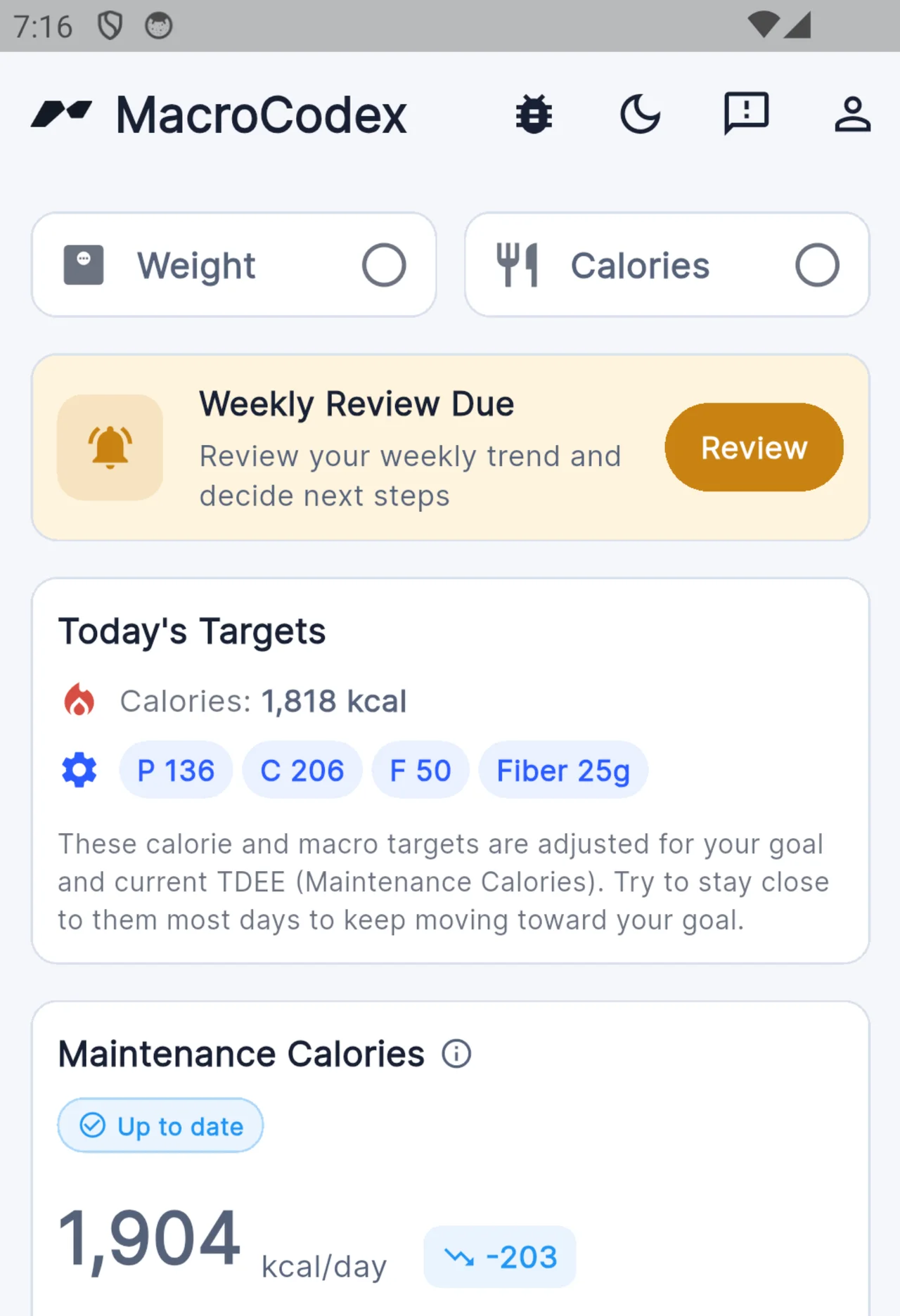
While this guide walks you through how to calculate and track your metrics manually, doing it by hand isn't for everyone. If you prefer to automate the heavy lifting, you can use MacroCodex. It is a completely free app designed specifically around the exact methods we cover here, and it takes care of almost all the tedious math and daily tracking for you.
It is still worth reading through this guide to understand the logic behind the numbers. However, the app is a great shortcut if you are short on time, prefer a hands-on learning approach, or simply want a faster, more consistent daily routine.
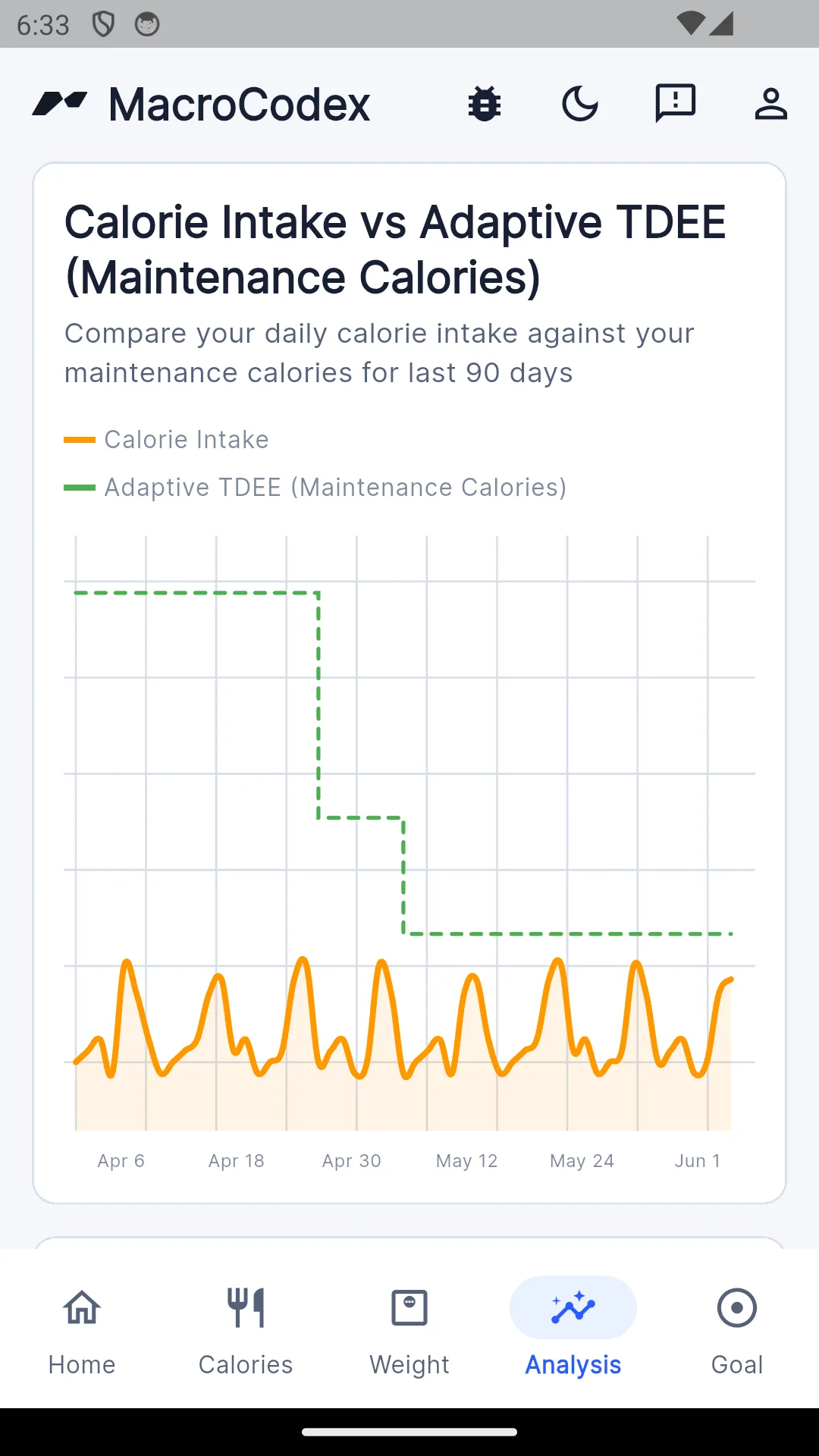
The green dashed line represents your Total Daily Energy Expenditure (TDEE), which is your maintenance level. To drop weight, you will want to eat below this line to create a deficit. To pack on size, eat above it for a surplus. If your goal is body recomposition, aiming right around that line is your best bet.
More than 16,000 people are already using the tool. Get free MacroCodex app here
Setting it up is simple. Just log your daily calories and weekly weight, then choose your specific goal, whether that is weight loss, cutting, body recomposition, or a lean bulk. As your metabolism shifts and your actual TDEE changes, the app automatically adjusts your daily calorie and macronutrient targets so you do not have to recalculate everything yourself.
What is Lean Bulking?
Lean bulking is gaining muscle with minimal fat gain by eating a small to moderate calorie surplus and following a consistent training plan. The goal is steady muscle growth without excessive fat accumulation.
Who Should Lean Bulk?
Before starting a lean bulk (gaining muscle with minimal fat gain), it's important to make sure it's the right phase for you. Bulking at the wrong time can lead to unnecessary fat gain and slow progress.
Use this tool to assess whether you should lean bulk: Should You Bulk or Cut? Fitness Strategy Planner
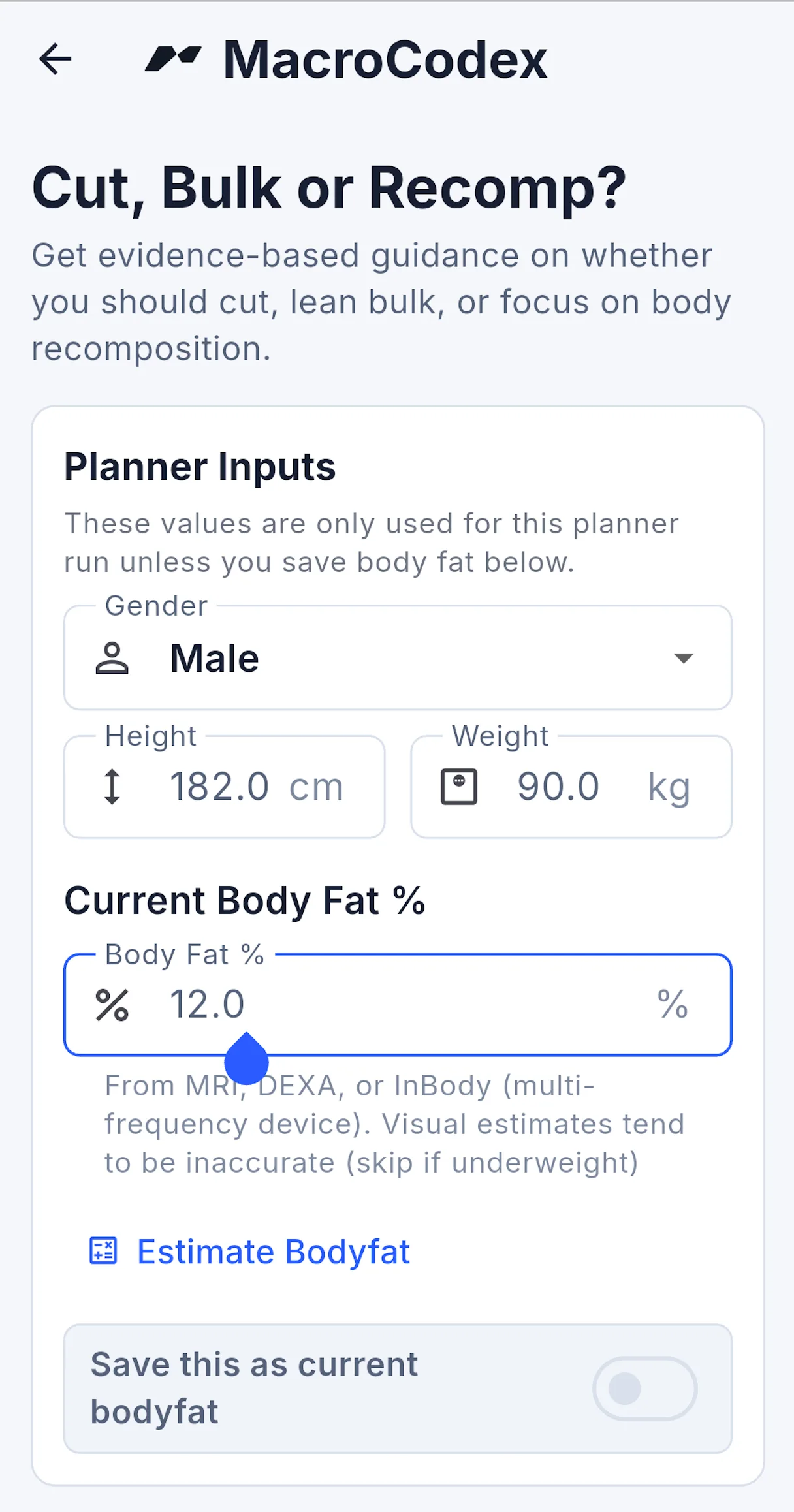
Important: Do not start a lean bulk until you've used the tool above and confirmed it's the right step for your current body composition and goals.
2. Calorie Targets
Calculating TDEE
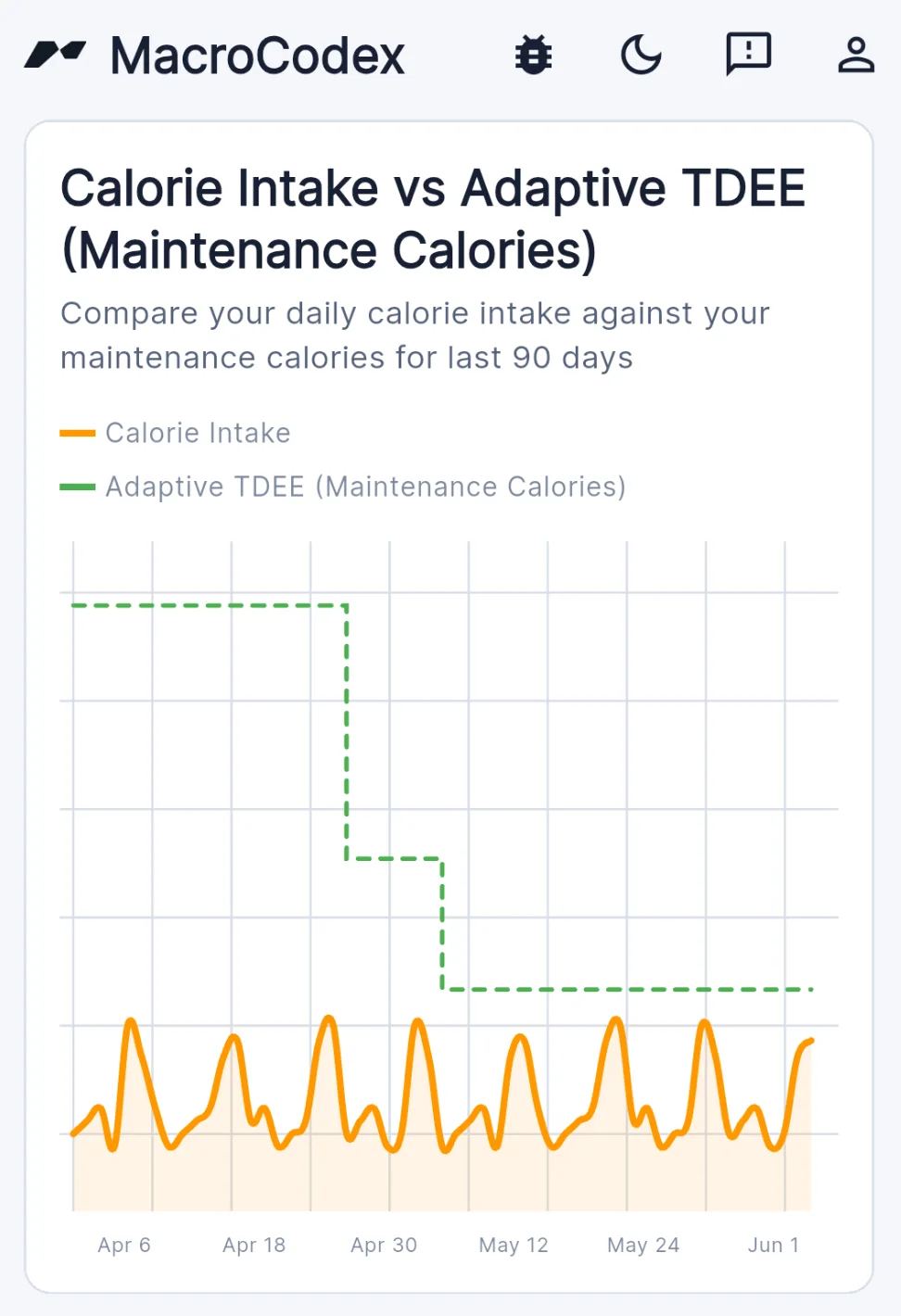
For a deeper dive, see this accurate Maintenance Calorie (TDEE) Tracking Guide.
Select a Surplus
Executing a lean bulk is difficult manually but why? The surplus needed is small, it becomes hard to track this. As you start gaining muscle, your Muscle Protein Synthesis makes your maintenance calories go up, MacroCodex app (completely free), can apply the right surplus for you giving you desired rate of weight gain for your experience level.
More surplus ≠ more muscle gain. It usually just means more fat gain.
Eating beyond a modest surplus doesn't accelerate hypertrophy, it accelerates fat gain.
Helms et al. (2023, Sports Med. Open, 9(1), 102) studied trained lifters over 8 weeks: groups assigned to maintenance (MAIN), 5% surplus (MOD), and 15% surplus (HIGH) showed no significant difference in strength or muscle growth. However, fat gain increased with the larger surpluses.
Recommended Lean Bulk Targets
The key is to focus on your rate of weight gain, not a specific calorie number or surplus percentage.
| Training level | Weekly weight gain rate | Monthly weight gain rate |
|---|---|---|
| Beginner | 0.25–0.5% of body weight/week | 1.0–2.0% of body weight/month |
| Intermediate | 0.25–0.4%/week | 1.0–1.7%/month |
| Advanced lifter | 0.1–0.25%/week | 0.4–1.0%/month |
These are total body weight gain targets, not pure muscle-gain targets. Scale weight includes muscle, glycogen, water, gut content, and some fat.
Usually, a calorie Surplus: +5-10% of TDEE (roughly 100-300 kcal/day) may get you there but if it doesn't adjust your calories up or down to reach the desired weekly weight gain rate.
Why this specific rate of weight gain is target? Read this guide for the detailed argument on this
Lean Bulk: Monthly Weight Gain vs Muscle Gain
In a lean bulk, the target is monthly body weight gain, not pure muscle gain. Scale weight includes muscle, glycogen, water, gut content, and some fat.
| Training level | Monthly weight gain target | Expected monthly muscle gain | Muscle as % of weight gain |
|---|---|---|---|
| Beginner | 1.0–2.0% BW/month | ~0.6–1.5% BW/month | ~50–75% |
| Intermediate | 1.0–1.7% BW/month | ~0.3–0.9% BW/month | ~30–60% |
| Advanced | 0.4–1.0% BW/month | ~0.1–0.3% BW/month | ~15–40% |
Example for a 70 kg / 154 lb lifter
| Training level | Monthly weight gain target | Expected monthly muscle gain |
|---|---|---|
| Beginner | 0.7–1.4 kg/month / 1.5–3.1 lb/month | ~0.4–1.0 kg/month / ~0.9–2.2 lb/month |
| Intermediate | 0.7–1.2 kg/month / 1.5–2.6 lb/month | ~0.2–0.6 kg/month / ~0.4–1.3 lb/month |
| Advanced | 0.3–0.7 kg/month / 0.7–1.5 lb/month | ~0.05–0.2 kg/month / ~0.1–0.4 lb/month |
The more advanced someone is, the slower their muscle-gain potential becomes. So if an advanced lifter gains 1.5–2.0 kg / 3–4 lb per month, most of that extra gain is likely to be fat, water, and glycogen rather than new muscle.
3. Macronutrient Recommendations
There’s no need to do all this math manually. MacroCodex app will automatically pick the right surplus for you.
If you're curious about the numbers behind that calculation, the details are below for you to read. Otherwise, feel free to skip ahead to the next step.
Protein
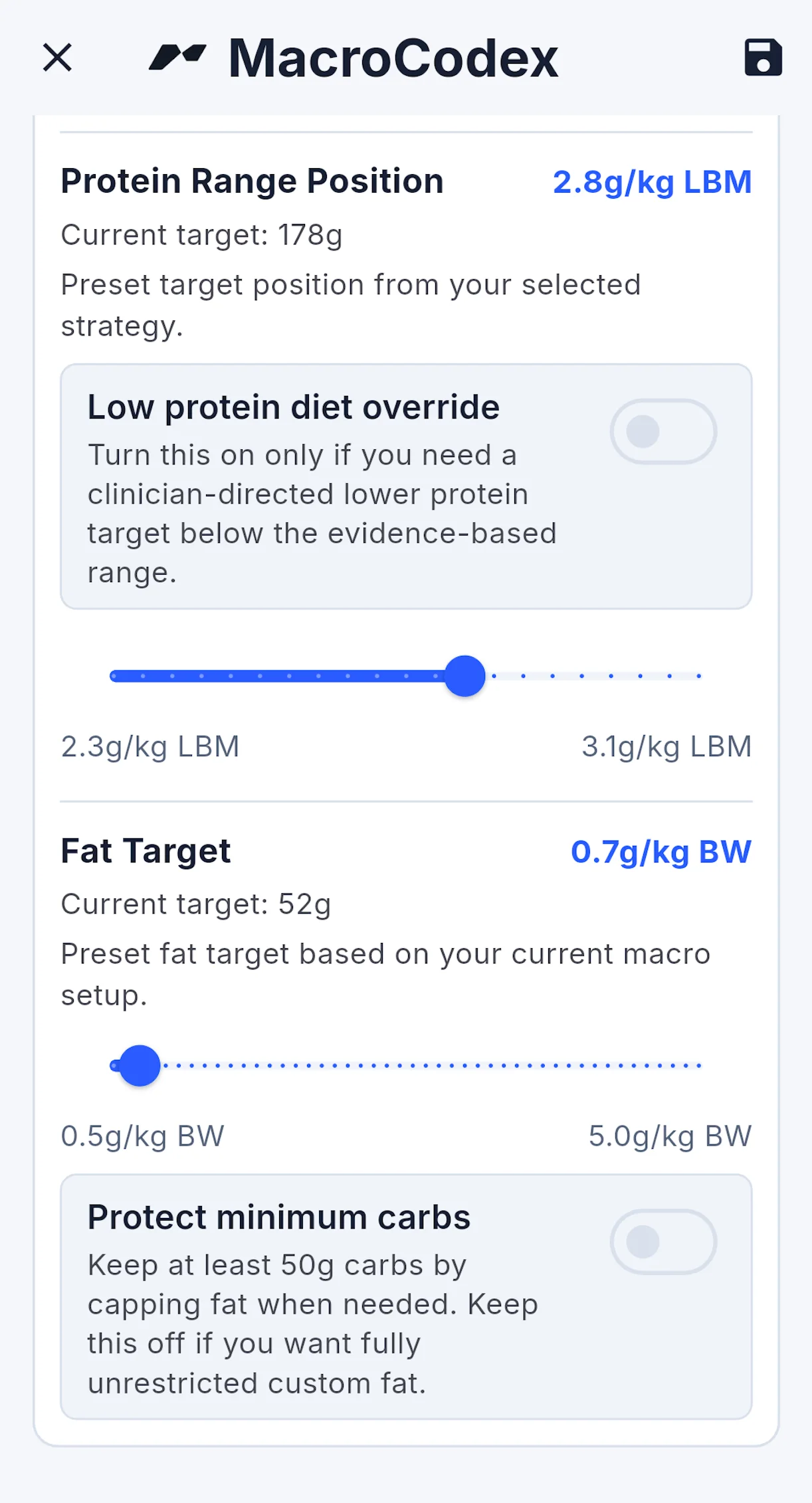
- 1.6-2.2 g per kg of total body weight
- Sufficient to maximize muscle protein synthesis and recovery
- Supported by Morton et al., 2018 (Br J Sports Med) & Schoenfeld & Aragon, 2018 (J Int Soc Sports Nutr) - Research widely supports a protein intake of 1.6-2.2 g/kg total body weight for optimizing muscle protein synthesis and hypertrophy in resistance trained individuals during a caloric surplus. For natural bodybuilders prioritizing lean mass gain, staying within this effective range ensures adequate amino acid availability without excessive intake that may displace other crucial macronutrients like carbohydrates
Fat
- 0.8-1.0 g per kg of total body weight
- Supports hormone function and overall health
- Supported by Helms et al., 2019 (Sports Basel) - Moderate fat intake (e.g., 0.5-1.5 g/kg total body weight or 20-35% of total calories) is recommended for bodybuilders in the off season to ensure essential fatty acids and support hormonal balance. For natural bodybuilders aiming for a lean bulk, a more specific practical target of 0.8-1.0 g/kg total body weight is commonly adopted, allowing sufficient caloric room for carbohydrate intake to fuel training and muscle growth.
Carbohydrates
4. Meal Plan Generation
Once you’ve got your calories and macros from the MacroCodex app (completely free), you can proceed with creating your meal plan.
See this guide on How to create a meal plan
5. Training Guidelines
Before you start any program
Hypertrophy just means muscle growth. You'll find plenty of programs but first you must learn what really matters in a program. Read Hypertrophy Blueprint, it contains all the knowledge you need to grow muscles. After reading this, you'll be able to make changes to any program.
You can find many free programs on websites like LiftVault, BoostCamp or FitnessWiki
Are you a beginner?
When you're new to fitness, the best thing you can do is follow a program built by an experienced coach. It's tempting to try and design your own routine, but you're unlikely to come up with something more effective. A solid plan is much more than just a list of exercises; it’s a careful balance of volume, intensity, and smart progression that takes expertise to get right.
If you’re working out from home or have limited equipment, this free beginner program list is an excellent place to start. It’s flexible and offers options based on the gear you have, including a full bodyweight program if you have no equipment at all.
So, what kind of schedule works best for beginners? A full-body routine three times a week or an upper/lower split four times a week are your best bets. As a novice, you get better results by training each muscle group at least twice a week, which helps maximize your body's muscle-building response. This is supported by the study "Effects of resistance training frequency on measures of muscle hypertrophy, a systematic review and meta analysis" by Schoenfeld et al., published in Sports Medicine, 2019. This approach also lets you practice the main lifts more often to build a solid foundation. If you can train four days a week, an upper/lower split is a fantastic choice because it hits every muscle twice while giving you plenty of time to recover and grow.
Ready to hit a fully-equipped gym? Here are a few great starting points:
Beginner Optimal Hypetrophy Program
| Experience Level | Recommended For | Days/Week | Split Style | Program |
|---|---|---|---|---|
| Beginner | Women | 3 Days | Full Body | Apsara FB |
| Beginner | Women | 4 Days | Upper/Lower | Apsara UL |
| Beginner | Men | 3 Days | Full Body | Symbiote 17 |
| Beginner | Men | 4 Days | Upper/Lower | Symbiote 21 |
If you're a late beginner or intermediate, proceed to Intermediate Programs
How often should you lift weights?
-
Recomp: 3–4x/week If you're new, detrained, a beginner, or returning after time off, you can usually recover well from 3–4 sessions per week while still building muscle and losing fat. You are handling easy weights here, so recovery isn't much of an issue.
-
Lean bulk: 3–4x/week You are in a calorie surplus and lean enough to prioritize muscle growth. Muscle gain is generally maximized in a surplus, so training performance and recovery are better.
-
Cut / weight loss: 1–2x/week In a calorie deficit, recovery and muscle growth potential drop. Once the deficit becomes large (around 400+ kcal/day), muscle gain slows significantly, so the goal shifts more toward maintaining muscle rather than maximizing growth.
-
Maintenance: 1–2x/week Maintaining muscle requires far less training volume than building it. A small amount of hard training is often enough to keep most of your muscle and strength.
-
PED users: 5–6x/week PEDs can dramatically increase recovery, work capacity, and protein synthesis, allowing much higher training frequency and volume. PED users can build muscles much faster than naturals even in deficit. To find your zone2, checkout this Zone2 Guide
How often should you do cardio?
Zone 2 is low-intensity cardio, so it can be sustained for much longer than high-intensity cardio like sprints, allowing for a higher cumulative calorie burn over time.
-
Recomp: ~50-60 minutes/day of Zone 2 cardio Helps increase TDEE and makes it easier to stay in a slight deficit while still recovering well enough to build or maintain muscle. Deficit = TDEE − calorie intake.
-
Lean bulk: 30–40 minutes/day of Zone 2 cardio Your main goal is muscle gain, not maximizing calorie burn. Moderate cardio helps with cardiovascular health, work capacity, recovery, and appetite without interfering too much with gaining weight.
-
Cut / weight loss: 1–2 hours/day of Zone 2 cardio More Zone 2 cardio increases calorie expenditure, helping create larger deficits for faster fat loss. Since lifting frequency is lower during this phase, more time and recovery capacity can be allocated toward cardio. Since you are performing relatively high amount of cardio, vary it between bicycling, fast walking, incline walking, swimming to avoid overuse injuries.
-
Maintenance: 30–40 minutes/day Enough to maintain cardiovascular fitness, general health, and keep TDEE above a sedentary level without creating excessive fatigue or energy demands.
Since Zone 2 cardio is low intensity and relatively easy to recover from, it usually does not interfere much with recovery from lifting weights.
You can separate the sessions across the day, such as doing cardio in the morning and lifting in the evening, or the other way around.
- Use cardio as a tool to increase energy expenditure, not to replace a calorie controlled diet
- High intensity cardio can interfere with strength training recovery
Note: Cardio increases your Total Daily Energy Expenditure (TDEE), thereby increasing your calorie deficit and accelerating fat loss.
It also helps break plateaus by maintaining high energy demands, forcing the body to tap into fat reserves to meet those needs.
6. Progress Tracking
The goal of a lean bulk is to gain muscle steadily while minimizing fat gain.
See: Progress Tracking
7. Troubleshooting
In you are using MacroCodex app, app does this automatically for you, but if you are lean bulking manually you'll have to make manual adjustments:
Not gaining muscle?
- Slightly increase calories by 5%
- Add calorie-dense foods or shakes
Excess fat gain?
- Reduce surplus closer to maintenance or +5%
- Track intake carefully
- Add light cardio if needed
Stopping Lean Bulking & Next Steps
Lean bulking is a strategy aimed at maximising muscle gain while minimising fat gain. Knowing when to stop is essential to avoid excess fat accumulation and to maintain insulin sensitivity, hormonal balance, and metabolic health.
Recommended Upper Limits for Body Fat
| Sex | Recommended Body Fat % to Stop Lean Bulk | Rationale |
|---|---|---|
| Men | ~17% | Above this range, insulin sensitivity declines, and further bulking leads to disproportionately more fat gain than muscle gain. |
| Women | ~27% | Due to higher essential fat requirements, women can lean bulk up to a slightly higher fat percentage safely. |
What to Do After Lean Bulking?
Once you approach or exceed the upper recommended body fat range (~17% for males, ~27% for females), it's time to reassess your next phase.
Use this tool: Fitness Strategy Planner, this is also available in MacroCodex app. It will help you decide whether to transition into a cut, maintain, or continue bulking based on your current body composition and goals.
9. References
- Garthe I, Raastad T, Refsnes PE, Koivisto A, Sundgot-Borgen J. Effect of Nutrition Intervention on Body Composition and Physical Performance in Elite Athletes: A Randomized Controlled Trial. Nutrients. 2021;13(1).
- Helms ER, Aragon AA, Fitschen PJ. Evidence-based recommendations for natural bodybuilding contest preparation: nutrition and supplementation. J Int Soc Sports Nutr. 2018;15(1).
- Morton RW, Murphy KT, McKellar SR, et al. A systematic review, meta-analysis, and meta-regression of protein supplementation on resistance training-induced gains in muscle mass and strength. Br J Sports Med. 2018;52(6).
- Trexler ET, Smith-Ryan AE, Norton LE. Metabolic adaptation to weight loss: implications for the athlete. J Int Soc Sports Nutr. 2014;11(1).