How to Make Your Own Diet Plan (Beginner Guide)
Step 1 — Find Your Calorie & Macro Targets
Before making a diet plan, you need to know:
- How many calories you should eat
- How much protein, carbs, fat, fiber you need
This depends on your goal:
- Weight loss
- Weight gain
- Maintenance
- Muscle building
and depends on your Maintenance Calories.
To figure out all this, give this Maintenance Calorie Guide a read.
After reading the linked guide you'll have your target calories and macros ready to convert into an actionable meal plan.
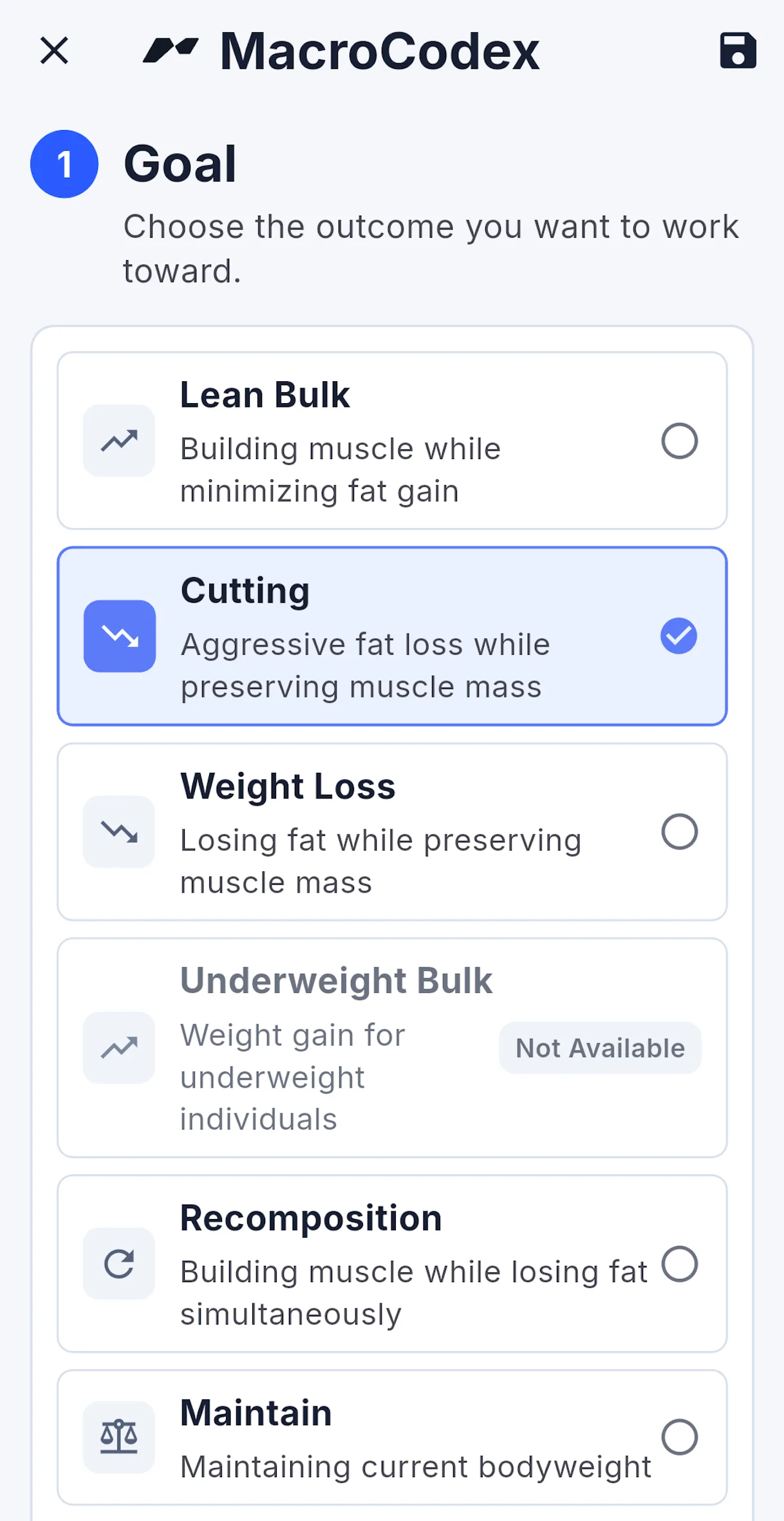
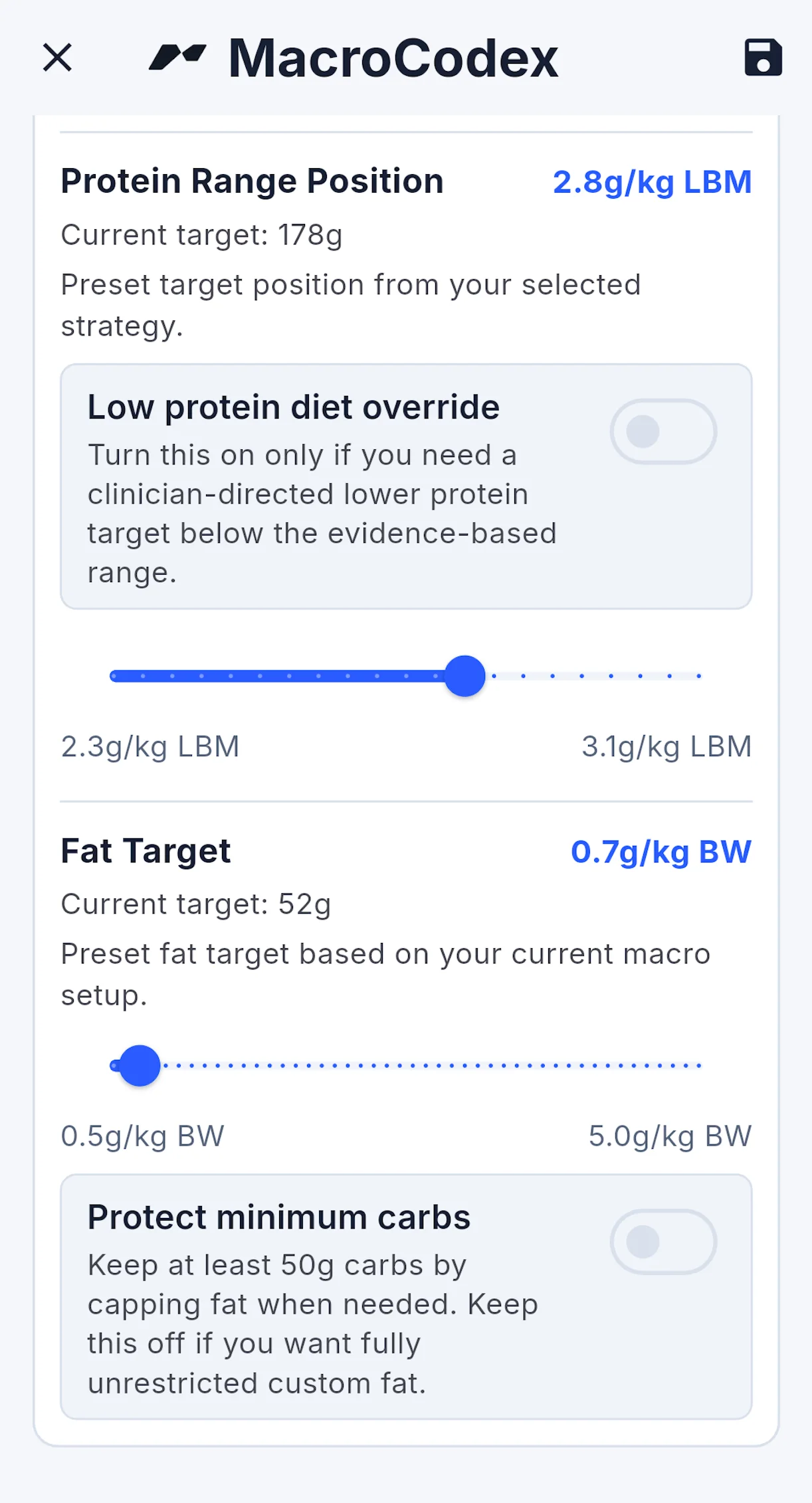
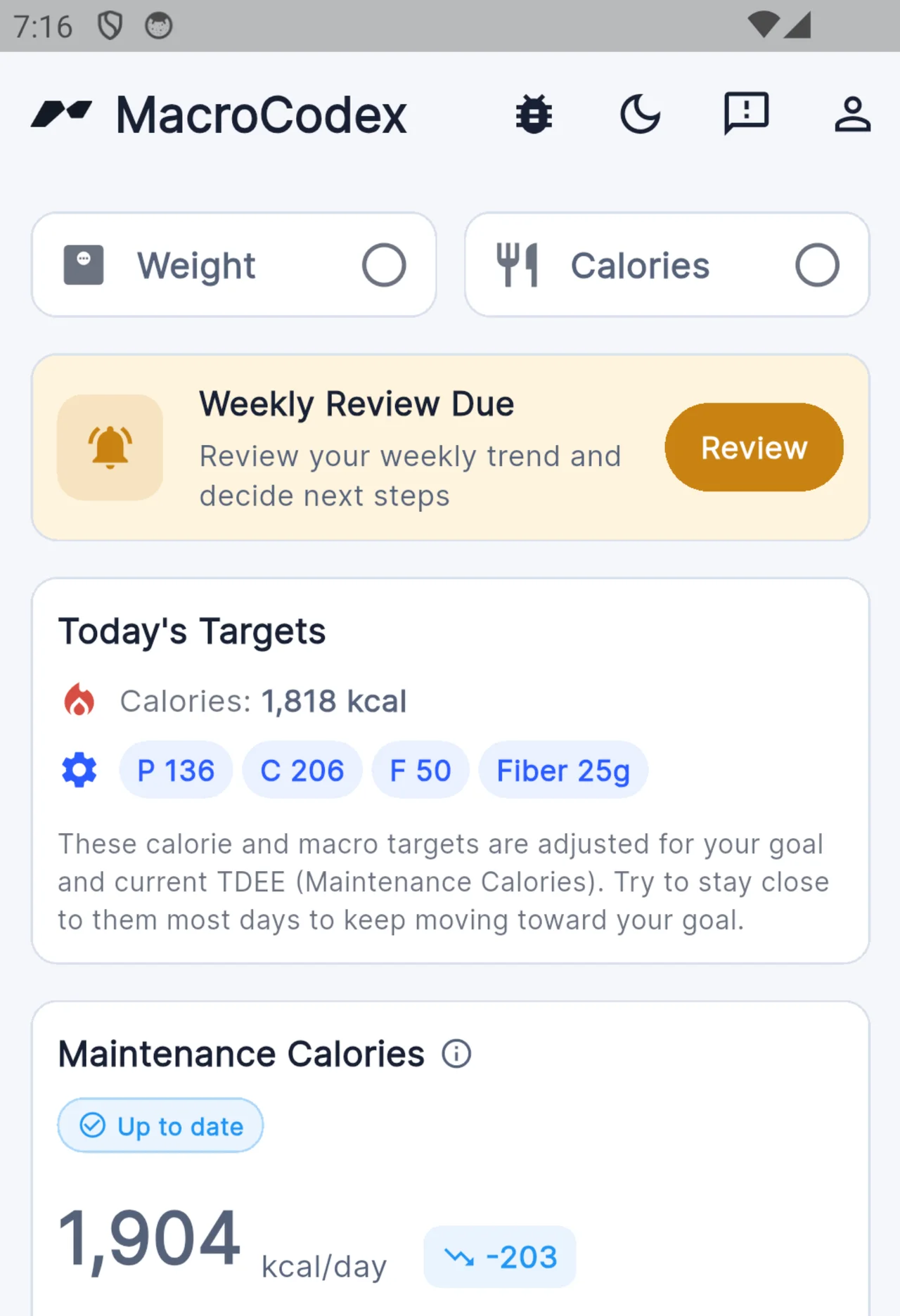
Or if you are using MacroCodex, below are the simple steps:
Step 1
Step 2 — Use AI to Improve Your Current Diet
Don't start from scratch right away. Switching to a completely different way of eating often makes it much harder to stick to your diet.
Imagine you're from the Middle East and suddenly try to follow a heavily Western-style diet. Even if it's nutritionally sound, you're much more likely to give up because it doesn't match the foods you're used to.
Instead, make small adjustments to the meals you already enjoy. By building on your existing eating habits rather than replacing them entirely, you're far more likely to stay consistent and achieve your goals.
Instead:
- Write down everything you already eat regularly
- Put your current diet + your target macros/calories into an AI like chatgpt, gemini, grok, claude etc...
- Ask it to suggest improvements
Example Prompt for AI
Copy paste it into chatgpt or gemini or claude, edit the stuff inside < > and hit enter!
I am aiming for weight loss / weight gain.

This is what I currently eat:

<your food list>

My target calories and macros are:

Calories: <target calories>
Protein: <target protein> g
Carbs: <target carbs> g
Fat: <target fat> g
Fiber: <target fiber> g

Suggest changes to help me get closer to these targets while keeping the diet practical, affordable, and realistic.

For each suggested change:
- Explain why you're recommending it.
- Estimate how it affects calories and macros.
- Prefer modifying portion sizes or swapping foods instead of replacing the entire meal plan.
- Keep meals simple and easy to prepare.
This gives you a rough idea of:
- Foods to add
- Foods to reduce
- Better substitutions
- Portion changes
Keep refining your meal plan by chatting with AI. Make small adjustments, experiment with different foods, and continue improving it until it fits your preferences, lifestyle, and goals.
Step 3 — Adjust Portions Using a Tracking App
Why are we doing it? We cannot blindly trust AIs output AI's estimate of calories and macros are crude estimates. You'll find out the errors AI is making when you actually run it through a calorie tracking app.
Usually the errors are small and easy to correct by adjusting portions.
At this point:
- You know your calorie target
- You know your macro targets
- You have a rough diet structure
Now the real skill is adjusting portion sizes.
Use a calorie tracking guide to:
- Increase or reduce portions
- Swap foods
- Get closer to your calorie and macro targets
You usually do not need perfect accuracy. Being reasonably close consistently matters more.
Over time, this becomes much easier and you’ll learn to modify your diet on the fly.
This calorie tracking guide may help you with this
Important Thing to Understand
A diet plan is not magic.
Most diet plans are simply:
A dietitian can absolutely help and may save you time. However, professional guidance can be expensive, and not every dietitian takes a rigorous, evidence based approach. But your calories or macros will change later as your maintenance calories change, some of the reasons for change:
- your body weight changes
- your activity changes
- your goal changes
As your body changes, your calorie and macronutrient targets will change too. That means your meal plan will need occasional adjustments. If you're relying on a dietitian, you may need to book another consultation and possibly pay an additional fee each time your plan needs updating.
These adjustments may be needed every few weeks. Fortunately, they are usually minor. In most cases, you only need to increase or decrease the portion sizes of a few foods rather than create an entirely new meal plan from scratch.
Learning the basics of diet planning gives you the independence to make these changes yourself. Once you understand the process, updating your meal plan becomes quick and straightforward.
There's nothing wrong with creating your own meal plan if you're generally healthy. However, if you have a serious medical condition or complex nutritional needs, it's best to work with a qualified dietitian or nutritionist.