Protocol for dosing GLP-1 Agonists in fitness

How do GLP-1 Agonists cause weight loss?
GLP-1 agonists work primarily by curbing your appetite and dialing back the urge to eat. The catch is that this blunt drop in hunger doesn't differentiate between what your body actually needs (essential nutrition) and what it merely craves (junk food).
When you feel less hungry, you consume fewer calories than you burn. That creates a calorie deficit, which is what actually drives the weight loss.
These drugs might provide a tiny boost to your resting metabolic rate (RMR) of around 50 kcal, but that effect is practically negligible. You could cut 100 to 150 kcal from your daily intake without even noticing the difference.
There is also a behavioral risk. People looking for quick results often push the dose too high to drop weight rapidly. When intake plummets, they usually fail to get enough dietary fat and protein, leading to muscle loss, hormonal suppression, biliary complications, and a higher risk of gallstones. GLP-1 agonists are tools, not magic cures. They can help anyone who struggles to stick to a sustainable nutrition plan, but most people do not need them in the first place.
When it comes to figuring out the right dose, there are two main strategies:
1. Weight-Loss-Driven Dosing
This method bases the dose entirely on the rate of weight loss you want to see.
The logic is simple: take a dose, then watch the scale.
You step up the dosage according to standard medical guidelines and evaluate whether the weight is coming off fast enough. The underlying goal ends up being:
"Find a dose that produces sufficient weight loss."
Most clinical trials follow this exact framework: they step up the dose on a preset schedule, then track weight loss and side effects. For instance, the SURMOUNT-1 trial paired a standardized calorie deficit with increasing doses of tirzepatide (Nice).
2. Adherence-Driven Dosing
Here, you dose only as much as you need to make your target calorie intake sustainable.
It is a far more refined approach that uses the minimum effective dose to get better overall results than simply chasing scale drops.
The logic flips: set your calorie target, then use the medication to make that target stick.
Under this model, the drug acts as an appetite management aid rather than the main engine driving your rate of fat loss.
"Pick a realistic rate like 0.5 kg or 1lb per week, calculate the nutrition needed to get there, and use the smallest dose required to stick to that plan without struggling."
This approach prevents appetite suppression from turning into the goal itself.
That distinction matters because GLP-1 and dual GLP-1/GIP medications can suppress hunger so heavily that people accidentally under-eat essential nutrients. The Obesity Medicine Association points out the need for deliberate nutrition planning during GLP-1 therapy, highlighting sufficient protein, dietary fiber, micronutrient intake, and muscle preservation (Obesity Medicine Association).
Here is how you can look at the numbers:
Target rate of loss = 0.5 kg/week
↓
Estimated deficit ≈ 550 kcal/day
↓
Estimated maintenance = 2,700 kcal
↓
Target daily intake = ~2,150 kcal
↓
Can you comfortably eat 2,150 kcal while hitting all your protein and micronutrient targets?
- If yes: do not increase the dose just because you could crush your appetite even further.
- If no: the dose may need adjusting.
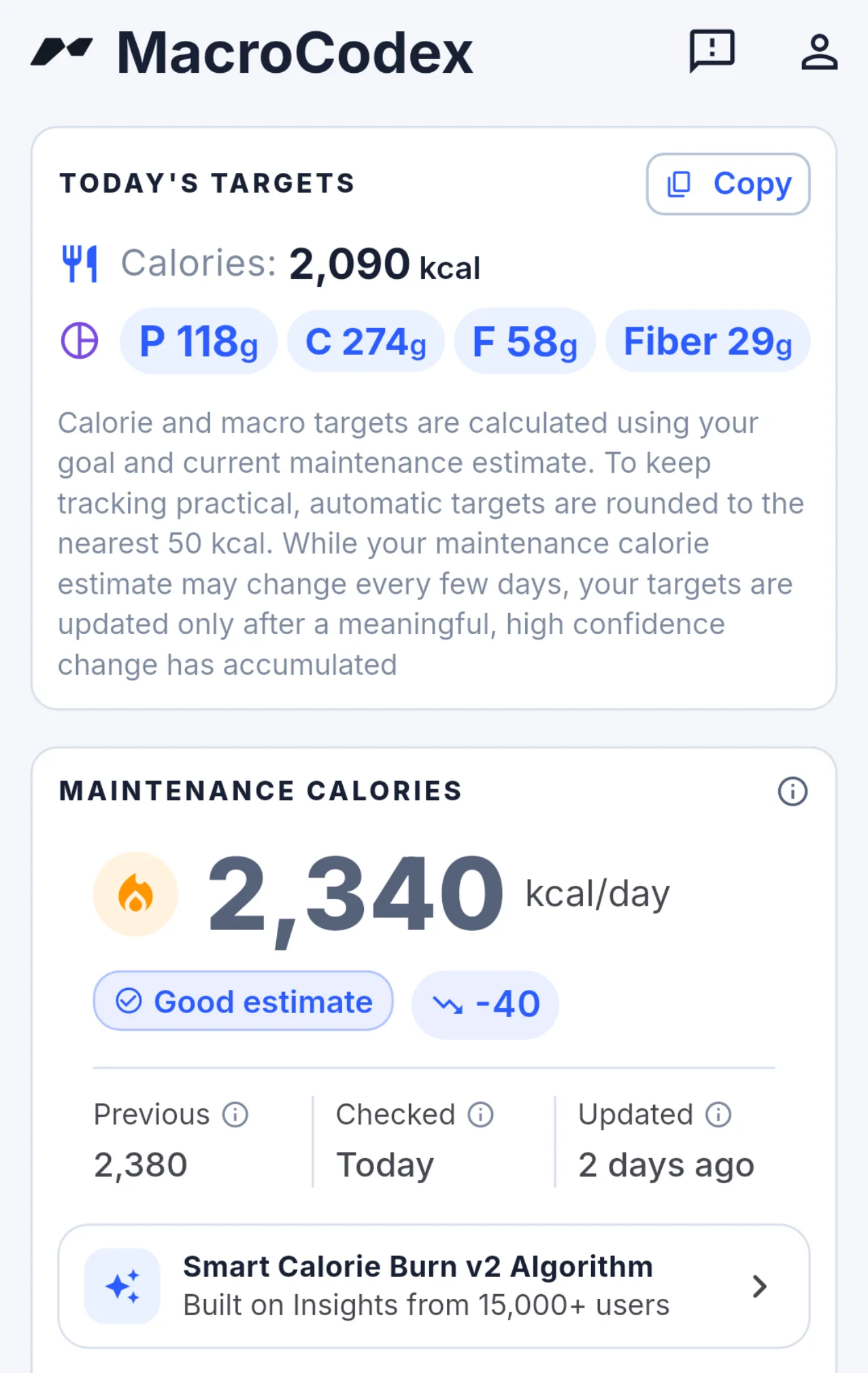
You do not have to crunch these numbers yourself. MacroCodex calculates your numbers automatically and displays your daily targets on the home screen so you can hit your target rate of loss.
After staying at a dose for a few weeks, ask yourself:
- Can I hit my calorie targets without constantly fighting hunger? If yes, keep the dose where it is.
- Am I struggling to finish meals or hitting my protein and micronutrient minimums? The dose is likely higher than it needs to be.
- Am I blowing past my calorie targets because of hunger and cravings? The dose might be too low.
This method keeps you from chasing maximum appetite suppression for its own sake.
Current guidelines from the Obesity Medicine Association confirm that the strongest medication or the highest dose is not universally the best choice. Individual response, tolerability, adequate nutrition, and personal goals all matter (Obesity Medicine Association).
Keep this rule of thumb in mind:
"Dose to enable the diet, rather than dose to replace the diet."
Keep in mind that this is not a standalone medical dosing framework where you pick a random dose strictly based on calorie numbers. You must always stay within the approved titration guidelines under the direct supervision of your prescribing clinician. Think of this approach as a practical way to optimize your results within that clinical framework.