What activity level should you choose in a TDEE calculator?
Choose the activity level that best reflects your whole week: your job, walking, chores, and planned exercise. A few gym sessions do not automatically make an otherwise sedentary week “very active.” The label is only a starting estimate; your calorie intake and weight trend will tell you whether it fits.
If your calculator asks for an activity factor, it usually multiplies an estimated resting metabolic rate (BMR or RMR) by that number to estimate daily calorie burn. A university teaching guide lists these common approximate factors:
| Common label | Factor | Practical starting interpretation |
|---|---|---|
| Sedentary | 1.2 | Mostly seated days and little extra movement |
| Lightly active | 1.375 | Some walking or light exercise; much of the day is still seated |
| Moderately active | 1.55 | Regular movement or exercise across the week |
| Very active | 1.725 | Physically demanding days or frequent substantial exercise |
| Extra active | 1.9 | Very demanding training combined with a highly active daily routine |
These factors are conventions, not measured facts about your body. For example, a BMR of 1,600 kcal gives 2,200 kcal/day at 1.375 and 2,480 kcal/day at 1.55—a 280 kcal difference from one category choice. If you are between two labels, pick the one that better matches your usual week and revise it from real results.
Why an activity factor cannot tell you your true TDEE
A standard TDEE calculator starts with a population-based resting-calorie formula, then applies a broad activity multiplier. That label cannot measure your non-exercise movement (NEAT), such as walking at work, chores, and fidgeting. Two people who both lift three times a week may have very different daily expenditure if one sits most of the day and the other is on their feet for hours. Even a carefully chosen factor cannot account for every personal difference or for activity that changes from week to week.
Treat the result as a first guess, not a measured maintenance calorie level. Record what you eat and follow your body-weight trend over several weeks; if the trend differs from what the estimate predicted, adjust the estimate. Our adaptive TDEE guide explains this limitation in detail.
Does lifting three days a week count as moderately active?
It depends on everything else you do. Three short workouts alongside a desk job and little walking may fit a lower category than three workouts plus an active job and daily walking. Think about time spent moving across all seven days, rather than the number of workouts alone. Do not add exercise calories again if your calculator's activity factor already includes that exercise.
How MacroCodex handles activity
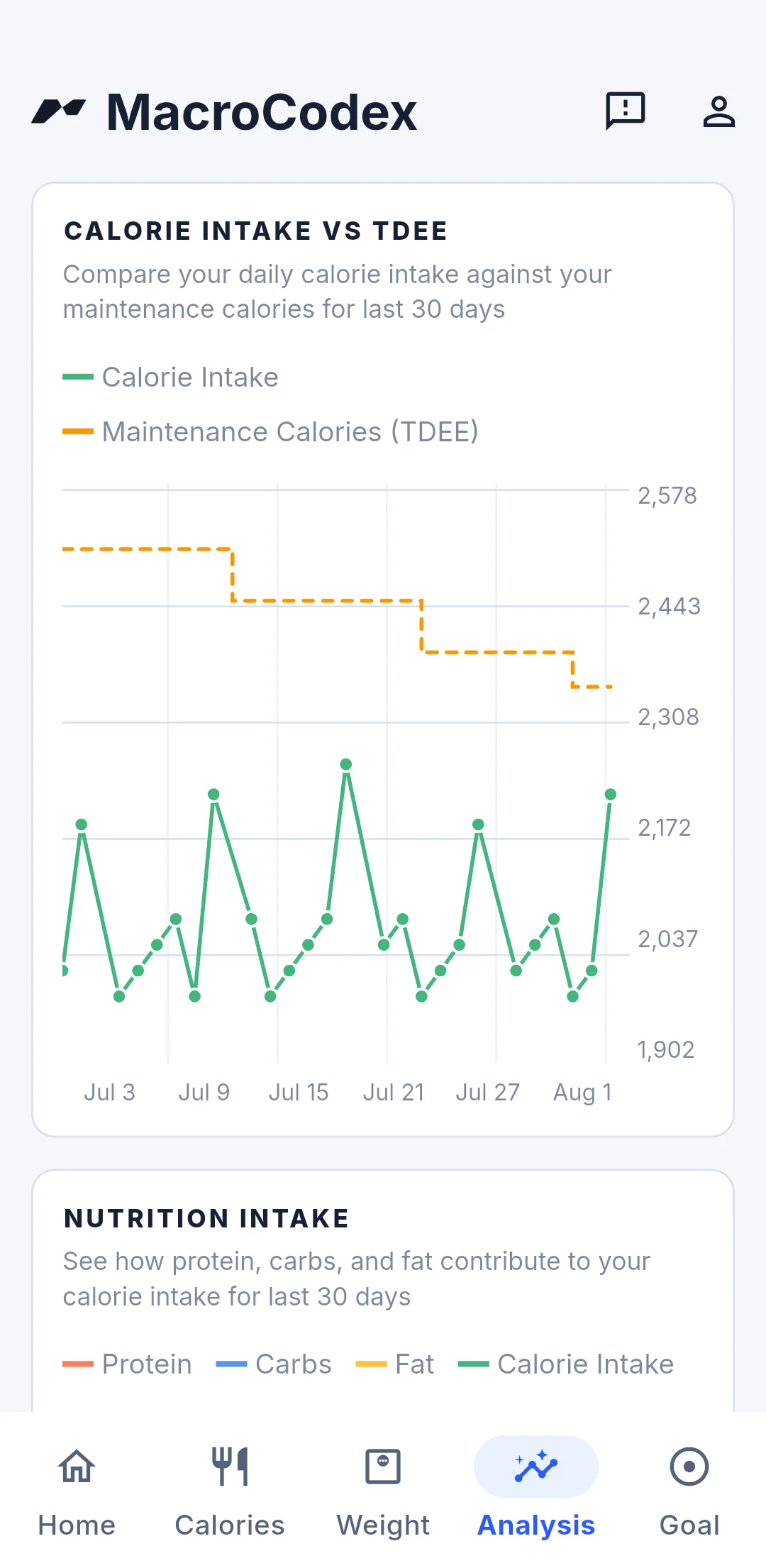
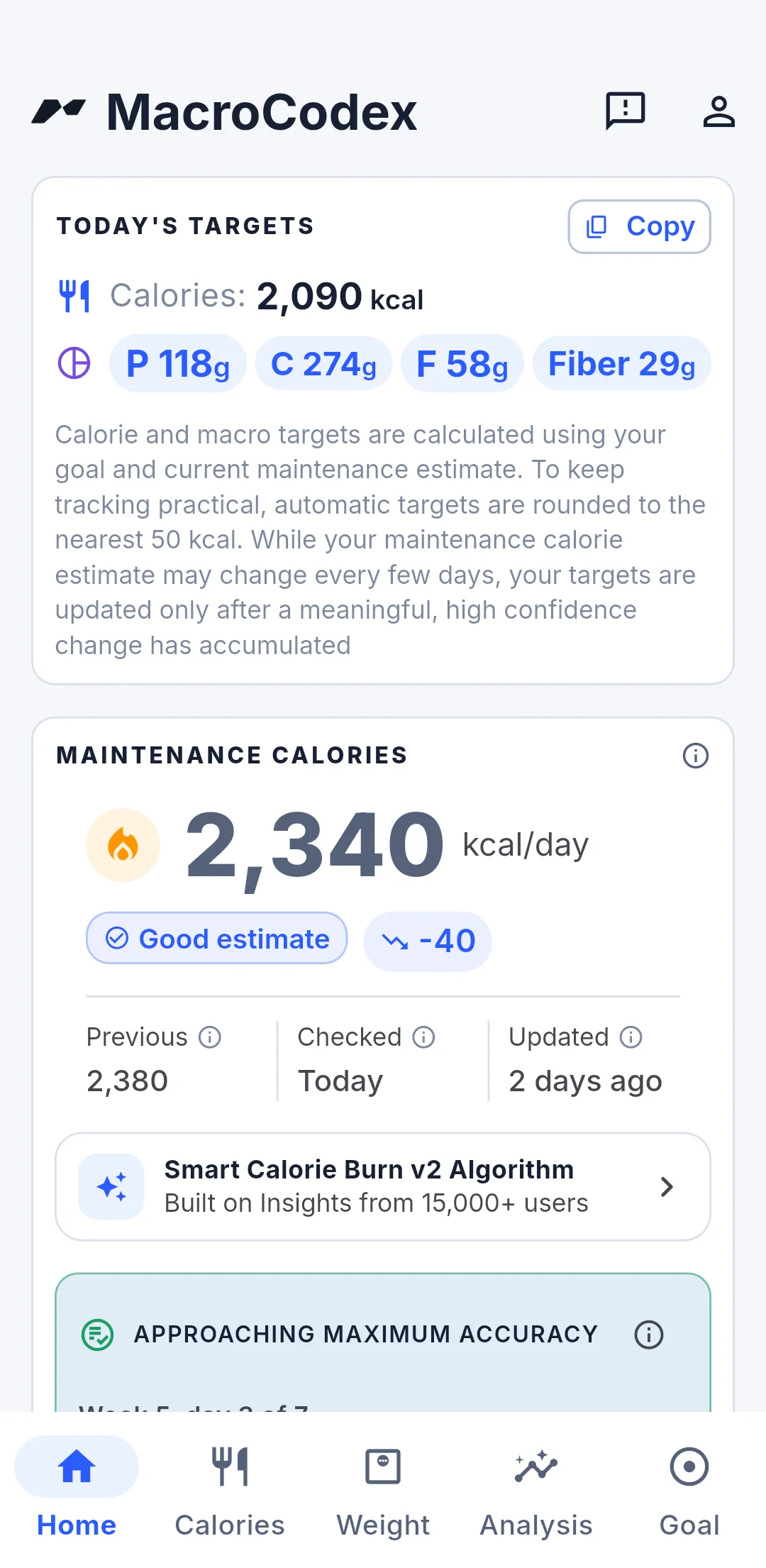
The free MacroCodex app gives you an initial TDEE estimate and then updates it from your logged calorie totals and body weight. That makes your choice of starting activity level less consequential over time: your own results help refine the estimate. Use your usual routine when entering starting details, and avoid counting the same exercise twice if you also track workout calories elsewhere.
Give the app several weeks of consistent data before judging a surprising result from one weigh-in.