nSuns TDEE spreadsheet: download and setup
✅ Tip
Before you spend $71.99 on MacroFactor, give MacroCodex a try. It's completely free, no ads!
It offers guaranteed weight loss or weight gain results within 2–3 weeks, and 80% of people will start seeing results within the very first week of use!
Don't believe it? Check out Reddit mentions, Play Store reviews, and the Telegram community with 2,000+ members for proof. https://macrocodex.app/
Here's a lean bulk journey from a MacroCodex demonstrating MacroCodex's accuracy!
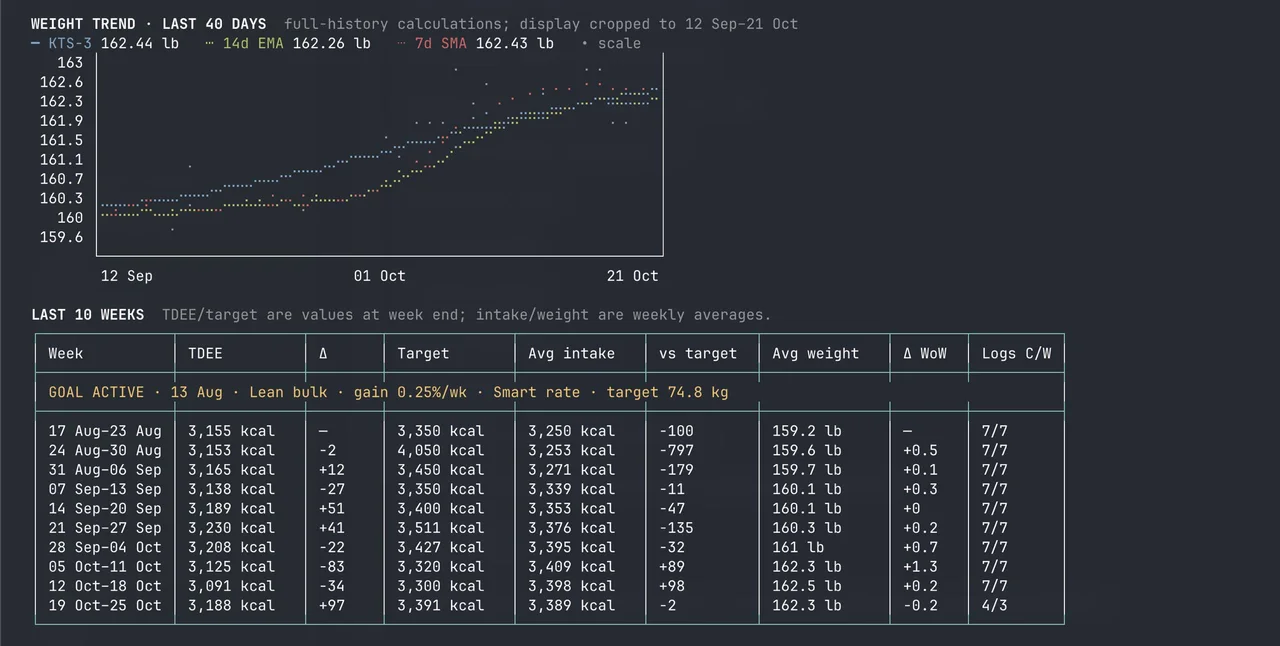
Start weight: 159.2 lb (17–23 Aug)
End weight: 162.3 lb (19–25 Oct)
Actual gain: 162.3 − 159.2 = +3.1 lb
Number of weekly intervals: 9
actual gain rate:
3.1 lb/ 9 week
≈ +0.34 lb/week
≈ +0.16 kg/week
≈ +22 g/day
≈ +0.22% of body weight per week
Implied average energy surplus using 3,500 kcal/lb:
0.344×3500/7 ≈172 kcal/day
That's equivalant of additional 2 slices of bread daily over maintenance!
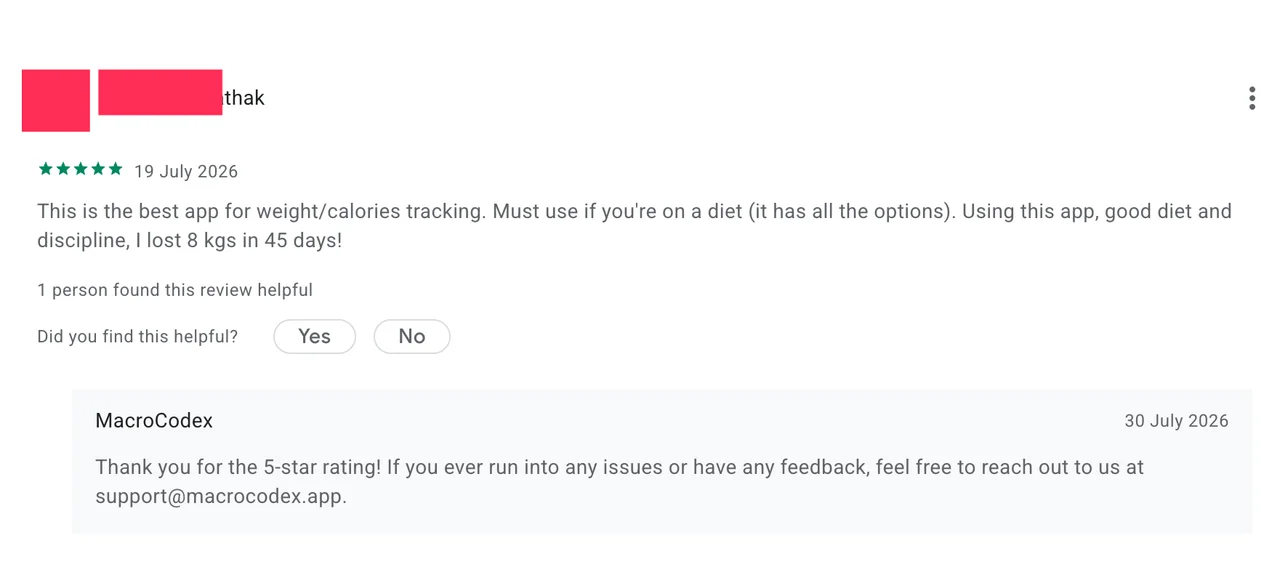
Our claim: See measurable weight gain or weight loss results within 2–3 weeks of using MacroCodex. Many users start seeing results as early as the first week.
Verify playstore reviews here: https://play.google.com/store/apps/details?id=com.macrocodex.app
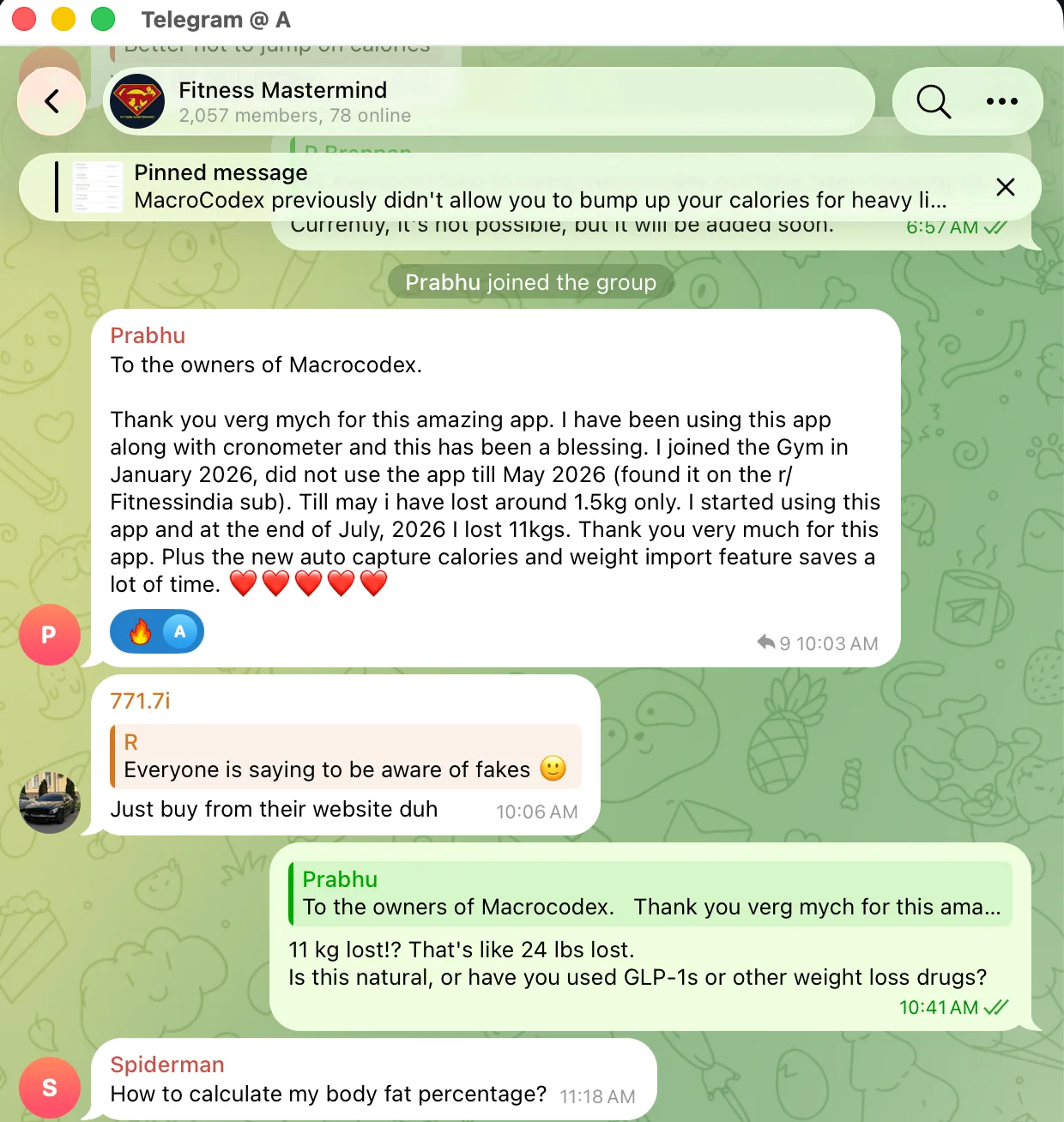
Verify Telegram Community reviews here: https://macrocodex.app/community/
Looking for the nSuns adaptive TDEE spreadsheet? Open the nSuns TDEE sheet on Google Sheets. The public sheet is read-only, so choose File → Make a copy to enter your own data. The Fitness Wiki also links to this sheet and recommends using it to refine a starting calorie estimate from your logged weight and intake.
This is a third-party spreadsheet. MacroCodex does not own or maintain it, and availability or formulas may change.
How to use the nSuns TDEE sheet
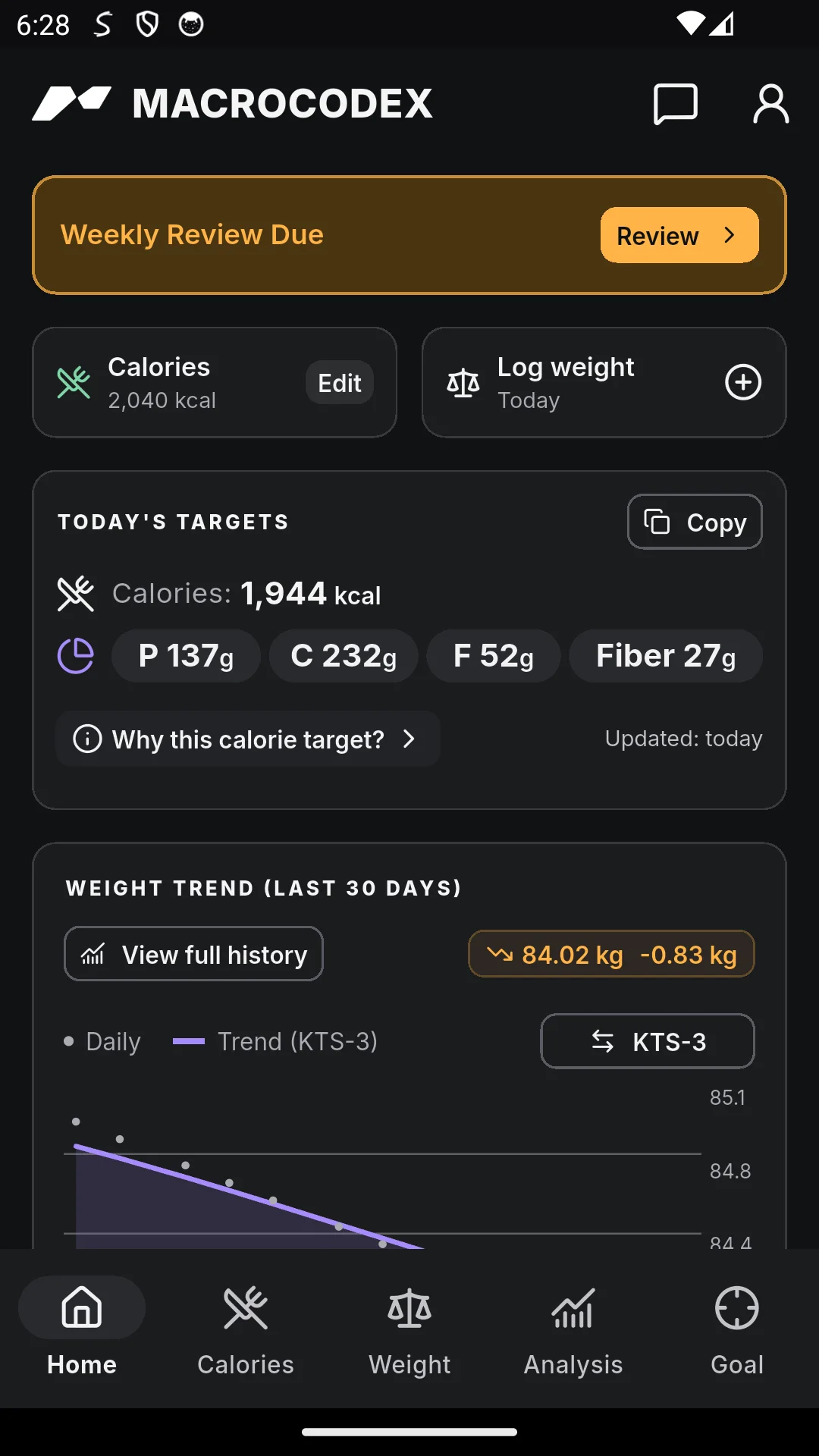
- Make your own copy and enter a start date, your starting weight, and whether you track calories or kilojoules.
- Record body weight and the calories you ate on each date. Keep the dates consistent; do not put yesterday's food under today's date.
- Read the estimated TDEE after several weeks of entries. TDEE means total daily energy expenditure: roughly the calories you would eat to maintain weight at your current activity level.
- Compare the estimate with your weight trend before changing your calorie target. A single high or low weigh-in is not enough to judge whether your maintenance calories changed.
The sheet learns from intake and weight change, so you do not need to guess a fixed activity multiplier. Missing food entries and short-term water-weight changes can still distort its estimate. For a broader explanation of the method and other community sheets, see our adaptive TDEE spreadsheet guide.
Want the same workflow in an app?
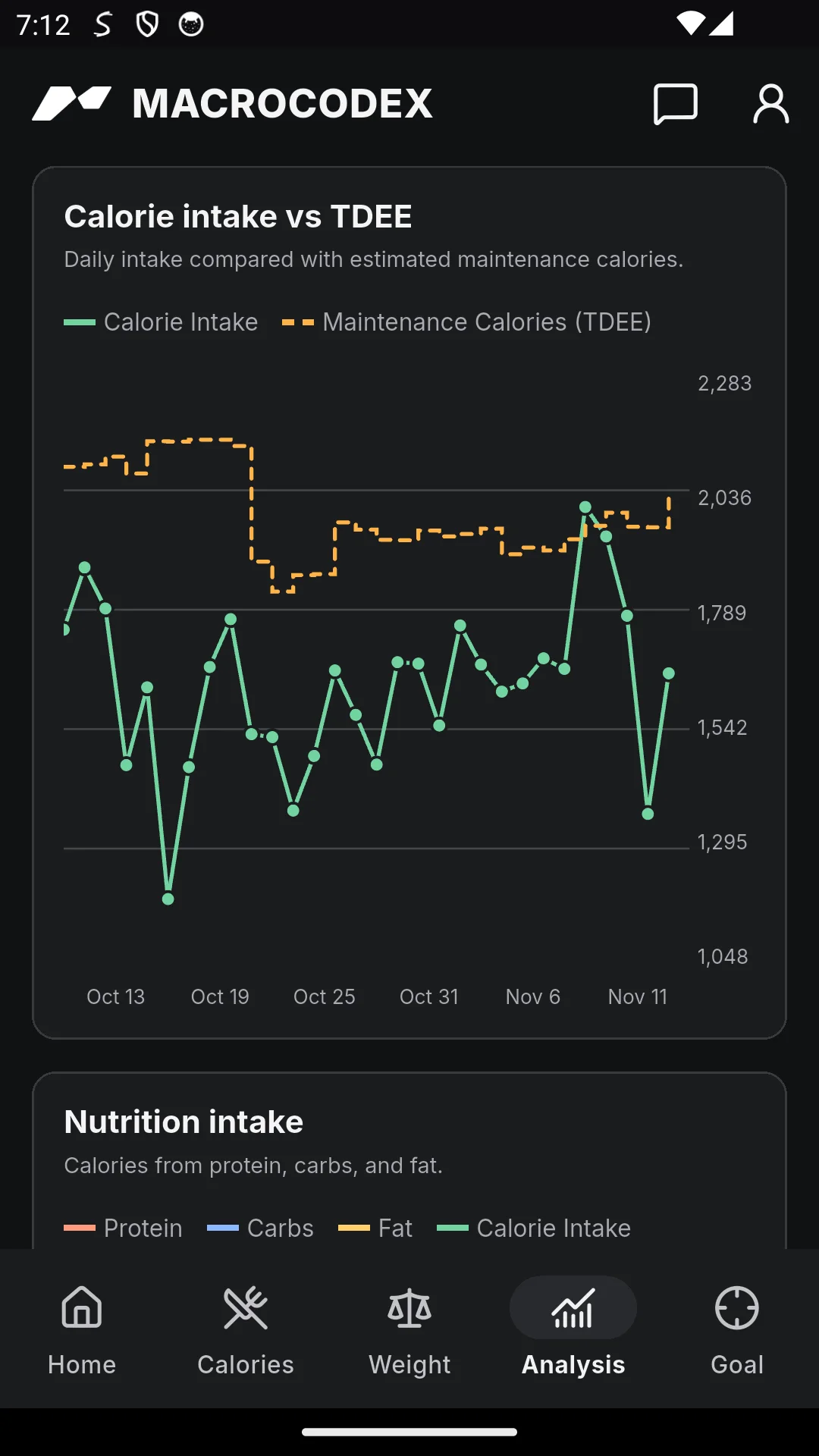
MacroCodex starts with a maintenance-calorie estimate, then updates it as you record calorie totals and body weight. Its Smart Calorie Burn v2 explanation describes a state-space neural-network approach that combines patterns from thousands of users with your own trend to produce a highly accurate personalized TDEE estimate. It also turns that estimate into calorie targets for your goal. The app is free, with no ads or subscription; use a separate food logger if you want help collecting your daily totals.
In our internal testing, popular Reddit adaptive TDEE spreadsheets were still 300–400 kcal/day off after six to eight weeks of tracking.