Hypertrophy Blueprint

Hypertrophy simply means muscle growth.
If you're serious about building muscle, your training program needs to be set up specifically for hypertrophy. Following these science-backed guidelines is the key to maximizing your gains efficiently and safely.
Should I use AI to build a program or follow an existing one?
You don’t need to build your own program from scratch. Use established, well-tested training programs instead. You can find many high-quality free programs on sites like FitnessWiki, LiftVault, or Boostcamp.
These programs are already designed and validated for results, and they’re more than sufficient for most people. There’s no need to pay for a custom plan when proven options are freely available.
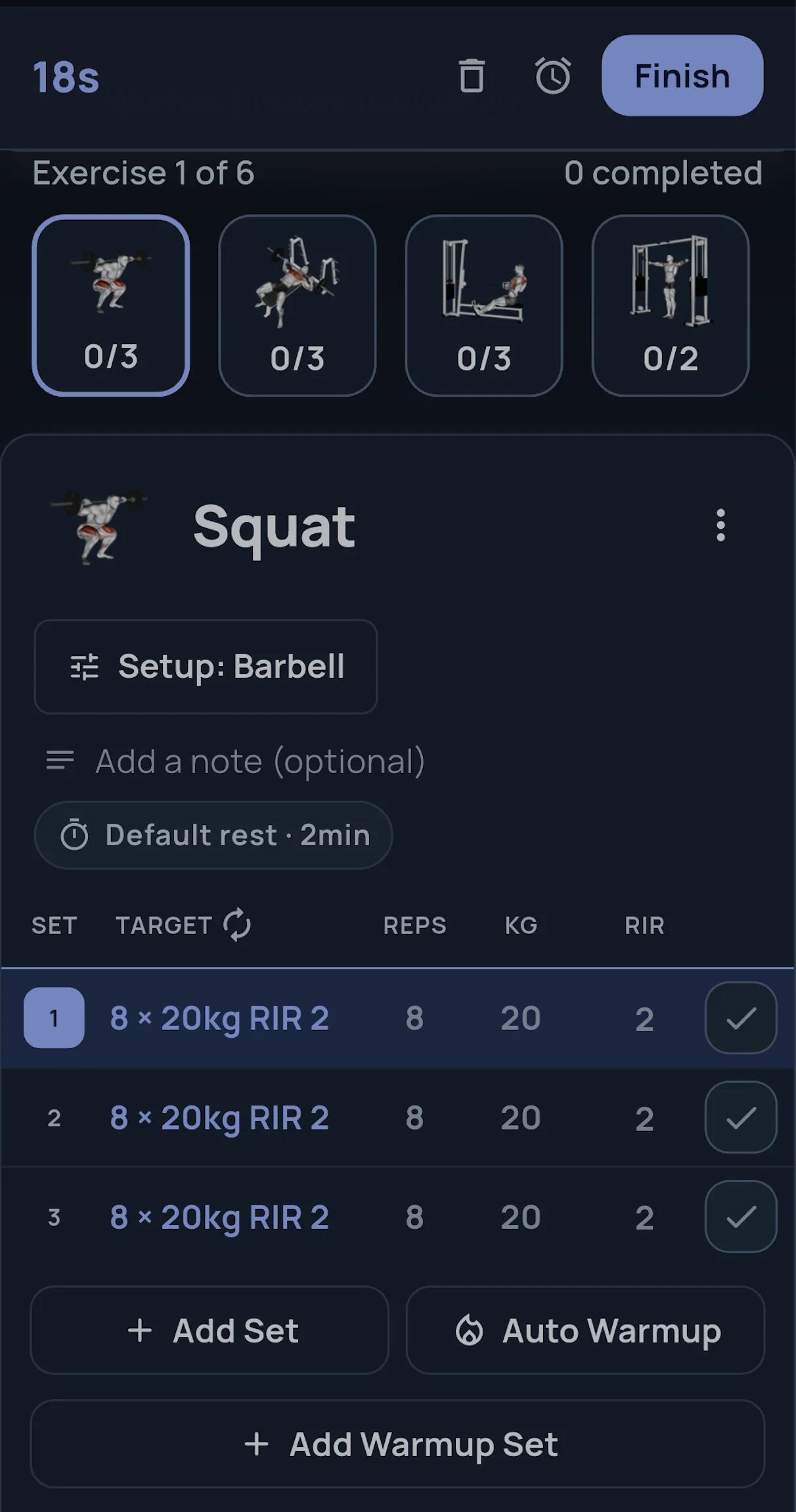
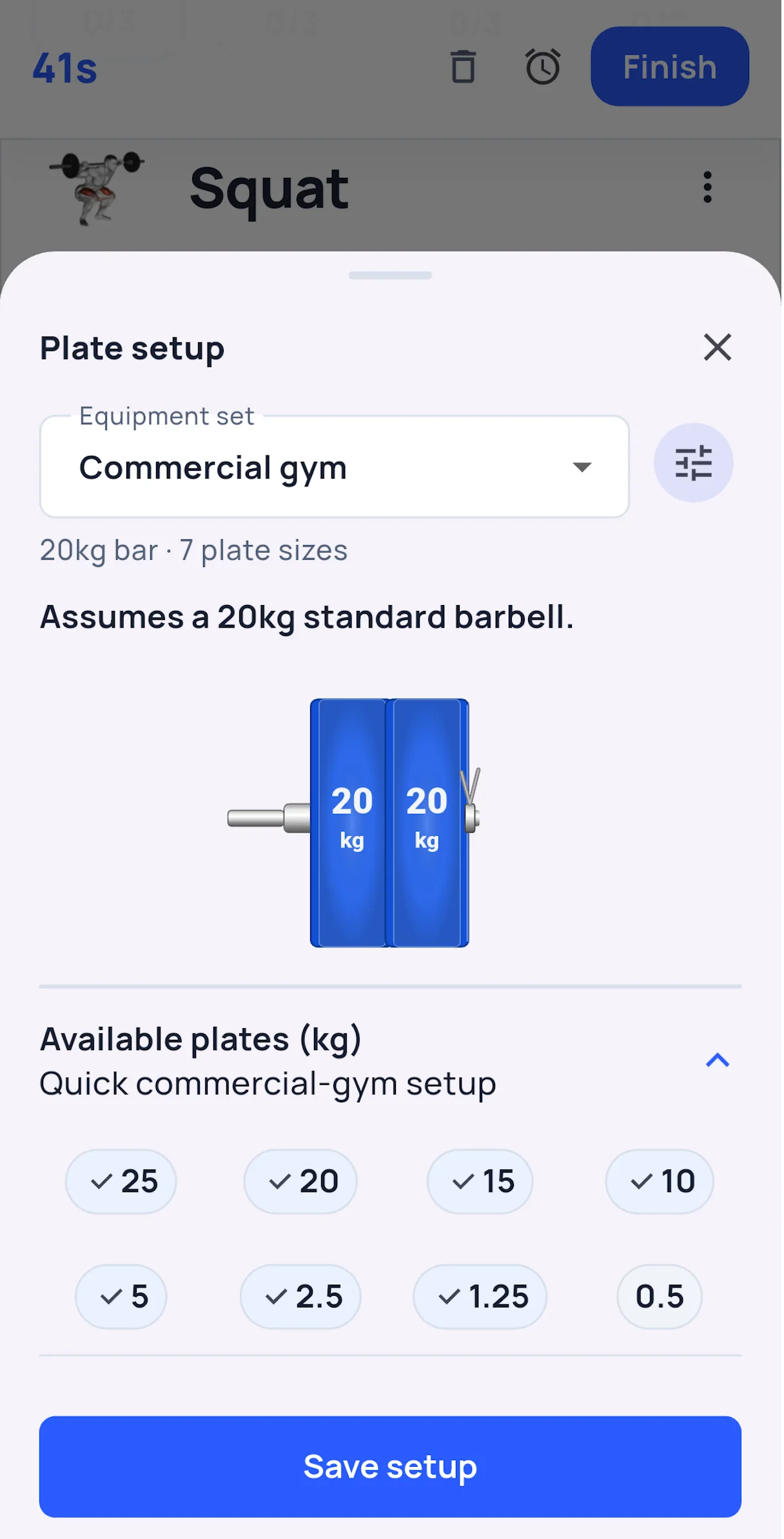
How often to workout?
For most people, training 3–4 times per week is the sweet spot. It provides enough stimulus to drive progress without overwhelming your ability to recover. If you're completely new to this, it's best to ease in with just 1–2 sessions a week to build consistency and keep from burning out. But what if you think you can handle more? The key is understanding that effectiveness isn't measured by how wrecked you feel. If it were, you'd need an ambulance ride home after every workout. The goal isn't to demolish your body. It's to deliver just enough of a training stimulus to kickstart adaptation, pushing your muscles just hard enough so that your body spends its rest days repairing, recovering, and overcompensating by growing stronger. So, will cramming in extra sessions get you faster gains? Not really. Recovery isn't optional, it's a critical part of the process. Without it, you’re just spinning your wheels and risking fatigue, injury, or stalled progress. Instead of grinding it out daily, prioritize intensity in shorter, more spaced-out workouts. Make each rep count. You can do this by lifting heavier and focusing on your form, so you can leave the gym knowing you've triggered the growth machinery without overtaxing it. And a quick word on the influencers and trainers you see online: many use steroids. These drugs supercharge recovery and allow them to train daily at a moderate intensity. This reality doesn't translate to natural lifters like us. Stick to a sustainable frequency, and you'll build real, lasting results.
How often should you lift weights?
-
Recomp: 3–4x/week If you're new, detrained, a beginner, or returning after time off, you can usually recover well from 3–4 sessions per week while still building muscle and losing fat. You are handling easy weights here, so recovery isn't much of an issue.
-
Lean bulk: 3–4x/week You are in a calorie surplus and lean enough to prioritize muscle growth. Muscle gain is generally maximized in a surplus, so training performance and recovery are better.
-
Cut / weight loss: 1–2x/week In a calorie deficit, recovery and muscle growth potential drop. Once the deficit becomes large (around 400+ kcal/day), muscle gain slows significantly, so the goal shifts more toward maintaining muscle rather than maximizing growth.
-
Maintenance: 1–2x/week Maintaining muscle requires far less training volume than building it. A small amount of hard training is often enough to keep most of your muscle and strength.
-
PED users: 5–6x/week PEDs can dramatically increase recovery, work capacity, and protein synthesis, allowing much higher training frequency and volume. PED users can build muscles much faster than naturals even in deficit.
Volume (The Right Number of Sets)
Aim for about 10 to 20 weekly sets per muscle group. According to research by Schoenfeld et al. (2017) and Ralston et al. (2017), this range serves as the ideal sweet spot. Undershooting this target means you are likely leaving gains on the table, but overdoing it can easily wreck your recovery and stall your progress. Legendary bodybuilder Mike Mentzer once asked a crucial question: "Why do another set?" His point gets right to the core of training theory, which is that volume is often just compensation for a lack of true intensity. If you could somehow generate absolute, ultra-high intensity in just one set, that single effort would trigger all the growth you need. Beginners, for example, can frequently grow on just one set taken to failure. But because reaching that level of extreme intensity is incredibly difficult, most of us add volume to make up the difference, all while trying to keep our effort levels as high as possible. Aiming for 10 to 16 hard sets per muscle group each week is a solid target, especially when you split them across multiple sessions (for instance, doing 6 to 8 sets of compounds and isolations per workout). Keep in mind that once you push past 10 sets a week, your gains start to plateau while fatigue begins to spike. To manage this, make sure to account for overlapping movements, such as counting your heavy pulling exercises toward your total biceps volume. If you are tight on time, you can get away with doing 8 weekly sets per muscle group. You could split this into two sessions, performing 4 sets across two different exercises each time. Just remember that if you are cutting back on volume like this, you have to ramp up the intensity to ensure you are still triggering muscle growth. This is the classic trade-off, when you drop your training volume, you need to crank up the intensity, and vice versa. This balance is what keeps the muscles growing. Personally, these days I start almost everyone off at around 10 sets per muscle group per week, keeping the effort at 0 to 3 reps in reserve (RIR) while focusing on progressive overload. At the end of the day, lifting hard and eating right will beat any fancy optimization program, provided you stick to it.
Intensity & Rep Range (Lifting with Purpose)
Let's say if you can bench press 100kg for 1 Rep, your one rep max = 100kg Calculate 60% of 100kg = 60kg now you need to do that for 6-20 reps. Calculate 85% of 100kg = 85kg now you need to do that for 6-20 reps.
Proximity to failure
Staying 2 reps in reserve (RIR) on most sets is ideal. Focus on progress by gradually adding reps or weight, rather than constantly pushing to failure. Every few weeks, incorporate a set to failure to gauge your limits. Without attempting it, it’s hard to know exactly where failure lies, making it difficult to estimate if you're truly 2 reps shy of failure. Your goal is to develop intuition for "failure" and stop 1-2 rep shy of it. Training to complete failure all time is not sustainable, staying 2 reps in reserve nearly produces the same stimulus for much less fatigue making adherence easier and more likely in long run with higher cumulative gains over period of time.
Training Frequency (How Often to Train)
Most lifting advice points toward hitting each muscle group twice a week. This approach is backed by a 2016 study by Schoenfeld et al., which found that training twice weekly distributes your workload more evenly and keeps your body's muscle-building signals firing consistently. Going to three times a week doesn't automatically mean better results. If your weekly target is 16 sets, breaking them down into two 8-set workouts works incredibly well. On the flip side, if your weekly target is only 4 sets, splitting them into tiny 2-set workouts probably won't give the muscle enough of a reason to grow (unless you can somehow bring absolute, maximum intensity to those couple of sets). At the other extreme, cramming all 20 sets into a single marathon session doesn't make much sense either. While the first 12 to 16 sets might do some good, those final 8 sets usually turn into junk volume that yields very little return. While the science clearly shows that training twice a week beats training once a week, bumping that up to three times a week introduces a logistical headache. It raises a tough question: how do you actually recover from that frequency while trying to fit every major muscle group into your weekly schedule?
Exercise Selection and Order
Does your routine include both compound and isolation exercises for every muscle? A 2019 study from Schoenfeld et al. confirms that this combination is crucial for ensuring full muscle activation and balanced development.
Limit to 1-3 exercises/muscle (mid-range compound + stretch + contracted, e.g., bench + pec deck + cable flyes). Strict form ensures tension on target muscles—cue mind-muscle connection (e.g., "pull humerus across body" on bench).
Heavy compounds first (e.g., deadlifts for back size); minor form loosening only on final reps if it keeps tension. No cheating that shifts load elsewhere.
See: Muscle Explorer for high quality Exercises.
Progressive Overload (The Foundation of Gains) or When to add weight to bar or reps to your set?
To build muscle over the long haul, you have to find ways to do a little more over time. Whether that means adding weight, squeezing out more reps, or throwing in extra sets, keeping a weekly log of your progress is the only way to guarantee you are actually moving forward. Real growth happens when you get stronger in those moderate rep ranges. Think of it this way: if you start out benching 50 kg for 10 reps, and by the end of the year you are benching 100 kg for those same 10 reps, your chest is going to be significantly bigger. On the flip side, if you are benching 20 kg for 10 reps today and you are still doing the exact same 20 kg for 10 reps next year, you haven't actually progressed. You might have leaned out a bit and noticed some new definition, but you won't have built any new muscle mass. So, when should you actually add weight or reps? Should it happen every workout, every week, or once a month? The truth is, you don't need to force progress every single week. You should only increase the load or the reps when the current weight starts feeling comfortable and no longer gives your muscles a reason to grow. That comfort is just a sign that your body has adapted. Let's look at a quick example. Imagine you are benching 60 kg for a target range of 6 to 10 reps, leaving about 2 reps in the tank (which is 2 reps shy of failure, or 2 RIR) on each set. As your body adapts over time, that 60 kg is going to feel lighter. Eventually, you will hit 10 reps and realize you actually had 4 reps left in the tank (4 RIR). At this point, the set is no longer challenging enough to trigger growth, since the general rule is to stay within 0 to 3 reps of failure. Because you have already hit the ceiling of your 10-rep target, you can't just keep adding reps. Instead, you need to bump up the weight to bring that intensity back. However, if you were only doing 9 reps at that easier effort, your immediate move would be to add one more rep to hit your target of 10. This approach is called double progression: you focus on adding reps until you hit the top of your target range, and only then do you increase the weight once the current load stops challenging you. As you get more experienced and stronger, these weight jumps might only happen every few weeks or even months. That is completely normal. The main objective is to gradually build strength in those moderate rep ranges, and the muscle growth will follow naturally.
- Linear Progression (Gradual Increase)
How It Works: Add small, consistent increments to your weight or reps every workout or every week.
Example: If you're bench pressing 100 lbs for 3 sets of 8 reps, aim to increase the weight by 2.5–5 lbs every week, or add 1–2 reps per set.
- Double Progression (Weight and Reps Combo)
How It Works: Focus on achieving a specific rep range before increasing the weight. Once you can perform the target rep range (e.g., 8-12 reps) with good form, increase the weight and drop back to the lower end of the rep range.
Example: If your goal is to do 8–12 reps for squats, you'll first work on increasing your reps within that range. Once you can do 12 reps comfortably, increase the weight and go back to 8 reps.
Double progression is pretty easy to understand, so that's what you should use to progress in strength.
Sleep & Stress
7-9 hours/night; poor sleep tanks testosterone and protein synthesis by 20-30% High cortisol from life stress hinders recovery—suggest active recovery days (walks, mobility work) or mindfulness.
Recovery & Deloads (Don't Skip Rest)
Progress isn't just made in the gym. You have to listen to your body and schedule a deload. During a deload, you reduce your training volume to give your body a chance to recover and adapt.
Monitor via performance drops (e.g., 10% off best reps = rest). Deload every 8-12 weeks (e.g., 50% volume). In contest prep, slash volume (2-3 quality sets/muscle every few days) and add cardio for fat loss.
Week 13: Reduce volume to 50% of your normal training (e.g., 4 sets per muscle down to 2 sets).
Week 14: Increase volume to 66% of your normal training (e.g., 4 sets per muscle up to 3 sets).
Week 15: Return to your original volume (e.g., 4 sets per muscle).
Week 16 and beyond: Resume progression as usual.
Alternatively, you can do an intensity deload where you drop the intesity often expressed by percentage of 1RM then build it back up in subsequent 3 weeks, adding progression from 4th week onwards.
Choose what works best for you.
Rest Between Sets
Most studies suggest resting between 30 and 90 seconds between sets if your main goal is building muscle. Keeping your breaks in this window keeps metabolic stress high and helps you accumulate enough total volume. It also gives you just enough breathing room to hit your target reps, usually around 8 to 12 per set, without burning out too early.
If you rest less than 30 seconds, you probably won't recover enough to handle heavy enough weights or finish your reps. That ultimately cuts down your total training volume, which hurts growth. On the flip side, resting for more than two minutes shifts the focus away from metabolic fatigue and moves it toward building raw strength.
Of course, your specific setup matters. Things like your experience level, how quickly you recover, and the actual exercise will change your timing. Big compound movements like squats naturally require a bit more downtime. Advanced lifters, for example, might find they need one to two minutes of rest to handle heavier working sets.
If you aren't sure where to start, try resting for 60 seconds and adjust the time based on how recovered you feel before the next set. Just make sure you pair this timing with progressive overload to get the best results.
Controlled Tempo (Mindful Reps)
Aim for explosive on your way up and controlled lowering, don't let it free fall but also do not bounce the weight up.
Warmup
See: Warmup Guide
Cardio
Add atleast 30 minutes of Zone 2 cardio each day and 1 hour on non training days even you are relatively lean (simply increase your calories to not lose weight)
Zone 2 cardio is unlikely to interfere with growth, avoid high intensity cardio when you are focused on growth, body got only limited recovery capacity, sprinting and lifting weights to growth simutanelously might be too much unless you must train for it therefore not recommended.
Matching Reps to the Movement
- Heavy compound lifts: 6–10 reps
- Isolation exercises: 10–20 reps
- Calves and abs: up to 30 reps
Nutrition
If you do not eat properly, you'll either get subpar results or results will come slow. Working out without a proper diet is like putting bunker fuel in F1 race car expecting it to offer peak performance.
Workout does not build muscle.
Workout triggers a process which builds muscle using supplies from diet.
A person working out consistently triggers this BUILD process, but if the diet is not on point, this process halts prematurely and doesn't build anything.
The supplies are fats, carbs, and proteins, which all add up to total calories.
These are needed in the right proportion for growth; too low fat = hormones not working optimally, not enough joint lubrication, too low carbs = not enough performance, glycogen stores to fuel the workout, too low proteins = not enough building blocks for muscle, too low calories (coupled with low bodyfat% which is body's energy reserve) = not enough energy to sustain muscle protein synthesis.
Hydration
Muscle isn't mostly protein; it's mostly water. By weight, your muscle is about 73-79% water, while protein only makes up around 20%. This is exactly why I always drink 1.5 to 2 liters of water about 30-40 minutes before a workout.
Think of your muscle fibers like a woven cloth. A dry cloth is pretty easy to tear, but a wet one is much, much tougher. A well-hydrated muscle is simply a stronger and better-lubricated one. You can run a simple experiment on yourself: track your hydration. You’ll quickly find that your workouts suffer when you're not properly hydrated, which is why taking pre-workout supplements loaded with things that dehydrate you has never made much sense to me.
My pre-workout meal is designed around this idea. I eat a good amount of carbs because each gram holds 3-4 grams of water, which aids hydration indirectly by improving fluid retention via sodium co-transport. I keep the fat intake low since higher fats slow down gastric emptying, and I want faster nutrient delivery. I'll have some protein, just not a lot.
Advancing
As you grow bigger, you'd need less sets not more. Why? because you'll be able to generate higher intensity of effort with time. Higher volumes become very difficult to recover from then.
Exercise form
Often you perform an exercise and someone calls you out on "wrong form". Well, good form develops overtime, the more experience you've with an exercise the better your form becomes, so don't take critisism from form police to your heart
There's no such thing as universal "perfect form" for big lifts like squats, deadlifts, or the bench press. The right form for you depends on personal factors like your limb lengths, joint mobility, injury history, where your muscles insert, and what your goals are, whether that's hypertrophy, strength, or rehab. Research confirms this. A study by McKean et al. (2010) in the Journal of Strength and Conditioning Research found significant variations in squat mechanics between individuals, proving the need for personalized coaching. Likewise, Schoenfeld et al. (2010) discovered that different squat and deadlift styles can be equally effective based on a person's biomechanics. Contreras et al. (2016) noted in the Journal of Applied Biomechanics that muscle activation patterns differ among individuals, which supports making form adjustments. Research by Hadi et al. (2021) in Frontiers in Sports and Active Living also showed that real-time, personalized feedback improves technique far better than generic instructions. Your goal should be to develop form that is safe, effective, and consistent for your own body.
To learn proper form, start with high-quality YouTube channels like Jeff Nippard, Squat University, Alan Thrall, or Renaissance Periodization. Focus on creators who break down the biomechanics and explain the cues. Watch how different body types perform the same lift and study slow-motion breakdowns from 2-3 sources to see the variations. If you can, book 1-3 sessions with a qualified coach for personalized feedback, and don't be afraid to ask "why" they're giving you certain cues. Practice with light weight to feel the right muscles working, like your glutes in a squat, knowing that this mind-muscle connection improves with time, as supported by Contreras et al. (2016). Record your lifts from the side and a 45° angle to check for issues like knee collapse or a crooked bar path, then compare your video to reliable sources. You can also post your videos to online forums like r/FormCheck for targeted advice, just be sure to include details about the exercise and what feels off. Over time, you'll refine your technique by listening to your body and prioritizing what's safe and effective for your goals, just as research like Schoenfeld et al. (2010) suggests form should evolve with experience.
Will i lose gains if i stop workout out?
Not if you're eating at maintenance or in a slight calorie surplus, consuming enough protein, and training with high effort once or twice per week.
When life gets busy, you can simply cut your training volume in half. As long as the intensity remains high, you can retain nearly all of your muscle and strength while spending far less time in the gym.
Research suggests that maintaining muscle generally requires much less training volume than building it. Several studies have found that as little as one-third of the volume used during a growth phase may be sufficient to preserve muscle mass, provided training intensity remains high.
People who seem to "deflate like a balloon" after stopping training are often dealing with other factors, such as poor nutrition during the layoff, rapid weight loss, or the discontinuation of performance-enhancing drugs (PEDs). In the latter case, coming off anabolic steroids without an appropriate cruising protocol or post-cycle therapy (PCT), depending on the compounds and regimen used, can lead to substantial losses in muscle size and body weight.
Naturals who are healthy and diet well (with optimal macro count and calories) and train well, rarely lose muscle.
Muscle memory
Once you’ve built muscle and later lost it, rebuilding it becomes much easier. This phenomenon is called muscle memory. Muscle memory is absolutely real, and science backs it up. A 2018 study in Scientific Reports by Seaborne et al. found that human muscles retain epigenetic changes from resistance training, which allows them to regrow faster after a layoff. Similarly, a 2010 PNAS study from Bruusgaard et al. discovered that mice keep the extra muscle cell nuclei they gain from training, speeding up recovery even after their muscles atrophy. It's not just for men, either. A 1991 study in the Journal of Applied Physiology by Staron et al. confirmed that women who trained, took a break, and then retrained gained strength and size much faster than beginners. On top of that, the idea that past steroid use gives a lasting advantage isn't just gym folklore. Research from Gundersen’s team (Journal of Physiology, 2013) and more recent human studies (Nielsen et al., 2024) show that even brief steroid use permanently increases myonuclei. This gives former users a lifelong edge for rapid regrowth and has sparked intense debates in anti-doping organizations.
2. Quick Reference: Hypertrophy Training Table
| Muscle Group | %1RM / Rep Range | Frequency (Sessions/Week) | Weekly Sets | Sets per Session |
|---|---|---|---|---|
| Chest | 65–80% (8–15 reps) | 2–3 | 10–20 | 4–7 |
| Back | 65–80% (8–15 reps) | 2–3 | 12–20 | 4–8 |
| Quads | 70–85% (6–12 reps) | 2–3 | 10–18 | 4–7 |
| Hamstrings | 65–85% (6–15 reps) | 2 | 8–15 | 4–8 |
| Glutes | 65–85% (8–15 reps) | 2–3 | 10–20 | 4–8 |
| Shoulders | 60–75% (10–20 reps) | 2–3 | 10–20 | 3–7 |
| Biceps | 60–75% (10–20 reps) | 2–3 | 8–15 | 3–6 |
| Triceps | 60–75% (10–20 reps) | 2–3 | 8–15 | 3–6 |
| Calves | 60–75% (10–20 reps) | 3–5 | 12–20 | 3–5 |
| Abs | Bodyweight–60% (12–30) | 3+ | 10–25 | 3–6 |
3. Putting It All Together: Your Hypertrophy Checklist
- Train Close to Failure: Always push your sets until you only have 1–3 good reps left in reserve (RIR). As Grgic et al. (2018) found, this is effective even with lighter loads for 15–30 reps.
- Use Multiple Exercises: Don't just do one movement per muscle. You'll get more complete development by combining big compound lifts with targeted isolation exercises. (Schoenfeld et al., 2019)
- Apply Progressive Overload: This is non-negotiable. Track your workouts and aim to improve your weights, reps, or sets weekly.
- Use a Smart Frequency: Hitting each muscle 2 times a week generally produces better results and higher quality sessions than training them only once. (Schoenfeld et al., 2016)
- Deload When Needed: Plan a deload every 8-12 weeks where you reduce your volume for one week. This is essential for long-term recovery and progress.
- Control the Tempo: Focus on quality muscle tension with a moderate pace, not on rushing your reps.
- Match Reps to the Lift: Use lower reps (6–10) for heavy compound work, higher reps (10–20) for most isolation exercises, and even higher reps (up to 30) for calves and abs.
- Use a Full Range of Motion: Performing exercises through their full range typically results in more muscle growth than doing partials. A study by Kassiano et al. (2023) in Sports Medicine shows this is especially true when loading the muscle in its stretched position.
4. Key Scientific References
- Schoenfeld, B.J. et al., 2017 — Dose-response relationship between weekly resistance training volume and increases in muscle mass
- Schoenfeld, B.J. et al., 2016 — Effects of resistance training frequency on muscle hypertrophy
- Ralston, G.W. et al., 2017 — The effect of weekly set volume on strength gain
- Krieger, J.W., 2010 — Single vs. multiple sets for hypertrophy
- Grgic, J. et al., 2018 — Training to failure vs non-failure on muscle growth
- Borde, R. et al., 2015 — Dose–response of resistance training in older adults
- Contreras, B. et al. — EMG studies on glute activation (2014–2016)