MacroFactor vs. MyFitnessPal: which calorie tracker should you use?
MacroFactor is subscription based; MyFitnessPal has a free tier with ads and a paid Premium tier. If you want free food logging without ads on Android, CalorieCodex is another option. The best choice depends on whether you need an adaptive calorie target, a very large food database, or a simpler free log.
| What matters | MacroFactor Nutrition | MyFitnessPal | CalorieCodex |
|---|---|---|---|
| Free ongoing use | No | Yes, with a basic free tier | Yes, on Android |
| Advertising | No ads | Ads in the free experience; Premium removes third-party ads | No ads, per its Play listing |
| Photo food logging | AI food logging | Meal Scan with Premium | Available after AI provider setup |
| Voice food logging | Check the current app workflow | Premium feature | Voice transcript estimates after AI provider setup |
| Calorie targets | Adaptive expenditure estimate from intake and weight trends | Initial goal based on profile and activity, with weight check-in adjustments | Pair with MacroCodex for adaptive targets |
| Food database | Curated food search | Large food database | Check coverage for the foods you eat |
Is MyFitnessPal a paid app?
MyFitnessPal is not paid-only. Its basic account is free, including food and exercise logging. Premium adds features such as barcode scanning, Meal Scan, Voice Logging, more detailed goal controls, and an ad-free experience. Its US Premium page currently lists $19.99 per month or $79.99 per year; local and in-app prices may differ.
MyFitnessPal says it places advertisements in its free website and mobile apps, including banner ads and sponsored posts. Its ad-free help page explains which ads Premium removes. If frequent ads interrupt your logging, the choice is to pay for Premium or use a different app. How intrusive they feel will vary by device and person.
Why choose MacroFactor instead?
MacroFactor Nutrition uses your logged food intake and weight trend to update an expenditure estimate and guide calorie targets. This is its main distinction if you want your calorie plan to respond to real weight data. MacroFactor also offers AI food logging and a paid Workouts app. Its individual Nutrition subscription is listed at $11.99 monthly or $71.99 annually in the US; see the full price breakdown.
Why choose MyFitnessPal instead?
Its free tier may be enough if you mainly need to record food, exercise, weight, and basic nutrition. MyFitnessPal also offers a broad food database, web access, and iOS and Android apps. If those features matter more than adaptive targets, it may be the better fit even with ads. Premium is an option if you want its faster logging features and ad-free experience.
Where does CalorieCodex fit?
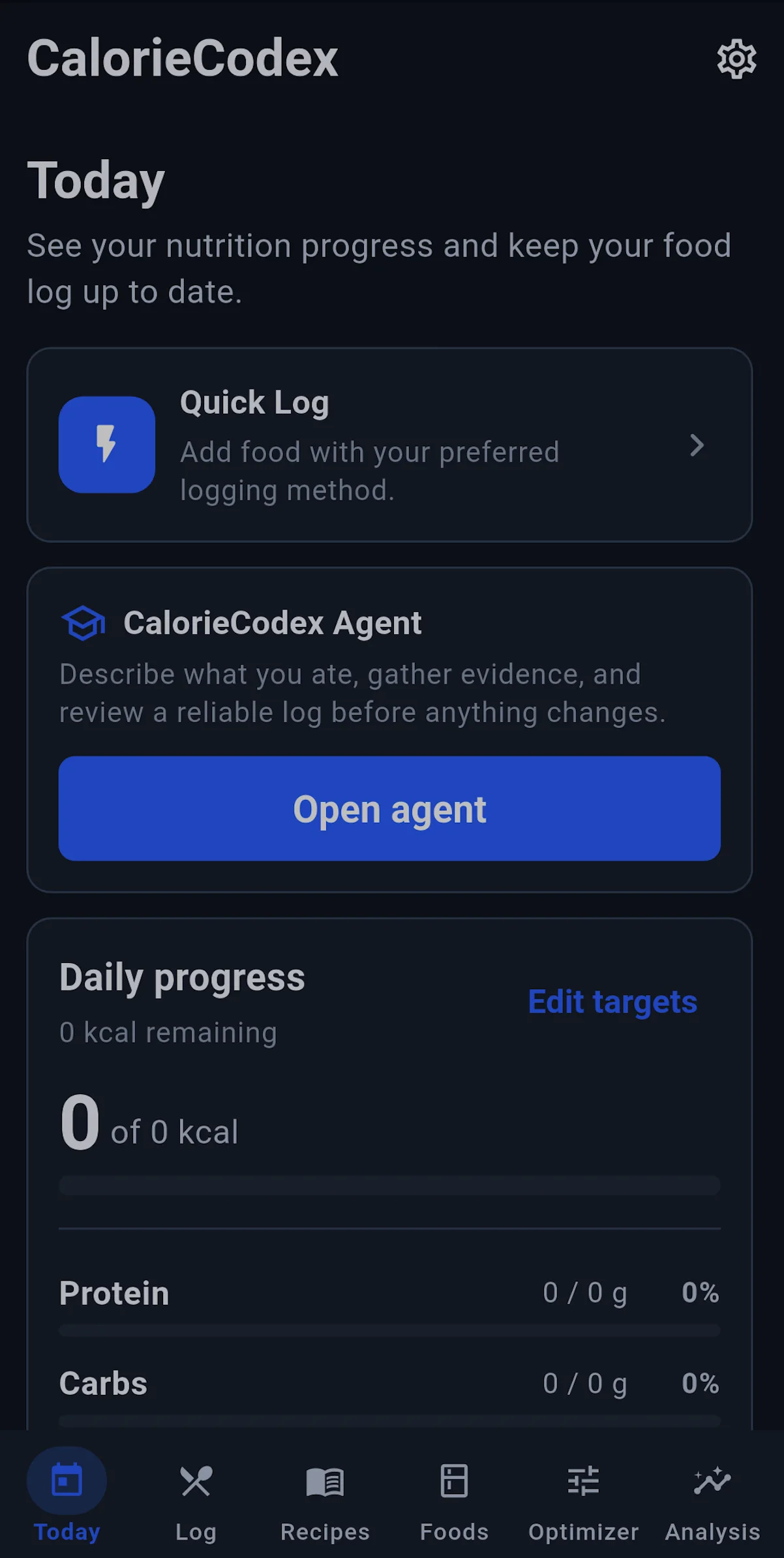
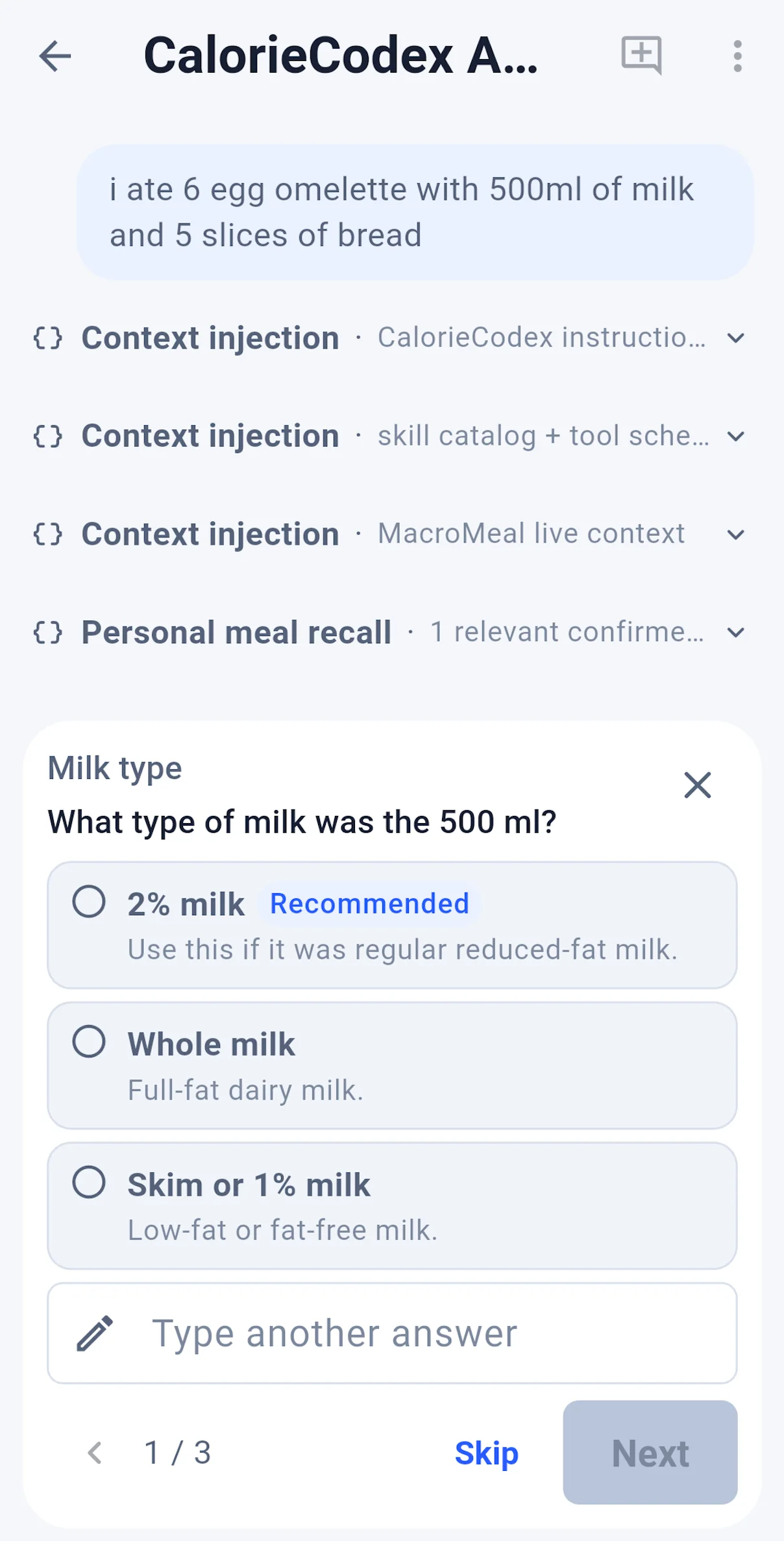
CalorieCodex is a free Android food log whose Play listing says no ads. Our CalorieCodex overview describes photo, voice, and chat-based logging. Pair it with MacroCodex if you also want an adaptive maintenance-calorie estimate and a weight trend. This is a two-app setup, so it may be less convenient than keeping everything inside one product.
The free alternative guide has a short table of CalorieCodex's food search, barcode and label scanning, recipes, meal templates, optimizer, analysis, and data export features. AI logging requires a connected provider, which may have separate usage limits or charges.
As with every AI photo logger, check the suggested ingredients and amounts. Hidden oils and uncertain portion sizes can change the true calories substantially; see our calorie tracking guide.
The practical choice
Choose MacroFactor for adaptive nutrition coaching in a paid app. Choose MyFitnessPal Free for a large food database and basic logging if ads do not bother you. Choose MyFitnessPal Premium if you value its Meal Scan, Voice Logging, and ad-free workflow enough to pay. Choose CalorieCodex plus MacroCodex if you want free, ad-free Android logging and adaptive calorie targets across two apps.
For another angle, see our free MacroFactor alternative guide.